Roofing Marketing: How Roofers Get More Quote Requests in 2027
On this page 8 sections
Key takeaways
- Set your Google Business Profile category to Roofing Contractor first
- Before-and-after photos with suburb and roof type outperform generic content
- Prepare storm landing pages before severe weather hits, not after
- 59% of home-services enquiries come from searches not on your keyword list
- Answered calls convert far better than callbacks for insurance and inspection jobs
Roofing marketing in 2027 comes down to two things: being visible when a homeowner has water dripping through the ceiling, and answering the phone when they call. Most roofers don't need more channels. They need a few channels set up properly and ready before demand spikes.
Why Do Most Roofing Businesses Struggle to Get Consistent Quote Requests?
Most roofing businesses struggle because their enquiries depend on the weather and word of mouth, not on a system that keeps them visible all year.
The feast-or-famine pattern most roofers know too well
After a big storm, the phone rings nonstop and you can't get to half the inspections. Six weeks later it goes quiet and you're chasing restoration work. The fix isn't working harder during the busy weeks. It's building visibility that keeps working during the slow ones. That usually starts with solid SEO for roofing businesses, so you show up for repair and restoration searches regardless of what the sky is doing.
What the data actually shows about how homeowners find a roofer
Homeowners search Google, look at the Maps results, check reviews and call. In one Australian home-services sample reported in October 2026, "near me" searches made up 17% of enquiries and converted at 1.3 times the rate of other searches. The same sample found 59% of enquiries came from searches that weren't on the advertiser's keyword list. In plain terms, people search in unpredictable ways, and you need to be visible for more than "roof repair".
How Do Roofers Rank Higher in Google Maps?
Roofers rank higher in the Google Maps local pack by getting their Google Business Profile category, service areas and reviews right, because Google ranks local results on relevance, distance and prominence.
Get your primary category and service areas right first
Your primary category should be "Roofing contractor". Only add secondary categories, such as gutter or skylight services, if you genuinely offer that work. Google's Google Business Profile category guidelines are clear that categories should describe what you are, not every keyword you'd like to rank for. Set service areas to the suburbs you actually cover, and don't stuff "Roof Restoration Sydney" into your business name. Reviews can't make up for a wrong category or a service area that's too far from the searcher.
Building a review profile that actually sticks in 2027
Getting reviews has become a bit harder. Around 30 September 2026, Google Maps started requiring users to sign in before they can see all reviews, sort them or leave one. That extra step means fewer homeowners will leave a review on a whim. To work around it:
Send your direct review link by text on the day you finish the job
Tell the customer they'll need to sign in to their Google account first
Ask while they're still happy looking at their new roof, not three weeks later
Reply to every review, mentioning the suburb and type of job where it fits naturally
Photos, posts and the signals Google actually weights
Local SEO prominence signals include reviews, links from other sites, local mentions and an active profile. Upload real job photos regularly, post completed projects, and keep your name, address and phone number identical everywhere online. Stock photos of shiny American roofs do nothing for you.
Before-and-After Content That Turns Searches Into Inspections
Before-and-after content works because it shows homeowners what their roof could look like and proves you've done the same job nearby.
What to include in every project post
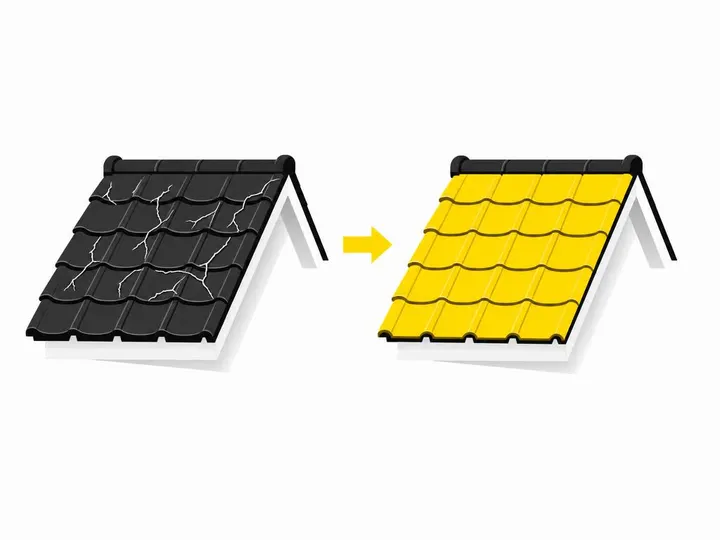
A photo of a faded tile roof next to a freshly restored one is persuasive, but the details are what earn the inspection request. Every project post should cover:
The problem (cracked ridge capping, rusted sheets, a leak over the kitchen)
The suburb and roof type
The scope of work and materials used
How long it took
The finished result, plus a clear "Request a roof inspection" prompt
These before-and-after posts for tradies work just as well on your website and Google Business Profile as they do on Facebook.
Organising content by service type, not just suburb
Group your projects by service: restorations, leak repairs, tile replacement, metal reroofing and storm damage roof repair. Someone with a leak doesn't want to scroll through restorations. Then link those projects from your suburb service pages so each location page has real local proof rather than generic filler text.
What Storm-Season Marketing Should Roofers Do Before a Weather Event?
Roofers should build storm-response pages, prepare paused ad campaigns and sort out after-hours call handling weeks before storm season, because once the rain hits it's too late to build anything.
The demand is real. Insurance Council of Australia declared-event data shows more than 400,000 home-damage claims between 2022 and 2026, with A$11.3 billion in insured losses, and 145,392 homes damaged in 2025 alone. On 1 November 2026, a storm near Good Hope, NSW damaged 16 buildings, including six roofs torn off completely.
Why storm-response pages need to be live before storm events
Google takes time to find and rank new pages. A storm damage page should already be live, covering emergency make-safe and tarping, what to photograph for the insurer, how insurance work is handled and a big phone number.
Running suburb-targeted ads after a storm event
Build a storm campaign in Google Ads now and leave it paused. When a storm hits an area you service, switch it on and target the affected suburbs. Only target places you genuinely cover. Implying you're local when you're two hours away damages trust and wastes money.
Call handling and after-hours processes matter more than the ad
Consumer research found 77% of people prefer speaking with a human for complex enquiries, and an insurance roof job is about as complex as it gets. If your phone rings out at 9pm, that homeowner calls the next roofer. Set up an after-hours roster or answering service, and use missed call text-back for small businesses so nobody is left hanging.
Which Google Ads Keywords Bring the Most Qualified Roofing Leads?
The most qualified roofing leads come from urgent and service-specific searches such as "roof leak repair", "storm damage roof repair" and "roof restoration near me".
Campaign groupings that work for roofing businesses
Roof repair: broken tiles, ridge capping, flashing
Roof restoration: tile and metal restoration, roof painting
Reroofing: tile to metal conversions, full replacements
Storm damage: insurance work, make-safe
Emergency leaks: urgent and after-hours searches
Add negative keywords for searches to avoid: DIY guides, roofing jobs and apprenticeships, courses, and material supply searches like "buy colorbond sheets".
Why broad coverage plus good landing pages beats a tight keyword list
With 59% of enquiries coming from searches nobody predicted, a tiny exact-match list misses most of the market. Use broader matching with tight negatives, send each campaign to a matching service page, and review the search terms report weekly.
Why Do Roofing Websites Lose Quote Requests?
Roofing websites lose quote requests when the phone number is hard to find, the site is slow on mobile, service areas are hidden or the form asks too many questions.
What needs to be above the fold on a roofing site
On a phone, before any scrolling, a homeowner should see a tap-to-call number, the areas you service, your licence and insurance details, your star rating, a real project photo and one clear next step. Good roofing website design treats the site as a quoting tool, not a brochure.
Contact forms, phone numbers and call tracking
Keep forms short: name, phone, suburb, problem and an optional photo upload. Most roofing enquiries come through as calls, so set up call tracking to see which pages and campaigns make the phone ring. Here's how to track phone calls from your website without overcomplicating it.

Putting It Together: A Simple Roofing Marketing Priority Order
Fix your call handling and Google Business Profile first, then your website, then content, then ads.
Answer every call and set up missed call follow-up
Clean up your Google Business Profile and start asking for reviews
Fix the website so mobile visitors can call in one tap
Publish project content by service type and suburb
Prepare storm pages and paused campaigns before the season starts
Run Google Ads once the pages they land on can convert
Conclusion
Roofing marketing that works in 2027 isn't complicated. Get found in Maps with the right category and steady reviews, prove your work with detailed before-and-after projects, and have storm pages and campaigns ready before the weather turns. None of it pays off if calls go unanswered.
Your practical first step this week: ring your own business number after hours and see what happens. If a homeowner with a leaking roof would hit voicemail and nothing else, fix that before spending another dollar on marketing.