Facebook Ads vs Google Ads for Tradies: Which One Should You Use First?
On this page 7 sections
Key takeaways
- Google Ads targets demand that already exists; Facebook creates new demand.
- Google Ads cost-per-lead runs $15 to $45 AUD for most trade categories.
- Facebook Ads have lower cost-per-click but typically need longer follow-up.
- Most tradies should start with Google Ads, then add Facebook once cash flow allows.
- Neither platform works well without a solid landing page behind the ad.
If you're a tradie running a small business, you've probably heard that you should be advertising online but which platform actually works? Google Ads and Facebook Ads are the two heavy hitters, and they work in completely different ways. One finds people who are already looking for what you do. The other finds people who don't know they need you yet. Understanding that difference is the entire ballgame, because it changes which platform makes sense for your budget, your trade, and how fast you need leads.
The Core Difference: Capturing Demand vs Creating It
Google Ads and Facebook Ads are not competitors doing the same job better or worse they're solving two entirely different problems. That's why one isn't the right answer for every tradie.
What Google Ads actually does for a tradie
Google Ads, including Google Search Ads and Google Local Services Ads, work by intercepting people who are actively searching for your service right now. When someone in your area types "plumber near me" or "emergency electrician Parramatta", Google Ads put you in front of them. They already have intent. They already know they have a problem. Your job is just to show up and look better than the other tradie.
This is why search intent matters so much. If someone is searching, they're ready to spend money. Tracking lead sources for trade businesses shows that Google leads typically convert faster and at higher rates because the person called or enquired for a reason.
What Facebook Ads actually does for a tradie
Facebook Ads (which includes Instagram ads through Meta Ads) work the other way around. You're finding people who are scrolling social media, minding their own business. They don't know they need you yet. Your ad has to make them stop, think "actually, yeah, I should get my gutters cleaned" or "my kitchen does look tired", and then push them to take action. You're creating demand, not capturing it.
This means Facebook ads need stronger creative (good images or video), a clear message, and often multiple touches before someone converts. It takes longer. But when it works, running Facebook ads for a local service business can reach people nobody else is bidding for, which sometimes means cheaper leads overall.
Cost Comparison: What You'll Actually Spend in Australia
Cost matters more when your marketing budget is tight, so let's be straight about what you'll spend on each platform in 2026.
Google Ads costs for trade businesses
Google Search Ads for tradies in Australia currently run between $2.50 and $8.50 per click, depending on your trade and how competitive your area is. Electrical work and plumbing in major cities are more expensive. Carpentry and general labour tend to be cheaper. That means your cost-per-click (CPC) is real money before anyone even calls you.
Google Local Services Ads, where available for licensed trades, work differently you only pay when a lead is sent through, not per click. These often cost $10 to $40 per lead but have a higher close rate (60 to 75% of leads actually convert to jobs).
Facebook Ads costs for trade businesses
Facebook Ads cost significantly less on a per-click basis. You're looking at $0.80 to $3.50 per click on average in Australia. On the face of it, that's attractive sometimes a third the cost of Google.
The catch is that cheaper clicks don't automatically mean cheaper leads. Because people on Facebook aren't actively looking for your service, your click-through rate is lower, your conversion rate is lower, and you need more impressions to get the same result. That $1.50 click might turn into a $50 lead. Or it might turn into nothing. What Facebook Ads cost Australian businesses varies wildly based on your audience, your creative, and how tight your targeting is.
Why cheaper clicks don't always mean cheaper leads
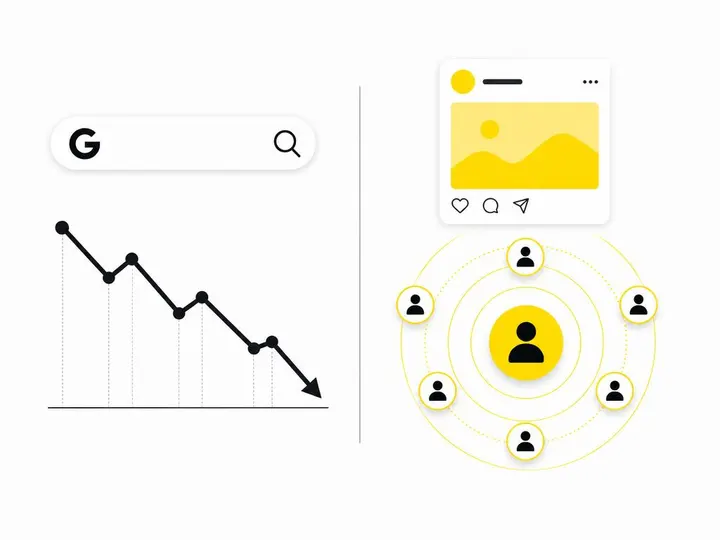
A common trap is assuming that a lower cost-per-click means a lower overall cost to get a customer. It doesn't work that way. If you spend $500 on Google and get 50 clicks but 8 turn into qualified leads, your cost-per-lead is about $62.50. If you spend $500 on Facebook and get 250 clicks but only 3 turn into qualified leads, your cost-per-lead is $166. The Facebook clicks were cheaper, but the lead was way more expensive.
Which Platform Gets You Leads Faster?
If you need leads in the next week, Google Ads wins almost every time. Facebook is the slower play.
Google Ads: intent is already there
Google Search Ads can start generating leads within hours. Set up your account, write your ad copy, point it at your Google Business Profile, and you're live. People searching for your service will see you. Some will click. Some will call. You get feedback fast, and you can adjust. Most tradies see their first lead within 24 to 48 hours.
Facebook Ads: you have to build the intent
Facebook is slower because you're starting from zero interest. Your ad has to build awareness, overcome scepticism, and push someone to take action all while they're distracted by their mate's holiday photos and a cooking video. Most Facebook campaigns take 2 to 3 weeks before you see any real traction. Your first lead might take a month if you're not running strong creative and retargeting.
When Facebook Ads Actually Beat Google for Tradies
Facebook isn't always the slow second choice. There are trades and situations where it absolutely outperforms Google.
Trades where Facebook outperforms Google
Facebook tends to work better for trades where the buyer isn't searching actively. Interior design, kitchen renovations, landscaping, and bathroom renos often perform better on Facebook because people are scrolling for inspiration before they're searching for a tradie. Handyman work and general home improvement also do well because the need is often vague ("my place needs work") rather than specific ("I need a licenced electrician today").
How Meta Ads work for tradies reveals that lifestyle trades and aesthetic services get much higher engagement and lower costs than emergency or critical services.
Using Facebook for retargeting and reputation
Facebook's real strength for tradies isn't always front-line lead gen. It's retargeting showing ads to people who've already visited your website or called you. You can remind someone you quoted three weeks ago, stay top of mind, or reach their friends. Facebook is also excellent for building reputation through case studies and before-and-after photos, which helps with those who are already shopping around.
The Decision Framework: Which One Should You Start With?
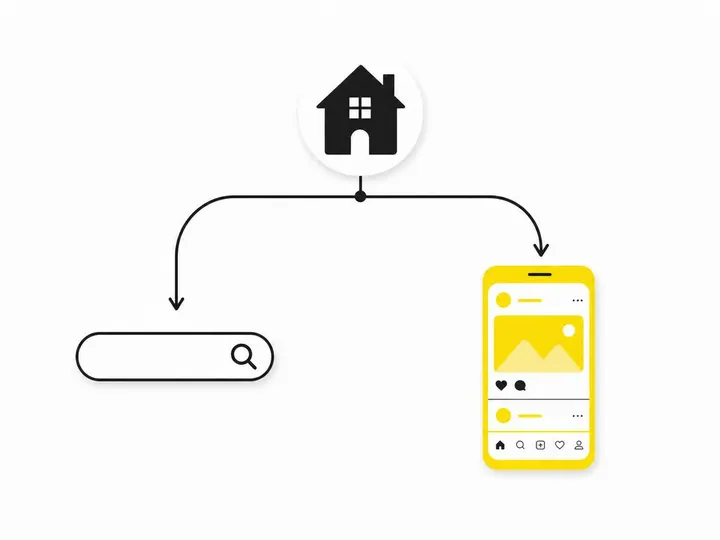
Here's how to choose based on where you are now.
Start with Google Ads if...
You need leads this month and your budget is $1,000 to $3,000.
Your service is something people actively search for (plumber, electrician, emergency roof repair).
You're in a competitive metro area and can afford higher clicks.
You already have a solid Google Business Profile set up.
Your website converts reasonably well (if you don't know, ask a marketer to audit it first).
Start with Facebook Ads if...
Your budget is under $500 per month and you can afford to wait 4 to 6 weeks for results.
Your service is lifestyle-based or aesthetic (kitchen reno, landscaping, design).
You have strong before-and-after photos or video of your work.
You're in a less competitive area where Google costs are still high.
You already have a warm audience (past customers, email list) to retarget.
The case for running both
If your budget allows ($2,000 to $4,000 per month), running both makes sense. Allocate 60 to 70 percent to Google (the faster, more predictable platform) and 30 to 40 percent to Facebook (to build reach and retarget warm leads). Comparing Google and Meta Ads for local businesses shows that tradies running both consistently get lower overall cost-per-lead than those betting everything on one platform.
What You Need Before Running Either Platform
Don't start spending money until you have these basics locked in. Too many tradies burn cash because they're not ready.
Your landing page has to do the heavy lifting
Whether you're running Google or Facebook, the ad gets the click. Your tradie landing page gets the lead. If your website is slow, confusing, or doesn't have a clear call to action, no amount of ad spend will help. Your page needs to load fast, show what you do, prove you're legitimate, and make it easy to call or fill a form. For Google Ads, this might just be your Google Business Profile. For Facebook, you need a proper landing page or lead form ads vs website landing pages that collects details without friction.
Tracking and follow-up matter more than most tradies realise
Knowing which ads are sending you leads is non-negotiable. Set up conversion tracking on both platforms before you spend a cent. If you're running Google Ads, link it to your Google Business Profile and use call extensions. If you're running Facebook, enable lead form ads or use the pixel to track visits and form fills. Without tracking, you're flying blind and you'll waste money on ads that aren't working.
Follow-up speed also matters. Research shows that tradies who call leads within one hour close 40 percent more jobs than those who wait until the next day. Your ad is just the first touch. Filtering out tyre-kickers from your ad leads happens in the follow-up conversation, not in the ad itself.
Conclusion
Google Ads and Facebook Ads aren't in competition they're different tools for different jobs. Google captures existing demand fast and converts quickly, but costs more. Facebook builds awareness slowly and cheaply, but needs patience and strong creative to work. For most tradies starting out, Google Ads is the right first move because it gets leads faster and is easier to measure. But if you're in a trade where people shop around (renos, landscaping, design) or if your budget is tight and you can wait a month for results, Facebook can be just as valuable.
The real answer for most tradies isn't choosing one it's understanding what each does, starting with the platform that matches your timeline and trade, and then adding the other once you've proven your landing page works and you've got tracking in place. Setting a marketing budget as a tradie means allocating money where it actually converts, not where it sounds smartest.
Start with Google if you need leads now. Add Facebook if you want to stay top of mind and reach people before they start actively searching. Track everything. Follow up fast. That's how you actually get a return on ad spend, not just a stack of enquiries that go nowhere.