Facebook and Instagram Ads for New Businesses in Australia: A Simple First Campaign
On this page 10 sections
Key takeaways
- Start with $7 to $10 per day and one clear campaign objective
- Install the Meta Pixel before you spend a single dollar on ads
- Test 2 to 3 creative variants before scaling any budget
- Expect 30 to 90 days before judging return on ad spend
- Advantage Campaign Budget automates spend for new advertisers
If you've just launched a business in Australia, Facebook and Instagram ads might feel like a daunting leap, but they're actually one of the fastest ways to find customers without spending a fortune. You can start small, test what works, and scale only what proves itself. This guide walks you through your first campaign, step by step, so you know exactly what to do and what to expect.
Why Facebook and Instagram Ads Make Sense for a Brand-New Business
Facebook and Instagram reach over 14 million Australians every month, and you can reach a meaningful portion of them for $5 to $20 a day while you figure out what works.
The reach is genuinely large in Australia
Australia's population is around 26 million. Facebook has 14.8 million monthly active users, and Instagram has 10.9 million. That's coverage most traditional advertising can't touch. More importantly, 78% of Australian SMBs already use paid social advertising, which means the infrastructure and competition are mature. You're not pioneering; you're joining a well-established channel.
You control exactly how much you spend
Unlike print or radio, you set the daily budget and it doesn't change without your approval. You can literally pause or stop tomorrow if you need to. Most new businesses benefit from starting between $5 and $20 per day for testing, then scaling only if you see results.
The trade-off: patience is required
Facebook and Instagram ads don't deliver instant results like a direct mail drop or a newspaper ad might feel like they do. Your first campaign will likely take 30 to 90 days before you can reliably say whether it's working. That's the learning phase, and it's normal. If you turn ads off too early because you haven't seen a sale yet, you'll never know if it would have worked.
Before You Spend a Dollar: Four Things to Set Up First
You cannot run ads successfully without these four foundational pieces in place.
Create a Meta Business Manager account
This is your control centre for all Facebook and Instagram advertising. Go to business.facebook.com, sign up, and link your personal Facebook account. It takes 10 minutes and costs nothing. Follow a full Meta ads setup walkthrough if you get stuck on any step.
Install the Meta Pixel on your website
The Meta Pixel is a small code snippet that tracks what happens when someone clicks your ad and lands on your website. Without it, you're flying blind. You won't know if clicks turned into phone calls, enquiries, or sales. Most website builders (Wix, Squarespace, WordPress) have simple Pixel installation guides, or your web person can handle it in minutes.
Set up your Facebook Page and Instagram profile
Your ads will run from a Facebook Page and an Instagram profile (both linked to the same business account). Make sure your business name, location, phone number, and website are complete and correct. Customers click through to these profiles, so they need to look legitimate.
Define one goal for your first campaign
Pick one thing: generate phone calls, collect email addresses, drive website visits, or get sales. Don't try to do everything at once. Your first campaign should teach you what works, not deliver 10 different outcomes.
Which campaign objective should a new business choose for their first Meta campaign?
Your campaign objective is the single most important decision you'll make, because it tells Meta's algorithm what to optimise for. Choose the right Meta campaign objective based on what your business actually needs right now.
Lead generation: best for service businesses and tradies
If you're a tradie, plumber, electrician, painter, or run any local service business, Lead Ads is almost always the right choice for your first campaign. Lead Ads let people enquire from within Instagram or Facebook without leaving the app. Meta fills in their details automatically, and you get a notification instantly. Cost per lead (CPL) ranges from $15 to $50 depending on your industry and competition in your area.
Traffic: use it only when you have strong landing pages
If you have a high-quality landing page or blog post that converts, sending clicks to it can work. But most new businesses don't have this yet. Traffic campaigns are better once you've learned the basics.
Sales (conversions): save this for when you have data
If you sell products online, this objective works, but your Pixel needs solid conversion data first. As a new business, you won't have that. Stick with Lead Ads or Traffic for your first month or two.
Targeting Your Audience Without Wasting Money
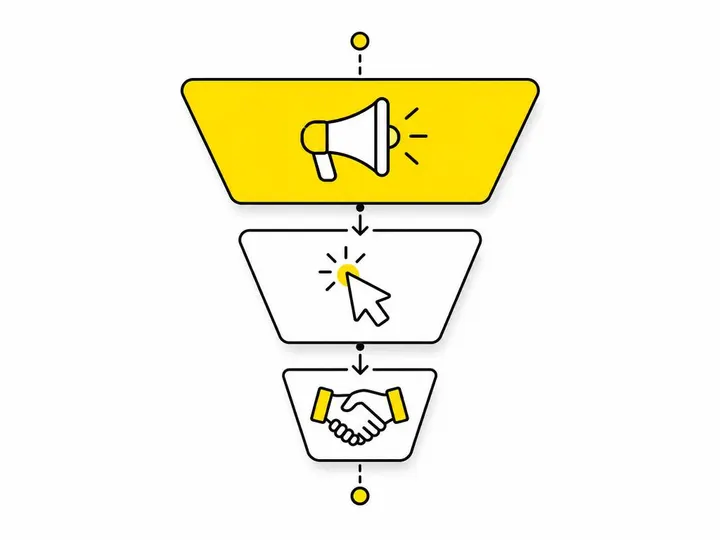
Targeting is how you tell Meta who should see your ads, and getting it right saves you from spending money on people who will never buy.
Start broad, then narrow with interest or behaviour layers
Create a loose target first (age range, rough location), then add layers like interests or behaviours. For example, if you're a personal trainer, start with women aged 25 to 50 in your area, then layer in interests like fitness or gym. Don't get too narrow on your first try because you need enough people seeing your ads to get useful data.
Use location targeting to keep spend local
If you're a local business (and most new businesses are), use precise location targeting. Set a radius around your postcode. This stops your money leaking to people who can't actually use your service.
When to trust Meta's automation on audience
How Advantage+ audience works for Australian businesses is worth understanding. Advantage+ lets Meta automatically find people similar to your best customers, but you need some initial data. If you're running Lead Ads and have collected 50 to 100 leads, Advantage+ can help you find more like them. On your very first campaign, manual targeting is safer.
What daily budget should a new Australian business start with on Facebook and Instagram ads?
Start with $10 to $20 per day (around $70 to $140 per week) and run it for at least 30 days before deciding if it works.
At this budget, you'll spend around $300 to $600 per month. That's enough data to see patterns without risking the house if it doesn't work. When you set your budget, use Advantage Campaign Budget from the start. This tells Meta to distribute your daily budget across the day automatically, rather than trying to spend it all in the morning. It's faster and smarter.
Increase your daily spend only when you see a cost per lead or cost per click that makes sense for your business. If you're getting enquiries at $25 each and one customer is worth $500 to you, scale up. If you're spending $80 per enquiry, pause and change your creative or targeting first.
Creating Your First Ad: Copy, Creative, and Format
Your ad is the message and the image or video. Both matter equally.
Simple creative ideas that actually work for new businesses
Creative ideas for your first Meta ad are not about being flashy. Use before-and-after photos (most powerful for trades), customer testimonials, your team in action, or your work site. Avoid stock photos. Real work beats polish every time.
Writing ad copy that speaks to an Australian audience
Write like you talk. If you're a plumber, say "Burst pipe? We're here in 2 hours" not "Emergency plumbing solutions." Mention your location (suburb or postcode). Use Australian slang if it fits your brand. Keep it short: 125 words or less. Tell people exactly what to do: "Click here to book" or "Message us for a free quote."
Image vs video: which to start with
Start with a strong still image, not video. Video takes longer to produce, and you'll want to test a few image options first anyway. Use a clear, well-lit photo of your actual work or your team. Avoid logos and heavy text overlays.
Reading the Results: What to Look At in Your First 30 Days
When your campaign is running, you'll see a dashboard full of numbers. Most of them don't matter for a new business.
Focus on these three metrics: Cost Per Lead (CPL) or cost per click, Click Through Rate (CTR), and how many people actually called or enquired. Ignore impressions and reach in week one. They mean nothing if nobody acts. How the Meta learning phase works is critical to understand here. In your first 50 conversions (leads or sales), Meta is still learning. Your numbers will bounce around. Don't change anything for at least a week.
Return on Ad Spend (ROAS) is how much money you made for every dollar spent on ads. If you spent $300 on ads and got $1,200 in sales, your ROAS is 4:1, which is excellent. But ROAS only matters if you're selling products online. For lead-based businesses, focus on CPL and whether enquiries convert to paying jobs.
Common Mistakes New Australian Business Owners Make
Turning ads off too early
The number one mistake is switching off ads after a week because you haven't seen a sale. You haven't given Meta enough time to learn who to show your ads to. Commit to 30 days minimum.
Skipping the Pixel setup
You cannot know if your ads work without the Pixel. Install it before you spend a cent.
Running ads to a weak website or landing page
If someone clicks your ad and lands on a page that doesn't clearly explain what you do or how to contact you, they'll leave. How to build a landing page that converts takes time, but it's worth it. For your first campaign, at minimum make sure your website homepage has your phone number, your main service area, and a clear call-to-action (Call, Message, or Book).
When to Get Help Running Your Ads
If you've run your first campaign for 30 days, collected 50 to 100 leads or clicks, and you're not sure what to change next, that's when to bring in help. Professional Facebook and Instagram ad management by someone who knows the Australian market can save you months of trial and error. The cost of professional management (typically $500 to $2,000 per month) pays for itself if it doubles your lead quality or cuts your cost per lead in half.
Many new businesses also wonder whether to choose Facebook ads or Google ads first. Comparing Meta and Google ads for service businesses shows that Meta is usually better for local service businesses in their first 90 days, because the targeting is tighter and the cost per lead is lower. Google ads work better once you're ready to capture high-intent searches.
Conclusion
Your first Meta ads campaign doesn't have to be perfect. It has to teach you something. Start with a clear goal, a tight budget ($10 to $20 per day), and simple creative. Install the Pixel, choose Lead Ads if you're a service business, and commit to 30 days. Read your results every week, but don't panic if numbers bounce around. The learning phase is real, and it's temporary.
Most Australian new businesses see their first meaningful results between weeks 4 and 8. If your cost per lead lands somewhere between $15 and $50, depending on your industry, you're in the ballpark. From there, you can scale, test new creative, or adjust your targeting. The key is starting small, staying patient, and learning from what the data actually tells you, not what you hope to see.