How to Build a High-Converting Tradie Landing Page in 2026
On this page 8 sections
Key takeaways
- One page, one goal. Remove navigation and off-topic links
- Trust signals (reviews, licences, photos) do the selling for you
- Keep your enquiry form to five fields or fewer
- A strong headline tells visitors exactly what you do and where
- Mobile layout comes first. Most tradie leads browse on a phone
A tradie landing page is a single-purpose web page designed to convert one specific type of visitor into an enquiry, quote request, or phone call. It is not your homepage, and it is not a service page. It is a laser-focused sales tool built to answer one question, remove one objection, and push one action. Done right, a landing page will convert 8 to 15 percent of visitors into leads. Done wrong, it will leak enquiries and waste your ad spend.
What Is a Tradie Landing Page (and Why It Is Not Your Homepage)?
Your homepage welcomes everyone. A landing page welcomes one person with one problem. When someone clicks an ad for "emergency plumbing in Parramatta," they do not want to see your full service list or your company history. They want to know: can you fix my burst pipe today, and how much will it cost? A landing page answers that. Fast.
The difference matters because attention is currency. The moment a visitor lands, they have three to five seconds to decide whether you are worth their time. A homepage spreads that attention across too many options. A landing page keeps it laser-sharp. This focus directly affects your conversion rate—the percentage of visitors who take the action you want (usually filling out a form or calling you).
Landing page vs service page: what is the difference?
A service page lives on your website and ranks in Google for long-tail searches like "roof repairs near me." It answers broad questions about your service and builds trust over time. A landing page is the opposite: it is built for a specific campaign, lives outside your natural navigation, and exists only to convert traffic from an ad or email. The difference between a service page and a landing page is one of intent. Service pages educate and rank. Landing pages convert and sell.
When does a tradie actually need a dedicated landing page?
You need a landing page when you are running paid ads. If you are spending money on Google Ads, Meta Ads, or any other platform to drive traffic, a landing page will always outperform sending that traffic to your homepage or a generic service page. The reason is simple: it matches the message the visitor just clicked. If your ad says "Same-day sparkies for blocked gutters," your landing page should say exactly that. Not "Our guttering services" and not a jumbled homepage. That alignment what we call message match is what turns clicks into enquiries.
The Anatomy of a High-Converting Tradie Landing Page
Every landing page has a skeleton. Know it, and you can build pages that convert.
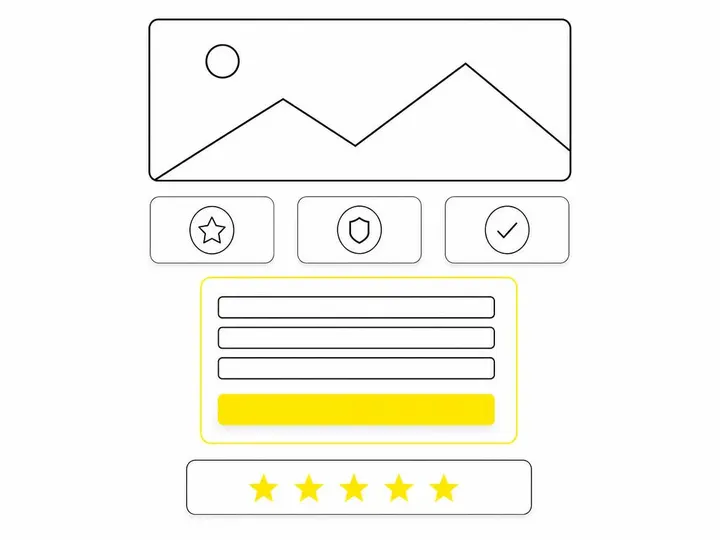
Hero section: headline, subheadline, and your primary call to action
Your headline is the first 10 words a visitor reads. It should repeat the ad they just clicked and answer their biggest question in plain terms. "We fix leaking taps in 24 hours" beats "Professional plumbing solutions for the modern home." Your subheadline (one line below) adds urgency or specificity: "No call-out fee. Licensed tradies. Booking open now." Then place your primary call to action (CTA) button close to the headline. Do not hide it. Most visitors will not scroll to find it.
Trust signals that matter for Australian tradies
Australian homeowners want to know three things before they hand you their money: Are you licensed? Are you local? Will you do a good job? Show proof of each. Include your NSW contractor licence check via Fair Trading (or your relevant state), your physical address, and your years in business. If you hold a Master Tradesperson certificate or QBCC licence (if in Queensland), display that too. These are not decorations. They are proof that the government trusts you. Homeowners notice.
Social proof: reviews, photos, and before-and-after content
Google Reviews are the currency of trust in 2026. Include your star rating and a handful of recent customer quotes on your landing page. If you do not have reviews yet, getting more quote enquiries online will give you the chance to earn them. Before-and-after photos work especially well for trades like painting, carpentry, or kitchen work. A single photo of a grimy bathroom transformed into a clean one speaks louder than 100 words. Include at least three to five strong images on your landing page.
The enquiry form: keep it short and frictionless
Your enquiry form should ask for name, phone, email, and one or two custom fields (like "What is the issue?" or "Preferred contact time?"). Stop there. Every extra field drops your completion rate by 5 to 10 percent. If you ask for address, suburb, postcode, and a full description of the job all at once, half your leads will bounce before submitting. Get their contact details first. Ask for the rest when you call them back. Meta lead ads versus a landing page have their pros and cons, but the principle is the same: shorter forms convert better.
Writing Copy That Converts for Tradie Services
Lead with the outcome, not the process
A homeowner does not care how you fix their problem. They care that it is fixed. Write "Your tap will stop leaking today" not "We diagnose the cartridge, replace the washer, and re-tighten the valve." The outcome is what they paid for. Sell the outcome.
Address the objections a customer has before they ask
The biggest unspoken fears are cost, time, and disruption. "From $150" removes cost objection. "We are done in two hours" removes the time objection. "We clean up after ourselves" removes the disruption objection. Write your landing page assuming every visitor is skeptical. Then answer their doubts before they ask.
Use plain language, avoid jargon
You are not writing for other tradies. You are writing for a stressed homeowner with a plumbing leak at 10 p.m. on a Sunday. Avoid acronyms, technical terms, and industry shorthand. "We fix blocked pipes" beats "We perform hydro-jetting rooter services." Plain language builds trust because it signals you have nothing to hide.
Design and Mobile Considerations for Tradie Landing Pages
Why mobile-first design is non-negotiable for tradies
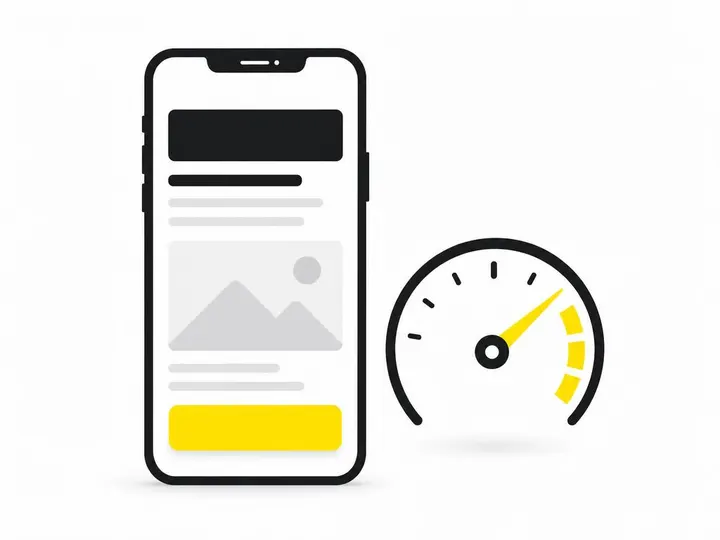
Most tradespeople get found on mobile. Someone is in their kitchen with a leaking tap, phone in hand, searching for "emergency plumber near me." If your landing page does not work on their phone, if the form is too small, the text is unreadable, or the CTA button is hard to tap you lose that enquiry instantly. Design your landing page for mobile first. Desktop follows. Not the other way around.
Page speed and why slow pages kill conversions
A page that takes more than three seconds to load will lose half your visitors. Test your page speed using Google PageSpeed Insights. Compress your images. Remove unnecessary scripts. Use a fast hosting provider. A half-second improvement in load time can lift your conversion rate by 20 percent. Speed is not a nice-to-have. It is the difference between converting a lead and losing it to a competitor.
What to leave off your landing page
Your landing page should not have a navigation menu, a footer with fifty links, or a sidebar pointing to your blog. Every distraction is a reason for someone to click away before they fill out your form. Keep the page clean. One headline. One subheadline. One form. One CTA. Everything else is noise.
Calls to Action: Getting the Click and the Enquiry
How many CTAs should a tradie landing page have?
One main CTA near the top of the page, and one repeat CTA at the bottom after all your social proof and details. Some pages add a third CTA in the middle, but anything more than three dilutes the message. Make each CTA button the same colour and label so the visitor knows what they are clicking.
Phone number vs form: which converts better for tradies?
This depends on your model. If you want to qualify leads before responding, use a form. If you want high volume and can handle incoming calls, add a clickable phone number. The best approach is both: a phone number that links to a call-to-action button, and a form below for visitors who prefer to type. How to qualify leads as a tradie is easier when you use a form first, but phone number leads often convert to actual jobs faster.
Writing a CTA button label that actually gets clicks
Do not use generic labels like "Submit" or "Click here." Use action words that match your service. "Get a same-day fix," "Book your sparkie now," "Request a no-obligation quote." The button label should tell the visitor exactly what happens when they click it. Specific CTA labels convert 20 to 30 percent better than vague ones.
How to Connect Your Landing Page to a Campaign
Matching your ad message to your landing page headline
If your Google Ad says "Same-day emergency plumbing," your landing page headline should repeat those exact words. Google rewards this alignment because it signals relevance. More importantly, your visitor feels like they landed in the right place. When the ad message matches the page headline, conversion rates jump. This is message match, and it is non-negotiable.
Tracking enquiries so you know what is working
How to track where your tradie leads come from requires setting up conversion tracking on your landing page. Use Google Analytics 4 to track form submissions. Link your landing page to your Google Ads account so you can see the cost per lead. Running Meta Ads to drive traffic to your landing page should include the Meta Pixel so you can measure conversions there too. Without tracking, you are flying blind. You will not know which landing pages work, which ads are worth money, or where your best leads come from.
Common Mistakes That Kill Tradie Landing Page Conversions
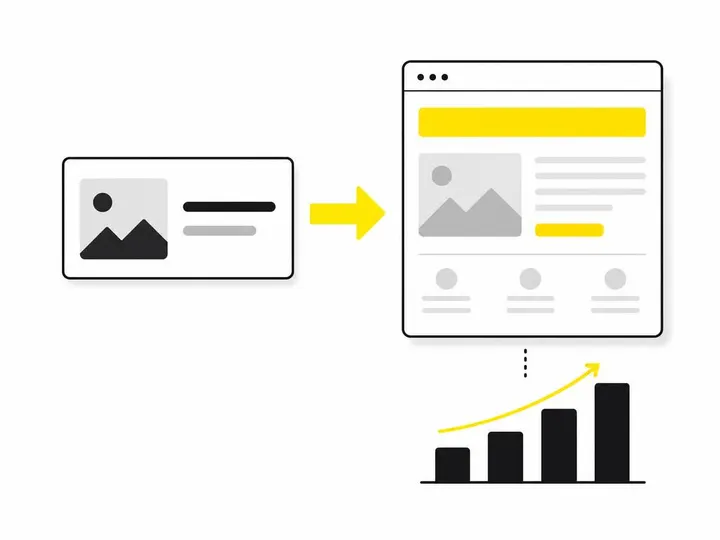
Poor navigation is one of the biggest killers. If your page has too many menu links or buttons pointing away from your CTA, visitors will click away instead of converting. Cluttered design too many colours, too many fonts, or too many images—signals amateurism and erodes trust. Not showing your price (or at least a starting price) creates friction. Visitors want to self-qualify before they call. A missing phone number is another leak: some people will call, not form-fill. Common tradie website mistakes often boil down to trying to please everyone instead of focusing on one action. Your landing page is not a portfolio. It is a sales tool. Treat it that way.
Conclusion
A high-converting tradie landing page is simple: one headline, one offer, one action. It matches the ad your visitor just clicked. It removes objections with trust signals, social proof, and honest pricing. It works on mobile, loads fast, and has no distractions. Most importantly, it is built for one conversion metric not brand awareness, not vanity metrics, but actual enquiries or calls.
If you are running paid ads without a dedicated landing page, you are leaving money on the table. Start with one landing page for one service or campaign. Test it. Measure the conversion rate. Improve it. Then build the next one. Over time, your portfolio of high-converting pages becomes your most valuable asset.
The tradie who builds a landing page that converts at 10 percent will outpace the one who sends ad traffic to their homepage every single time. That is not luck. That is strategy.