How to Build a Service Area Page for a Tradie Website (That Actually Ranks)
Key takeaways
- One dedicated page per suburb beats a single vague coverage list
- Unique local content on each page prevents duplicate-content penalties
- Include suburb name in the URL, title tag, H1, and opening paragraph
- Local testimonials and job photos turn a thin page into a trust signal
- Link all suburb pages from a central Service Areas hub page
Service area pages are how you tell Google and your future customers exactly where you work. Done right, they rank for suburb-level searches, turn strangers into leads, and justify the investment in a professional tradie website. Done wrong, they're invisible duplicates that waste your time and hurt your credibility. This guide shows you how to build service area pages that actually perform.
Why Service Area Pages Matter for Australian Tradies
Service area pages rank for high-intent, location-specific searches that generic service pages simply cannot capture. When someone in Epping searches "electrician in Epping" or "plumber Epping NSW," they're ready to call. A dedicated page for that suburb with local phone numbers, postcodes, and genuine location detail outranks vague homepage claims and wins that call.
The difference between ranking and being invisible
Most tradies either ignore location-specific SEO entirely or assume one "Service Areas" page listing 20 suburbs will do the job. Neither works. According to 2024 SEMrush data, suburb-level keyword searches for Australian trades have grown 45% year-over-year. That's real search volume going to whoever ranks. Without dedicated pages, you're invisible for the searches that matter most.
A plumber in Sydney might rank on page two for "plumber Sydney," but with a properly built service area page, they can rank on page one for "plumber Ultimo" or "plumber Darling Harbour" searches with less competition and higher conversion intent. The maths is simple: more suburb pages, more chances to rank, more leads.
How Google reads geographic intent
Google uses several signals to understand where your business serves. Your Google Search Console data, your NAP consistency (Name Address Phone) across your site and citations, your Google Business Profile listing, and the actual text content on each page all tell Google which suburbs matter to you. Service area pages explicitly signal geographic intent through suburb names, postcodes, and local detail signals a homepage simply cannot provide.
When you build a dedicated page for Epping with the suburb name in the title, heading, and body, and you link it back to your main service page, Google understands: "This plumber serves Epping." Combined with a verified Google Business Profile and consistent local citations, that signal becomes authoritative enough to rank.
What Makes a Good Service Area Page
A high-performing service area page balances SEO structure with genuine local credibility it answers the question "Why should I call this tradie?" while also proving to Google that the page is about this specific suburb, not a copy-paste template.
The essential on-page elements
Start with a clear, suburb-specific title tag and H1. Use the format "[Service] in [Suburb], [NSW/VIC/QLD]" (example: "Plumbing Services in Epping, NSW"). Include the suburb name and postcode naturally in the first paragraph, the meta description, and at least one subheading.
Below the fold, add:
A short paragraph explaining your local presence: years in the area, number of jobs completed, or team coverage.
Local testimonials or case studies with the customer's suburb and suburb-level details (not just "Great service!" but "Fixed our kitchen tap in Epping on a Saturday morning").
A service checklist or FAQ specific to common issues in that area (e.g., "Older homes in Epping often have outdated electrical work—here's what to check").
Schema markup (LocalBusiness) embedded in the page code, specifying your service area as that specific suburb, your phone number, and your business type. Google's LocalBusiness schema documentation shows the exact format.
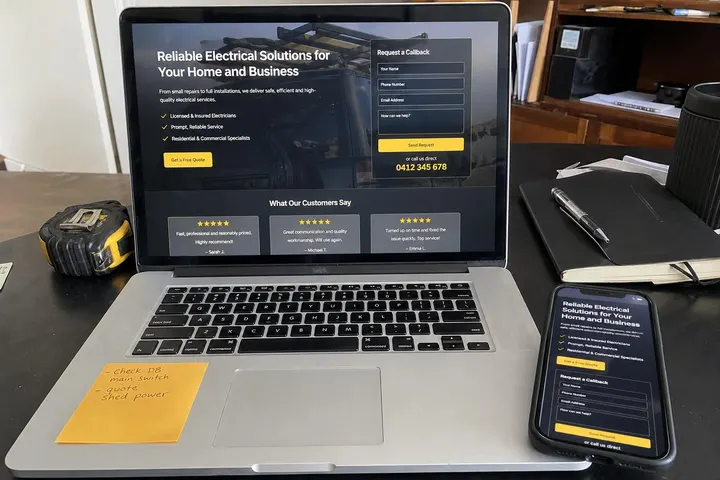
A clear call-to-action above the fold: phone number, contact form, or "Get a Quote" button. Mobile users must see this within two taps.
What to write when you have not worked in the suburb yet
You don't need to have already worked in every suburb you want to rank in. But you must be honest. Don't claim "Servicing Epping for 10 years" if you haven't. Instead, write something like: "We're expanding into Epping and can serve your area as of [date]. We're fully licensed, insured, and available 24/7." This is credible, transparent, and still ranks. Avoid outright lies Google's review filters and customer conversations catch them fast.
Page length and structure
Aim for 600 to 1,000 words per suburb page. That's enough to cover the suburb name, service details, local specifics, and a few testimonials without padding. Use short paragraphs, multiple subheadings, and white space. Mobile-first indexing means Google scans mobile layouts first, so if your page is wall-to-wall text on mobile, it ranks worse.

How to Avoid the Duplicate Content Trap
Duplicate or near-identical suburb pages don't rank they confuse Google and dilute your authority. This is the biggest mistake tradies make when scaling service area pages.
Why copy-pasting kills your SEO
If your Epping page reads almost exactly like your Chatswood and Willoughby pages, Google sees three thin, low-value pages instead of three strong ones. Search algorithms penalise thin, templated content. More importantly, users see it too—and they distrust a plumber who can't bother to mention their suburb's specific needs or history.
How to create genuine variation across suburb pages
Each suburb page should include genuinely local detail: local testimonials from that suburb, a photo or video taken in that area, a local case study, or a paragraph about the suburb's unique characteristics (age of homes, common plumbing or electrical issues, nearby landmarks). Use local keyword variations naturally: "Plumbing in Epping" vs. "Epping plumbing services" vs. "Plumber near Epping station." Vary your opening paragraphs. Quote a customer by suburb. Make each page feel local, not templated.
Using schema markup to help Google understand location
Schema markup (LocalBusiness) tells Google's crawlers explicitly that a page is about a specific location and service. Each suburb page should have its own LocalBusiness schema block specifying the service area as that suburb, your phone number, and your business category. This clarifies to Google that Epping and Chatswood are separate service areas with separate pages, not duplicates. Use a structured data validator to ensure your markup is correct before publishing.
Building Your Service Area Hub and Internal Link Structure
Service area pages don't exist in isolation they're part of a larger site architecture that channels authority and helps users find what they need.
The hub-and-spoke model explained
Create a central "Service Areas" or "Areas We Service" hub page that lists all your suburbs as links. This becomes your hub. Each suburb page (Epping, Chatswood, Willoughby, etc.) is a spoke. The hub ranks for broader searches like "plumber Sydney suburbs," and spokes rank for suburb-specific searches. Traffic and SEO authority flow between them via internal links.
How to link suburb pages back to your main service pages
From each suburb page, link back to your main service page (e.g., "Plumbing Services") with descriptive anchor text like "Learn more about our plumbing services." From your main service page, link to a few key suburb pages (start with your top 3 to 5 suburbs by search volume). This tells Google that suburb pages support and are related to your core service pages. Keep links contextual don't drop a list of every suburb at the bottom of every page. That looks like spammy keyword stuffing and wastes link juice.
Internal linking also improves user experience. If someone lands on your Epping plumbing page and wants to know about your drain cleaning service, a well-placed link to your drain cleaning main page or Epping drain cleaning page keeps them on your site instead of bouncing to a competitor.

Conversion: Turning Suburb Visitors into Leads
A service area page that ranks but converts nobody is a waste of server space. Build each page to both rank and convert.
Above-the-fold elements that drive enquiries
Mobile users decide in the first two seconds whether to call or leave. Your suburb page needs your phone number, business hours, and a "Book Now" or "Get a Quote" button above the fold. Add a short value statement: "Licensed and Insured Plumber in Epping. Same-Day Service Available." This reassures visitors that you're legitimate and ready to help them.
Trust signals specific to the local area
Include local testimonials with the customer's suburb. "John from Epping" is far more credible than a generic five-star review. If you've won a local award or are a member of a local business chamber, mention it. A photo of you or your team in that suburb (at a job site, with a customer, or just a local landmark in the background) builds connection and proves you actually work there. Customer photos and case studies work best they're harder to fake than generic stock images.
Mobile optimisation for on-the-go searches
Over 60% of tradie service searches happen on mobile. If your suburb page isn't mobile-optimised, you lose 60% of your leads. Test every page on mobile: tap the phone number does it call? Try the contact form does it submit easily? Is the page fast (under 2 seconds load time)? Slow mobile pages rank worse and convert worse. Use Google's PageSpeed Insights to identify slowdowns. Compress images, defer non-critical scripts, and use a mobile-responsive design. If you're unsure whether your current site meets these standards, tradie website design packages built from the ground up for performance solve this problem.

How Many Service Area Pages Do You Need
You don't need a page for every suburb. Build strategically based on search volume, competition, and drive time.
Prioritising suburbs by search volume and drive time
Use Google Search Console to see which location-based queries already bring traffic. Use SEMrush to estimate search volume for suburb-level keywords in your trade ("plumber Epping" vs. "plumber Beecroft"). Prioritise suburbs where you have the most search volume and can realistically serve within your drive time. A plumber in Epping shouldn't build a page for suburbs two hours away you won't rank, and even if you do, you can't serve them profitably.
When to build pages and when to wait
Start with your top 5 to 10 suburbs. Build those pages well, ensure they rank within 8 to 12 weeks, then expand. Fifty mediocre pages rank worse than ten great ones. Once you have 10 solid suburb pages bringing consistent traffic, add the next 10. Build quality first, quantity second. Monitor Google Search Console for new suburb-level queries people are searching—those are natural opportunities to expand. If you see "Plumber Pennant Hills" in your search queries but don't rank for it, that's a signal to build a Pennant Hills page.
Conclusion
Service area pages are your ticket to high-intent, location-specific leads. They work because they answer a specific customer question at the exact moment they're searching for your service in their suburb. But they only work if they're built with both SEO rigour and genuine local detail no copy-paste, no keyword stuffing, no false claims.
The framework is simple: identify your top suburbs, build one strong page per suburb with local testimonials and detail, use schema markup (LocalBusiness) to clarify geographic intent, link suburb pages to each other and to your main service pages, and optimise ruthlessly for mobile. Start with 5 to 10 suburbs, monitor performance in Google Search Console, and scale from there. If you're uncertain about your current site structure or haven't explored how local lead generation for Australian tradies can be systematised across your website, that's worth investigating many tradies leave leads on the table simply because their site isn't built to capture location-specific intent.
The tradie who builds proper service area pages today will rank where competitors can't and capture calls that otherwise go to someone else. That's not theory that's how Google's algorithm works, and that's how local tradie businesses grow.