Meta Ads Lead Form vs Landing Page: Which Gets Better Leads for Australian Tradies?

Key takeaways
- Lead forms convert more clicks but often attract lower-intent enquiries
- Landing pages filter for serious prospects willing to leave Facebook
- High-value jobs usually justify the extra effort of a landing page
- Fast follow-up is critical with lead form enquiries or they go cold
- Testing both options is the only way to know what works for your trade
Meta lead forms and landing pages both generate enquiries for tradies, but they work in fundamentally different ways and suit different situations. Lead forms capture more submissions at lower cost, but landing pages attract people with stronger buying intent and give you better tracking. The choice comes down to your follow-up speed, how much you value data, and what stage of the customer journey you're targeting.
What Is a Meta Lead Form and How Does It Work?
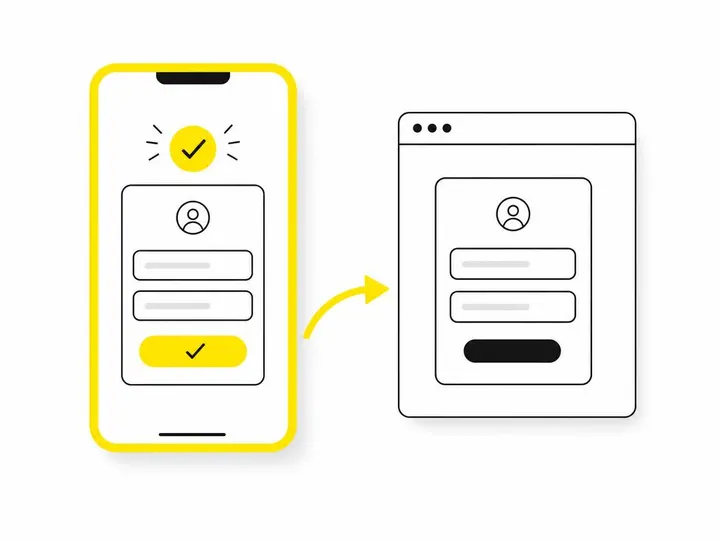
A Meta lead form is a simple enquiry form that appears directly inside Facebook or Instagram without taking users to an external website. When someone clicks your ad, a small form pops up inside the app asking for their name, phone number, email, and maybe a few custom questions. They submit it and stay on Meta. That's it.
Meta Instant Forms overview from Meta Business Help confirms that these forms pre-fill user details from the person's Meta profile. If they're logged into Facebook or Instagram, their name and email often appear automatically, so they only need to tap a button to submit. This removes friction from the enquiry process.
How instant forms pre-fill user details
Meta's data about you is already there. Your age, name, email address, and sometimes phone number are linked to your account. When a lead form asks for these fields, Meta fills them in silently. You don't type anything. This is why lead forms see completion rates of 25 to 50 percent higher than external forms. The barrier to entry is almost zero.
Why Meta keeps users inside the platform
Meta wants users to stay on Facebook or Instagram, not bounce away to your website. Lead forms serve Meta's interests and yours up to a point: more people hit submit because they're not navigating anywhere. But that convenience cuts both ways. You lose control over the experience, you can't track behaviour the same way, and the person has done minimal work to express interest.
What Is a Landing Page and Why Do Tradies Use One?
A landing page is a standalone webpage you build and host on your own domain. Someone clicks your Meta ad, leaves Meta, lands on your site, reads your pitch, and fills out a form. They've now crossed a line. They found you, they went to your website, and they committed enough to complete a longer form. That usually signals stronger intent.
When you're running Meta Ads as a tradie, a landing page gives you control over messaging, proof points, and next steps. You can add photos of your work, testimonials, your qualifications, and a clear explanation of what happens next. A plumber can show before-and-after photos on their landing page. A sparkly in Meta's form can't do that.
What a high-converting tradie landing page includes
Start with a headline that speaks directly to the problem. "Emergency plumbing in Parramatta, 24 hours" is stronger than "Plumbing Services." Include 2 to 3 customer testimonials with real names and photos. Show your qualifications, years in business, and any guarantees. Make the form short (name, phone, what they need help with). One call-to-action button. Load the page fast. Test it on mobile because most people land on it from their phones.
How landing pages connect to tracking and your CRM
A landing page lets you drop a Facebook Pixel on it and capture detailed behaviour data. You see who clicked, how long they stayed, whether they scrolled past the testimonials, and whether they started filling the form but quit. You can set up UTM parameters to track which specific ads drive the best leads. That data lives in your own analytics system, or you can integrate it directly into your CRM using Zapier or native connectors. Meta's lead forms don't offer this granularity.
Lead Quality: The Real Difference Between the Two
Meta lead forms attract more people because they're frictionless, but many of those people are curious clickers rather than serious prospects. Landing pages attract fewer enquiries overall, but a higher proportion of them are people who genuinely want your help.
When someone submits a lead form inside Instagram after scrolling for two minutes, they've made a tiny commitment. They might be shop-shopping. When someone clicks your ad, waits for your website to load, reads your qualifications and testimonials, and then types their phone number, they've made a decision. There's a measurable gap in follow-up conversion rates between the two groups, though the size of that gap changes by trade and by targeting.
Electricians and plumbers running emergency-focused ads often find lead forms work well because urgency lowers the bar for enquiry. A homeowner with no hot water doesn't need persuading; they need fast information. Builders, renovation specialists, and trades requiring site inspections usually see better ROI from landing pages because the prospect needs to understand scope, pricing, and process before they're ready to commit.
Cost Per Lead: Which Option Is Cheaper?
Meta lead forms almost always deliver a lower cost per lead because completion rates are higher and you're paying Meta to run the ads, not your own hosting. You might pay $2 to $8 per lead form submission, depending on your targeting and audience. Landing pages cost $5 to $15 per conversion because fewer people complete the form, so you need more clicks to get the same number of enquiries.
Completion rates and what they mean for your ad budget
Lead forms convert at 30 to 50 percent. Landing pages convert at 8 to 15 percent. If your ad gets 1,000 clicks and costs $1,000, lead forms might deliver 300 to 500 enquiries. Landing pages might deliver 80 to 150. The maths is clear: lead forms are cheaper per submission.
When a cheaper lead is actually the more expensive choice
But cost per lead is not the same as cost per customer. If half your lead form enquiries go nowhere because they're low-intent clicks, and 60 percent of your landing page leads convert to jobs, the landing page lead costs you far less per actual customer. You need to measure the whole funnel, not just the first step. Many tradies obsess over cost per lead and miss this trap.
Tracking and Follow-Up: Where Each Option Falls Short
How much Meta Ads cost in Australia depends partly on how well you track results. Lead forms and landing pages have different tracking headaches.
Meta lead forms send data into the Meta Ads Manager and sometimes into your CRM via a webhook or integration, but the connection is often loose. You get the raw submission data but not the full picture of who became a customer. Landing pages with a Facebook Pixel and UTM parameters let you see the whole journey: click, landing page view, form submission, and if you set up a pixel event, even the phone call or job booked. That's powerful data, but it demands setup work.
How to set up proper tracking for both options
For lead forms, connect your Meta Ads Manager account to your CRM (HubSpot, Pipedrive, or even a Google Sheet). Test the integration with a dummy submission. For landing pages, install the Facebook Pixel, set up conversion events, and add UTM parameters to your ad links so you can segment traffic by campaign in Google Analytics. Both methods need follow-up discipline: your sales data back into Meta so you can tell Meta which leads became paying jobs. That feedback loop improves targeting over time.
Why speed of follow-up matters more with lead forms
Lead form enquiries go cold faster. Because the person made a minimal commitment, they're more likely to call a competitor or forget they enquired. You should call or text a lead form submission within 15 to 30 minutes. Landing page leads usually stay warm longer because they've invested more effort. You have a few hours, maybe a day. If your team isn't set up for rapid follow-up, lead forms aren't worth running.

Which Setup Suits Which Tradie?
Lead forms make sense if: You're an emergency or urgent trade (plumbing, locksmith, electrical). You have a team answering enquiries in real time or very quickly. You want maximum volume. You're okay with lower conversion rates because your target audience is already motivated.
Landing pages make sense if: You're a builder, renovation specialist, or trade requiring consultation or site visit. Your sales cycle is longer. You want detailed tracking and better lead quality. You have time to craft a good website page and you'd rather talk to fewer, warmer leads.
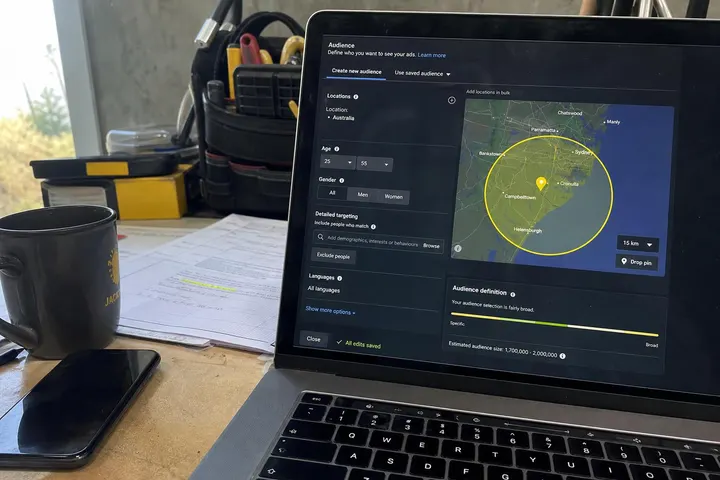
Many tradies find how to target the right audience as a tradie is the first priority, and the lead form vs landing page choice comes second. Get your audience targeting right first, then decide how they enquire.
The Hybrid Approach: Using Both Together
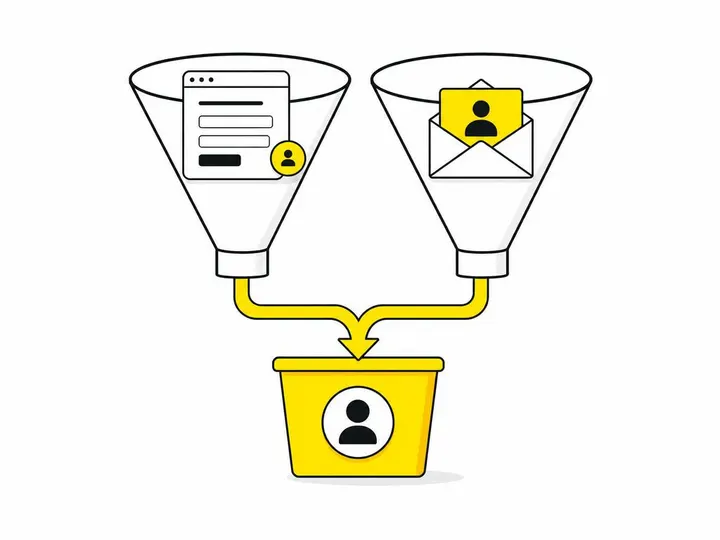
You don't have to pick one. Run lead forms at the top of your funnel for maximum volume. Run landing pages for retargeting warm audiences on Meta who have already visited your website or engaged with your business online. Cold audiences see the lead form and you capture quick enquiries. Warm audiences who've shown real interest see an ad leading to a landing page where you can tell your full story and qualify them better.
This stacking approach lets you use lead forms as a volume play and landing pages as a conversion play. Many Australian agencies recommend this for serious tradie businesses because it balances speed with quality.
How to Test What Works for Your Business
Set up two simple campaigns in Meta Ads Manager. Campaign A: three lead form ads, identical copy and targeting, two-week duration. Campaign B: three landing page ads, same copy and targeting, same duration. Track cost per lead and cost per conversion. Call every enquiry within the timeframe and note whether they convert to a real job. After two weeks, you'll see which approach suits your business, your follow-up capacity, and your sales process.
Most Australian tradies discover that a mix works best: lead forms for high-urgency enquiries, landing pages for considered decisions. Start with whichever your team can execute fastest and most reliably. A slow follow-up on perfect lead form data beats slow follow-up on perfect landing page data. Execution speed beats everything.
Conclusion
Meta lead forms deliver more enquiries faster and cheaper per submission, but landing pages attract higher-intent prospects and give you better tracking data. Neither is universally better. Lead forms suit urgent trades and high-volume strategies. Landing pages suit consultation-based trades and teams focused on lead quality over volume.
The real difference is in your follow-up speed and your ability to track results. If you can't call a lead within 30 minutes, a lead form is wasted money. If you don't set up pixel tracking and UTM parameters for your landing pages, you're flying blind. Choose the option your team can execute reliably, test it for two weeks, and measure cost per customer, not just cost per lead. That's where the truth lives.