Meta Retargeting Ads for Tradies: Costs, Setup & ROI in Australia
Most tradies lose money on website traffic they never follow up with. Fifty-eight percent of people who land on your site leave without booking. Meta retargeting ads bring them back, and they cost a fraction of cold traffic. For Australian tradies running Facebook and Instagram ads, retargeting typically costs $10 to $30 per day and delivers 70 percent higher conversion rates than prospecting new visitors. This guide walks you through setup, budgets, timing, and what actually moves the needle on your bottom line.
Why Retargeting Ads Work for Tradies
The 58% abandonment problem
Your website gets traffic. Most of it goes nowhere. Job seekers land on your services page, look at a few photos, maybe check your reviews, and leave without filling out a form or calling. They weren't ready yet. They had three other tradies to compare. Something distracted them. That's normal, and it's not your fault. But it is your opportunity.
Abandonment rates for trade services sit at 58 percent across Australia, according to industry tracking. That means if 100 people visit your electrician or plumbing website this month, 58 walk away with zero follow-up. Of the remaining 42, maybe half are serious right now. The other 29 are browsing, gathering prices, or comparing you to a mate's recommendation. They need a reminder.
Second-touch economics: why retargeting is cheaper
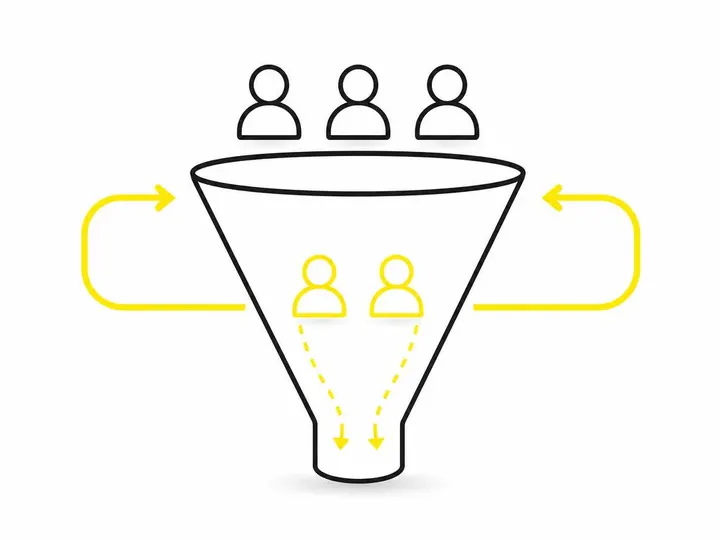
Retargeting is cheaper because these people already know you exist. They've already visited your site. Your Meta Pixel tracked them. When you run retargeting ads on Facebook or Instagram, you're showing ads only to warm traffic—people who have already expressed enough interest to click through. That makes the ad cheaper per person and far more likely to convert.
Compare this to cold prospecting. Typical Meta ad budgets for Australian small businesses running cold campaigns often run $20 to $50 per lead because you're starting from zero trust. Retargeting cuts that cost by 40 to 60 percent because the barrier to action is lower. They already know your name, your prices, and what you do. You're just nudging them back.
Real conversion lift: 70% more likely to book
Data across industry platforms consistently show retargeted users are 70 percent more likely to convert than cold traffic. For tradies, "conversion" means a quote request, phone call, or booking. That lift is real and measurable. Dynamic retargeting ads—which show the exact service they looked at on your site—perform even better, generating 150 percent higher click-through rates than static creative.
What Meta Retargeting Ads Cost in Australia
Typical daily budget: $10 to $30
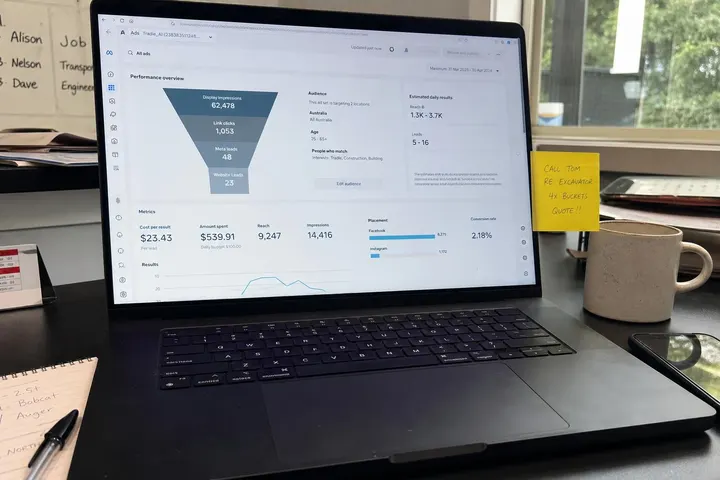
A tradie business running retargeting ads in Australia typically spends $10 to $30 per day and gets between 5 and 15 quote requests per month, depending on website traffic volume and ad quality. That's $300 to $900 per month on retargeting alone.
If you're getting 50 website visits per week, a daily retargeting budget of $15 means you're reaching those 50 visitors multiple times across Facebook and Instagram. Most retargeting campaigns show the same person 3 to 8 impressions over 7 to 14 days. Your Cost Per Lead (the most important metric) will likely sit between $40 and $120 once campaigns mature.
Cost per result vs. cold prospecting
Here's the money calculation. Cold prospecting for a plumber or electrician in a metro area might cost $80 to $150 per lead. Retargeting the same audience cuts that by half because conversion intent is higher. If your average job is worth $2,000 and your close rate is 30 percent, a $60 cost per lead means your customer acquisition cost is $200—a 10x return on ad spend.
GST, billing currency, and account setup
Meta charges in Australian dollars if you set your account to AUD. ATO guidance on claiming GST for business expenses confirms you can claim GST on ad spend if you're registered. Store the Meta Ads Manager invoice as a business expense. There's no GST charged by Meta itself; you'll pay the raw amount in AUD and reclaim GST through your BAS if you're registered.
How to Set Up Retargeting Ads on Meta
Step 1: Install the Meta Pixel on your website
The Meta Pixel is a tracking code that sits on every page of your website. It records when someone visits, which page they land on, whether they fill out a form, and what they click. Without it, you can't retarget anyone. Installation takes 15 minutes. Go to Meta Business Suite, find Pixels, create a new pixel, and copy the code snippet into your website header. Most website builders (Wix, Squarespace, WordPress) have simple one-click Pixel installation. If you built your site in WordPress, use a plugin. Meta's official Pixel installation guide walks through every platform.
Step 2: Create Custom Audiences from your traffic
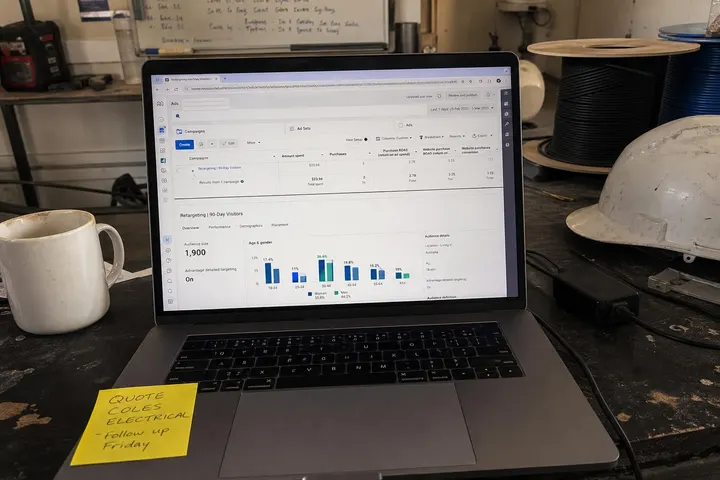
Once the Pixel is live, it starts collecting data. After 7 to 10 days of traffic, you'll have enough people to build a retargeting audience. In Facebook Ads Manager, go to Audiences, select Custom Audience, and choose "Website traffic." How to create Custom Audiences in Meta Ads Manager gives the step-by-step. You can segment by page (people who viewed your services page get different ads than people who viewed testimonials), by time window (visitors in the last 7 days, last 30 days, last 180 days), and by action (people who viewed but didn't inquire).
Step 3: Build your retargeting campaign and ad creative
Create a new campaign in Facebook Ads Manager. Choose Conversion or Lead Generation as your objective. Select your Custom Audience as the target, then build ads showing your best work, testimonials, and a clear call to action: "Get a Free Quote," "Book Online," or "Call Now." Dynamic retargeting ads automatically show the exact service they looked at. For a plumber, if someone viewed your drain cleaning page, they see a drain cleaning ad with before-and-after photos.
Step 4: Set your budget and schedule
Set a daily budget of $15 to $25 to start. Run ads Monday to Friday if your business takes calls during business hours; pause on weekends if you don't operate then. Set a frequency cap of 3 to 5 impressions per person per day. This stops your name from becoming annoying. Most retargeting campaigns run for 7 to 14 days per audience segment.
Best Retargeting Sequences for Tradie Businesses
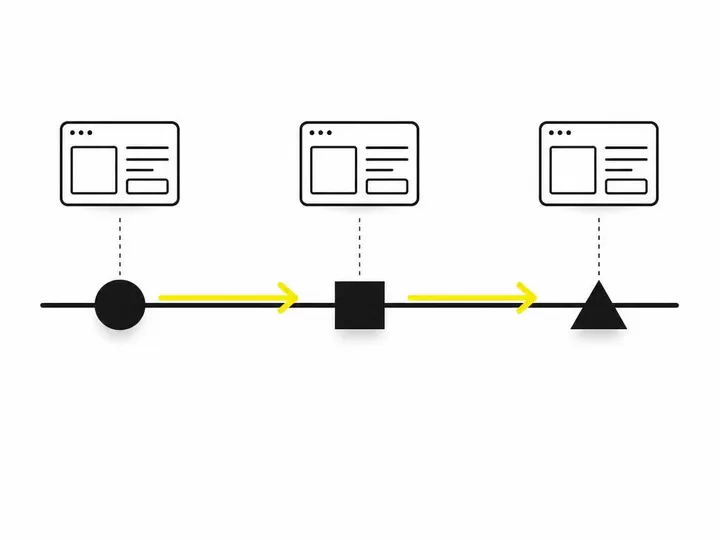
Hour 1 to 6: reminder ads (broad, brand recognition)
The moment someone leaves your site, they've half-forgotten you. In the first 6 hours, show reminder ads. These are broad, brand-focused creative: your logo, your best testimonial, your phone number. The goal isn't to convert yet; it's to stay top-of-mind. A plumber might show: "Still looking for a local plumber? We're on standby." Keep them simple. These ads often have low click-through rates, which is fine. You're building recall.
Day 1 to 3: dynamic product ads (show the service they viewed)
Once they've had a reminder, switch to specificity. Show the exact service they looked at. Dynamic retargeting pulls this automatically from your website. If a visitor browsed your "bathroom renovations" page, they see bathroom reno ads with floor plans, finishes, and customer reviews. This is where intent rises. Click-through rates jump 40 to 60 percent compared to reminder ads. Cost per click drops because relevance is high.
Day 7 to 14: urgency and social proof (testimonials, limited slots)
By day 7, the visitor is either gone or seriously considering you. Shift to urgency and proof. Show 5-star reviews, before-and-after photos, and messaging like "Book Now for July Slots" or "Limited Availability This Month." Video testimonials perform best here. A 30-second video of a satisfied customer saying "Best plumber in Parramatta" beats static copy. This is your last push. If they don't convert by day 14, pause and let them rest for 30 days.
Common Mistakes (and How to Avoid Them)
Retargeting visitors who already booked
Nothing annoys a customer more than seeing ads for your service after they've already hired you and paid. Set up a Custom Audience of website visitors who filled out your inquiry form and removed them from retargeting. In Facebook Ads Manager, exclude people who hit your "thank you" or confirmation page. If you take bookings through your website, sync your bookings list to Meta as an exclusion audience. A five-minute setup saves reputation damage.
Running the same ad creative for 14 days straight
Ad fatigue kills retargeting. If your audience sees the same three images or video for two weeks, click-through rates tank by day 10. Test at least two versions of each ad, swap creative every 3 to 5 days, and rotate in new testimonials or photos. For how Meta ads work for tradies, you need variety. Create 6 to 10 pieces of creative and cycle through them.
Setting your frequency cap too high
A frequency cap limits how many times one person sees your ad. Set it too high (10+ impressions per week) and people get annoyed and hide your ads. Set it too low (1 per week) and you don't build enough recall. Sweet spot for tradie retargeting is 3 to 5 impressions per person per week. Use Facebook Ads Manager to enforce this. It's a single dropdown.
Measuring ROI: What to Track
Key metrics: cost per lead, conversion rate, return on ad spend
Track three numbers:
Cost Per Lead: Total ad spend divided by quote requests or form submissions. If you spent $300 and got 5 leads, your cost per lead is $60.
Conversion Rate: Percentage of retargeted visitors who take action. If 100 retargeted people see your ads and 3 book, your conversion rate is 3 percent. This is good for retargeting.
Return on Ad Spend (ROAS): Revenue from retargeting divided by ad spend. If you spent $500 on retargeting and booked jobs worth $3,000, your ROAS is 6x. Anything above 2x to 3x is profitable for most trades.
Attribution windows and multi-touch credit
An attribution window is how long Meta counts a conversion after someone sees an ad. The default is 28 days. This means if someone sees your retargeting ad on day 1 and books on day 20, Meta credits the retargeting campaign. Change your attribution window in Ads Manager to match your sales cycle. For trades, 14 to 28 days is standard. Don't assume retargeting alone closes jobs; most bookings involve multiple touchpoints (cold ad, website visit, retargeting ad, phone call, follow-up email). But retargeting's role is outsized because the visitor was already warm.
How long to run a test before deciding
Don't judge a retargeting campaign until it's gathered 50 to 100 conversions (quote requests or bookings). That usually takes 2 to 4 weeks. Anything less and variance is too high. You might luck into 5 bookings in week one and zero in week two. Run full weeks, not days. Turn off or optimise underperforming audiences only after 14 days of data. How to get more quote requests from your website covers this in depth, but the rule is simple: give your ads time.
Conclusion
Meta retargeting ads recover the 58 percent of your website traffic that walks away without booking. They cost half what cold prospecting does because you're targeting warm, familiar visitors. A typical Australian tradie spends $15 to $25 per day and generates 5 to 15 quote requests monthly, often at a cost per lead of $40 to $120. Setup takes a few hours: install the Meta Pixel, build Custom Audiences from your traffic, and craft a sequence that reminds, shows specifics, then applies pressure over 14 days.
The most common mistake is running the same ad for too long or retargeting people who already booked. Avoid those, exclude previous customers, rotate creative every few days, and measure cost per lead and ROAS. Don't expect overnight results; run campaigns for at least two to four weeks before deciding whether to scale or pause. Done right, retargeting pays for itself several times over and turns your abandoned website traffic into booked jobs.