Marketing Budget for Australian Tradies: How to Split It Between Ads, SEO and Content in 2026
Key takeaways
- Paid ads deliver fast leads but stop when your budget stops
- SEO builds compounding visibility over 6-12 months
- Content supports both SEO and paid channels at low extra cost
- Start ads-heavy, then shift spend toward SEO as cash flow grows
- Track where every lead comes from before scaling any channel
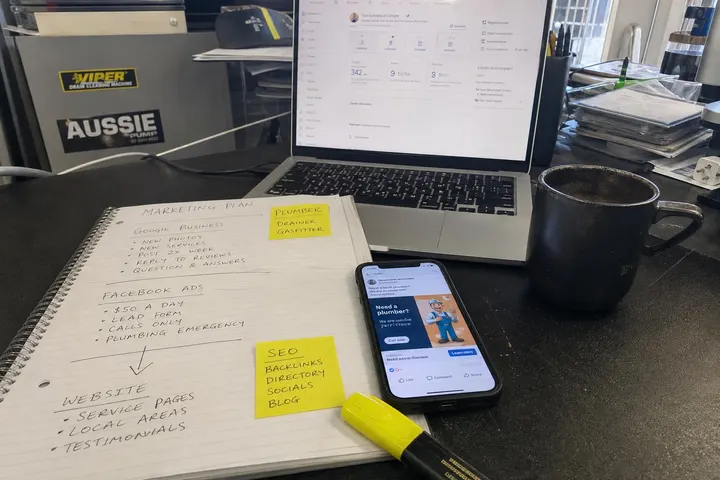
Most tradies spend their marketing budget like they're throwing darts in the dark: a bit on Google Ads here, some Facebook ads there, maybe a website that nobody maintains. Within months the money's gone, leads have dried up, and they're back to word-of-mouth hoping for the best. A realistic marketing budget and a clear plan for splitting it between paid ads, SEO and content transforms that waste into actual work. This guide shows you how to allocate your pounds (and sense) across the channels that actually work for trades businesses in Australia in 2026.
Why Tradies Need a Budget Plan Before Spending a Dollar
The most common mistake: spraying money across too many channels
The tradie who runs ads on Google, Facebook, Instagram and TikTok simultaneously while trying to rank organically and update their website weekly is the tradie who burns through $5,000 and gets nowhere. Budget without focus is just expensive noise. You need to know upfront which channels suit your trade, your location, your ideal customer and your cash flow.
A plumber in Sydney has completely different marketing priorities from an electrician in Canberra or a landscape designer in regional Victoria. A kitchen renovator might crush it on before-and-after content, while a residential painter needs reliable, repeatable leads month after month. Local lead generation for tradies in Australia works best when you're deliberate about where you spend, not scattered across every platform hoping something sticks.
How much should a tradie actually spend on marketing?
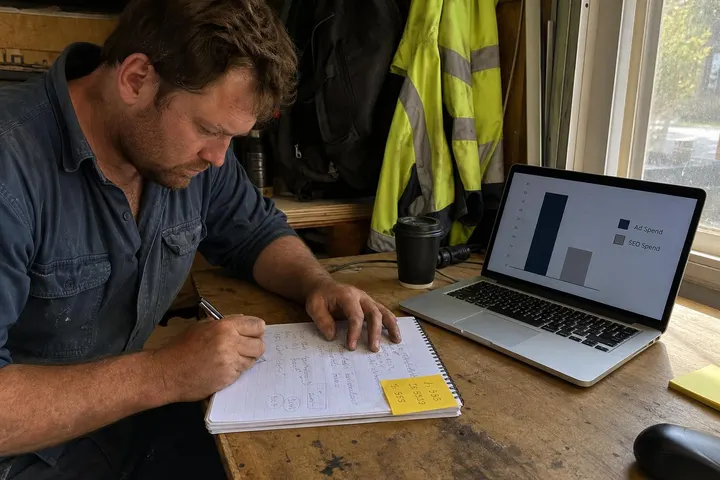
A common rule of thumb is that small service businesses should spend 5 to 10 percent of revenue on marketing. For a tradie turning over $200,000 annually, that's $10,000 to $20,000 per year, or roughly $800 to $1,700 per month. If you're just starting out or operating lean, 2 to 3 percent is more realistic. Established trades businesses scaling up often spend 8 to 10 percent because their systems are tighter and the return is measurable.
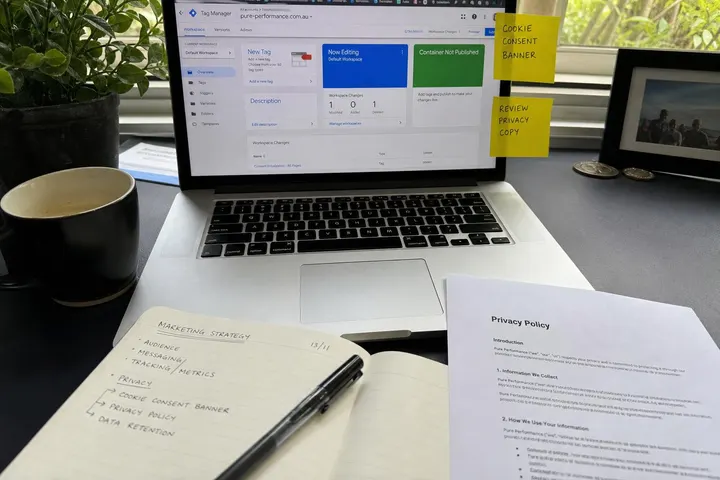
The ATO allows you to claim marketing expenses as a business deduction, which softens the sting. Start with what you can afford to lose, track every dollar and stop spending on any channel that isn't producing leads within the first 60 days.
What the 60/40, 70/30 and Other Marketing Budget Rules Actually Mean for Tradies
The 60/40 rule explained in plain English
The 60/40 rule says you should spend 60 percent of your budget on tried-and-tested channels (proven to work in your industry) and 40 percent on experimentation or emerging platforms. For tradies, that often means 60 percent on Google Ads and local SEO (the channels that consistently produce job leads) and 40 percent on content, social media testing or new platforms you want to explore. It works as a safety net: most of your money is working, but you're still learning what else might work.
The 70/30 rule: performance vs brand
The 70/30 split suggests 70 percent of budget on performance marketing (ads and channels where you pay per result) and 30 percent on brand building (content, reputation, long-term visibility). For tradies, this translates roughly to 70 percent on Google Ads and paid social to fill your job pipeline right now, and 30 percent on SEO, content and Google Business Profile upkeep to own your local market over time. Most tradies lean too hard into the 100/0 version (all paid, no organic), then panic when one ad platform changes its algorithm or your costs spike.
The 3-3-3 rule and the 1% rule — are they useful for small trades businesses?
The 3-3-3 rule divides budget equally into owned media (your website, email list, Google Business Profile), earned media (word-of-mouth, reviews, free press) and paid media (ads). For tradies, this is useful but not rigid: you might do 25 percent paid ads, 40 percent SEO and organic, and 35 percent content and profile management, depending on your stage.
The 1% rule says spend 1 percent of revenue on marketing. That's $2,000 per year for a $200,000 business, or $167 per month. It's realistic for trades businesses in survival mode, but it's also barely enough to move the needle. Use the 1% as a floor, not a ceiling. Once you prove which channels work, you can justify scaling up.

Paid Ads for Tradies: Fast Leads but Ongoing Cost
Google Ads vs Meta Ads — which one fits your trade?
Google Ads puts your business in front of people actively searching for your service right now. Someone types "emergency plumber near me" at 11 pm and your ad appears. Meta Ads (Facebook and Instagram) reaches people who aren't necessarily searching yet but fit your customer profile and might need your services soon. Google Ads vs Meta Ads for Australian small businesses breaks down the differences in detail, but the short version is this: Google is faster and more reliable for tradies; Meta is cheaper and better for brand awareness if you can tell a visual story.
How much to budget for paid ads as a tradie in Australia
Google Ads in the trades typically costs $15 to $50 per click depending on your trade, location and competition. If your average job value is $3,000 and you close 1 in 5 leads, you need to spend $5,000 to $15,000 in ads to land one job. Meta Ads cost $1 to $5 per click and are cheaper, but conversion rates are lower because intent is softer. Budget $500 to $2,000 per month to test Google Ads in a single location and see if it works. What to budget for Meta Ads in Australia depends on your audience size and campaign goal, but most tradies start with $300 to $1,000 per month.
When paid ads make sense as your primary channel
Paid ads are your lifeline if you need leads immediately, you have seasonal work, you're new to an area or your market is highly competitive. If you're a tradie who depends on steady cash flow and can't wait 6 to 12 months for SEO to build, paid ads work. The cost per lead is known and predictable (unlike organic search). The downside is you're renting attention: stop paying and the leads stop coming.
SEO for Tradies: Slower Build, Lower Long-Term Cost Per Lead
What SEO actually involves for a trades business
SEO is getting your website and Google Business Profile to rank at the top of search results for local keywords people actually use. For a tradie, that means ranking for "plumber in Parramatta," "kitchen renovation Sydney" or "roof repairs Newcastle." It involves building SEO service area pages for trades websites that target specific suburbs, earning backlinks from local directories, collecting customer reviews, and regularly updating your Google Business Profile with posts and photos. It's not complicated, but it takes time and discipline.
How much to budget for tradie SEO in Australia
A tradie can DIY basic SEO for under $50 per month (hosting, domain, tools). If you hire an agency, expect $400 to $1,500 per month in Australia, depending on the agency's experience and your location. The cost per lead drops over time: month one might be $200 per lead, but month 12 might be $20 per lead because your site is ranking and traffic is organic. SEO makes most sense if you can commit 6 to 12 months and your local market isn't explosively competitive.
When to prioritise SEO over paid ads
Prioritise SEO if you're in a stable market where you've been for years, you're not desperate for leads next week, or you want to reduce ad dependency over time. Landscape designers, structural engineers and building inspectors in established areas often see huge ROI from SEO because the search volume is steady and customer intent is clear. You also have time to invest in good content and local backlinks.

Content Marketing for Tradies: The Low-Cost Multiplier
What counts as content for a tradie business
Before and after posts for tradies on social media are content. Google Business Profile post ideas for Australian businesses are content. A how-to video on your website, a blog post answering a customer question, a photo carousel of a deck build on Instagram, a review testimonial you share on Facebook. Any piece of information, image or story that shows your work and helps someone decide to hire you counts.
Before-and-after posts, Google Business Profile updates and service area pages
Before-and-after photos are content gold for tradies. They take 5 minutes to shoot and post, they rank in Google Images, they prove your work quality and they convert like mad. Google Business Profile updates quick posts about current jobs, new services or local news—keep your listing active and fresh, which signals to Google that you're a real, operating business. Service area pages targeting specific suburbs add SEO strength and help local customers find you.
How much to budget for content
DIY content costs you time. If you're posting before-and-after photos weekly and refreshing your Google Business Profile, you're investing maybe 2 to 3 hours per week, which you can probably find by cutting admin elsewhere. Professional content writing for tradie websites costs $100 to $300 per article or $300 to $800 per month if you use a copywriter regularly. Budget $200 to $500 per month if you want consistent, good quality content without doing it yourself.
A Practical Budget Split for Different Stages of a Tradie Business
Just starting out: survival mode budget
You've got $500 per month. Spend $300 on Google Ads (testing one high-intent keyword in your area) and $200 on DIY: regular before-and-after posts, Google Business Profile updates, and basic website maintenance. Track every lead obsessively. Don't hire an agency yet; you need proof that marketing works for your trade first.
Established but wanting to grow: balanced split
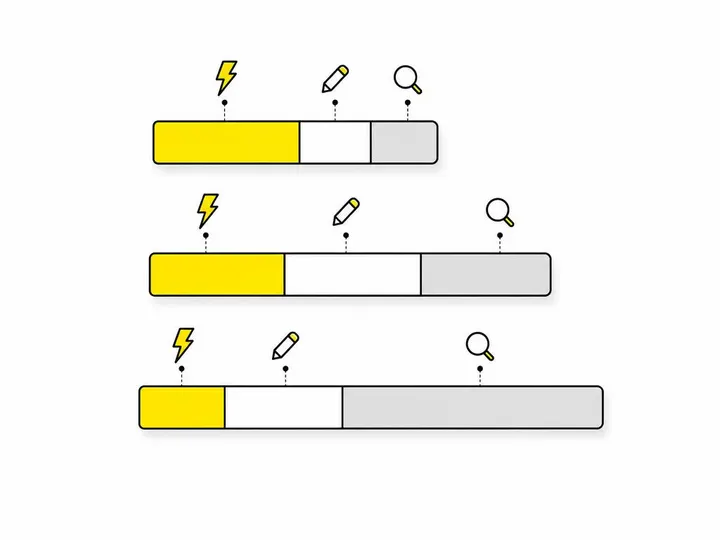
You've got $1,500 per month. Split it: $600 on Google Ads (multiple keywords, refined targeting), $400 on SEO or done-for-you SEO content, and $500 on content creation (photos, video, social posts, Google Business Profile). You're diversified, lowering risk and building long-term assets while still getting leads from ads.
Scaling up: investing in organic for the long game
You've got $3,000 per month. Spend $1,000 on Google Ads to maintain current lead flow, $1,200 on SEO or content to build ranking assets, and $800 on professional content and social management. You're de-risking by building organic traffic so you're not wholly dependent on paid ads. By month 12, your SEO and content should be producing leads at low cost, letting you cut ad spend if you want to.
How Australian Marketing Agency Fees Affect Your Budget
What agencies typically charge in Australia
Most Australian digital marketing agencies charge $500 to $3,000 per month for small business packages. That usually covers strategy, ad management, basic reporting and one channel (Google Ads or Meta Ads). Full-service, paid ads, SEO, content and social media runs $2,000 to $8,000 per month. Some agencies charge a percentage of ad spend (often 15 to 25 percent), so if you're spending $1,000 per month on ads, you're also paying $150 to $250 in management fees.
DIY vs hiring help — where it makes sense to outsource
DIY makes sense for before-and-after content, Google Business Profile updates and customer follow-up. Outsource paid ad management if you're spending more than $500 per month on Google Ads; a poor campaign setup wastes money fast. Outsource SEO if you don't have time or skills; it's technical and requires consistency. You don't need an agency to start; you need one when you're big enough that your time is more valuable than $500 to $1,000 per month in agency fees.
Track Where Your Leads Come From Before You Scale Anything
Simple tracking methods every tradie can set up
Set up tracking lead sources for trades businesses so you know which channel actually brought you work. Use a separate phone number or unique discount code for each ad platform (e.g., "Mention code GOOGLE10 for 10 percent off" or use a dedicated mobile number for Google Ads). Add a simple question to your enquiry form: "How did you hear about us?" Create a spreadsheet with date, lead source, customer name, job value and whether you won the work. Within 30 days you'll see patterns: maybe Google Ads is bringing tire-kickers while Google Business Profile is bringing serious leads. That data is worth gold.
The one question to ask every new enquiry
Before you quote, ask: "How did you find us?" Listen to the answer and note it down. After 60 days of tracking, you'll know which marketing channels produce the best quality leads, not just the cheapest. That's when you can confidently scale what works and cut what doesn't. A lead that wastes your time is not a lead; qualifying tradie leads before quoting saves you hours and keeps your focus on work worth doing.
Conclusion
There's no universal formula for marketing budget splits across all tradies in Australia. A plumber in a dense suburb needs different channels than a pool builder in regional NSW. But the principles stay the same: start small, pick one or two channels, track results obsessively, and scale only what works. Most tradies benefit from a mix of paid ads (fast, predictable leads now) and organic (SEO and content for long-term, low-cost leads), split roughly 60/40 or 70/30 depending on cash flow and patience.
Begin with what you can afford $500 to $1,500 per month is realistic for a growing trades business and commit to tracking where leads come from before you add more channels or hire an agency. You'll waste less money, know which channel deserves your next dollar, and build a marketing system that actually runs on its own over time instead of burning cash every month.