Before-and-After Social Media Posts for Tradies: How to Turn Jobs into Enquiries
Key takeaways
- Shoot every finished job from the same angle as the before shot
- Name the suburb and the specific problem in every caption
- Carousel posts on Instagram outperform single images for before-and-after content
- A consistent posting rhythm matters more than posting perfection
- Add a clear call to action at the end of every caption
Before-and-after photos are the most powerful social media tool tradies have. They turn a completed job into visual proof that stops the scroll, builds trust, and generates qualified enquiries. Unlike testimonials or generic posts, a good before-and-after shows exactly what you can do, and that's what makes people pick up the phone.
Why Before-and-After Posts Work So Well for Tradies
Before-and-after posts outperform almost every other content type on social media because they deliver one thing potential customers desperately want: proof that you can do the job they're asking about. When someone is considering hiring a plumber, painter, builder, or electrician, they don't want to hear about your experience or your credentials. They want to see the actual work.
Visual proof beats written testimonials every time
A customer testimonial says "They did a great job." A before-and-after photo proves it. The human brain processes images 60,000 times faster than text, and transformation imagery triggers an emotional response that plain words never can. When a homeowner sees a kitchen renovation from gutted space to finished product, or a bathroom from dated tiles to modern tile work, something clicks. That could be their space. That's the power of social proof in its most visceral form.
The psychology behind transformation content
Transformation content taps into what researchers call "progress bias." People are drawn to images that show change, improvement, and completion. Before-and-afters also reduce purchase anxiety because they show the end result in crystal clarity. There's no guessing what the finished product looks like. This is especially critical for trades where clients can't visualise the outcome without seeing actual examples.
Which trades benefit most from this format
Any tradie with visible work benefits enormously. Painters, plasterers, kitchen and bathroom renovators, and social media for painters see immediate returns because the visual transformation is dramatic and instant. Plumbers and electricians also win because before-and-afters show messy or broken systems versus functioning installations. Plumbers using social media can showcase burst pipes, leaking taps, or corroded systems fixed to perfect working order. Australian builders build entire reputations on before-and-after content because the scale of transformation is stunning.
How to Shoot a Before-and-After on Your Phone
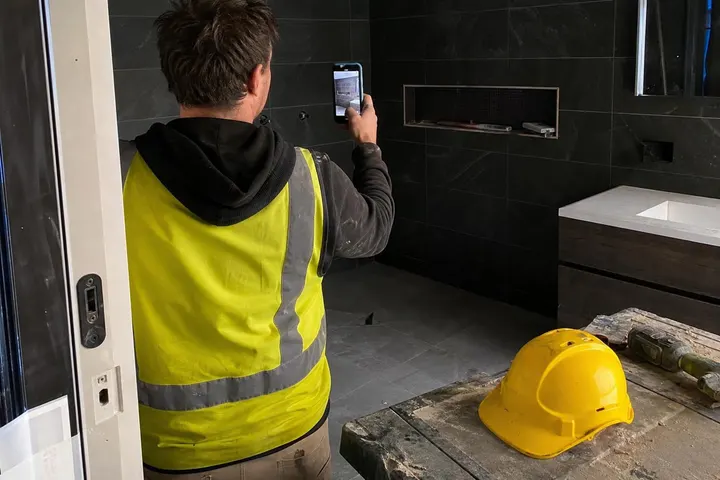
You don't need professional camera gear to capture a usable before-and-after. Your phone camera is good enough if you follow one critical rule and a few practical tips that take 30 seconds to apply.
The one rule that makes or breaks the shot: consistent framing
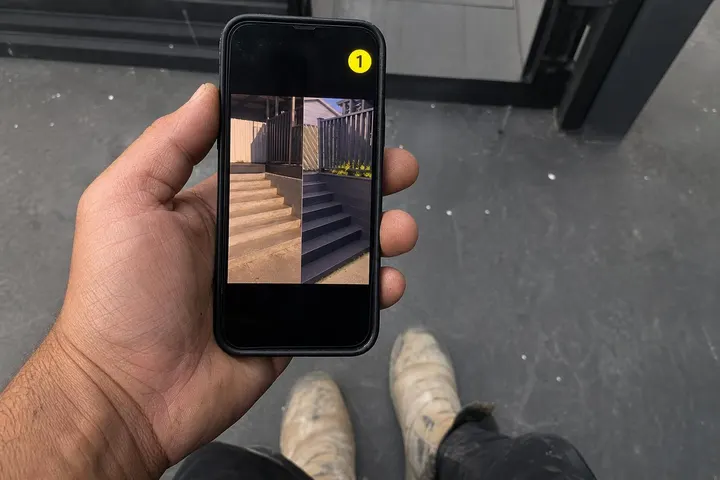
Shoot the before photo from the exact same angle and distance as the after photo. Stand in the same spot, use the same zoom, shoot at roughly the same time of day if possible. If the before shows the full space from one corner, the after must show the full space from that same corner. This consistency is what makes the transformation pop. Mismatched angles confuse the eye and weaken the impact.
Lighting tips for on-site photography
Natural light is your friend. Shoot during daytime with natural light from windows or open doors whenever possible. If you're shooting indoors, turn on all the lights before the after photo. Avoid harsh shadows across the work. If you're shooting in bright sunlight, position yourself so the sun lights the work without creating glare on your phone screen. Most phones struggle in very bright outdoor conditions, so step slightly to the side or shield the screen with your body if needed.
Quick editing apps to make your photos pop
Lightroom Mobile and Snapseed are free or cheap and take 60 seconds to use. Increase the contrast slightly, brighten the shadows, and warm up the colour temperature a touch. Don't over-edit. The goal is to make the photo look like real work under good conditions, not a glossy magazine spread. A simple crop to remove clutter, a brightness boost, and maybe a touch of colour saturation is all you need. If you're unsure, leave it alone. A clear, honest photo beats an over-processed one.

Choosing the Right Format: Carousel, Reel, or Single Image
Different formats work for different jobs and different platforms. Understanding which to use maximises your chances of getting eyes on your work and enquiries in your inbox.
Carousels on Instagram and Facebook
Instagram Carousels and Facebook carousels let you show 3 to 10 images in sequence, and the algorithm favours them because users tend to swipe through and spend more time engaging. Slide 1 is the before. Slide 2 is the after. Slides 3 onwards can show detail shots, mid-process photos, or close-ups of finishing work. Carousels work brilliantly for renovations because they tell a story. Getting started with Instagram as a tradie means understanding that carousels have higher reach than single images. Instagram content ideas for tradies should include at least one carousel per week if you're doing substantial work.
Short Reels showing the transformation in progress
Facebook Reels (video) are exploding in reach right now. A 15 to 30 second reel showing the job progressing from before to after, sped up with music, performs incredibly well. Reels get prioritised in the algorithm over static images. If you have progress photos or can shoot a quick video of work being done, compile it into a reel. The human brain loves watching transformation happen in real time.
When a single image is enough
If the job is small and the transformation is obvious in one split-frame image, go with a single before-and-after. Small plumbing fixes, drywall patches, or minor painting jobs don't need a carousel. A single image is faster to create, easier to repurpose, and cleaner to look at.
Writing Captions That Actually Generate Enquiries
The photo stops the scroll. The caption generates the enquiry. A great caption does three things: it speaks to the problem the customer had, it tells a mini-story about the solution, and it makes it easy for someone interested to get in touch.
Lead with the problem, not your business name
Don't start with "We just completed another stunning project." Start with "Client called us in Friday with water pouring through their ceiling." People scroll past business name drops. They stop for relatable problems. Writing social media hooks that stop the scroll means leading with the customer's pain point, not your credentials.
Name your suburb to attract local search
Include the suburb or area where you worked. "Blocked drain in Parramatta," "Kitchen reno in Manly," or "Bathroom tiles in Penrith." People searching on Instagram or Facebook often look by location. Naming your suburb also helps with Google Business Profile visibility and local SEO. Every post is an opportunity to reinforce that you serve that area.
The caption structure that works: hook, story, CTA
Open with the problem (hook). Explain what you did and why (story). Close with a clear call to action. That's it. Keep it to 3 to 5 sentences. "Blocked drain in Parramatta that hadn't drained in two days. Roots had grown through the line. We cleared it, flushed the system, and showed the homeowner how to prevent it next time. If your drains are slow or blocked, message us for a free quote." That's a complete caption that will generate enquiries.
Caption examples for common trades
Painters: "Exterior house paint in Cronulla. Two coats of premium exterior paint over three days. Client asked for something fresh but timeless. Now they've got it. Thinking about refreshing your exterior? Send us a message." Plumbers: "Emergency call-out in Strathfield. Burst water pipe under the house. We found it, dug it up, replaced the section, and tested the whole line. No more leaks. Burst pipe? Call us first, don't panic." Builders: "Kitchen renovation in Wooloomooloo. Gutted to finished in eight weeks. New joinery, appliances, tiling, and waterproofing. Kitchen ready to use day one. Planning a reno? Let's talk."

Building a Consistent Posting Habit Without Burning Out
The biggest reason tradies stop posting is inconsistency. They post once, then life gets busy, and they disappear for three months. Consistency beats perfection every time on social media.
How often should tradies post before-and-afters?
Aim for one substantive before-and-after post per week minimum. If you're completing multiple jobs weekly, two posts is better. If you're doing smaller jobs, one solid post per week builds momentum without burning you out. The 5-3-1 posting rule works: aim for 5 posts per week if possible, minimum 3, and never drop below 1.
Batching your content at the end of each job
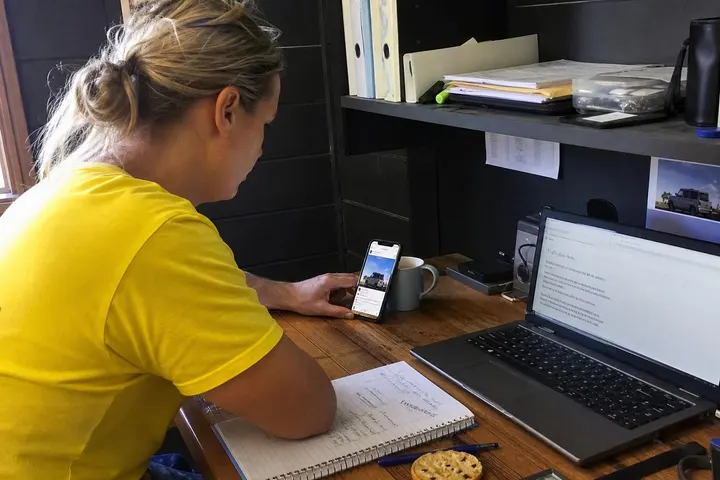
Don't wait until you feel like posting. At the end of every job, spend two minutes taking the before photo and the after photo from the same angle. Don't edit them yet. Dump them into a folder on your phone or computer labelled "social posts." At the end of each week, spend 15 minutes editing 2 to 3 of those photos and writing captions. Done. You've created a week's worth of content in one sitting.
Using scheduling tools to stay consistent
Social media scheduling tools for small business let you write and schedule posts days or weeks in advance. Meta's own scheduler (built into Facebook and Instagram business accounts) is free. You upload your photo, write your caption, pick the day and time, and it posts automatically. No more scrambling to post at random times. You control when content goes live, and you stay consistent even when work is frantic.
What the 70:20:10 rule means for your tradie content mix
Don't post only before-and-afters. The 70:20:10 rule says: 70% of your content should be value-driven (before-and-afters, tips, education). 20% should be community-focused (shout-outs, local business mentions, responding to comments). 10% can be sales or promotion. This mix keeps your feed from feeling like constant advertising. People follow you for proof you can do the work, and for tips that help them maintain their home. Mix in genuine community engagement and you'll hold followers longer.
Turning Engagement into Real Enquiries
Likes and comments mean nothing if they don't turn into enquiries. The goal is to move interested people from your social post into your quote process.
Responding to comments and DMs fast
If someone comments asking a question or expressing interest, reply within one hour if you can. Even just acknowledging them matters. Someone who sends a DM asking for a quote should get a response within 24 hours maximum. This isn't just manners. It's conversion. People who take the step to message you are warm leads. Slow responses lose them to competitors.
Linking your posts to a quote request page or booking form
Your caption CTA can say "message us for a quote," but make it easier by linking directly to a quote request form or booking page in your bio or post link. Qualifying leads as a tradie starts with making it frictionless to enquire. A form captures their suburb, phone number, and job type. You can filter enquiries instantly and respond to local work first.
Boosting your best-performing posts with Meta Ads
Once you've posted a before-and-after that gets good organic engagement, boosting posts with Meta Ads for tradies amplifies the reach. You don't need a huge budget. Even $10 to $30 per day targeting people in your service area can turn a good organic post into a lead generator. Meta's guide to boosting posts on Facebook and Instagram walks you through the process. Target by suburb, age range, and interests (home renovation, home maintenance, etc.). Local lead generation for Australian tradies means using paid social to dominate your service area.

Common Mistakes Tradies Make with Before-and-After Posts
These three habits kill before-and-after campaigns before they start.
Forgetting to shoot the before
The before photo is the hook. Without it, you just have an after shot that could be anyone's work. Even if a job looks small or routine to you, shoot the before. A clear before-and-after always outperforms an after-only image.
Captions with no location or call to action
A caption that says "Loved working on this job" generates zero enquiries. A caption without a suburb misses local search entirely. Every caption needs a location and a clear CTA. "If you're in [suburb] and need [service], message us for a quote." Period.
Posting inconsistently and then going silent
Posting once then disappearing for months tells the algorithm your account isn't active. It also tells potential customers you're not organised. Consistency is more important than volume. One post per week forever beats ten posts one week then nothing for two months.
Conclusion
Before-and-after posts are the most direct line between your completed work and qualified enquiries. They work because they show exactly what you do without any fluff. The formula is simple: consistent framing, honest editing, clear captions with location and CTA, and regular posting. You don't need fancy equipment or design skills. A phone camera, two minutes to take the photos, and 15 minutes per week to batch edit and caption is enough to build a steady stream of local enquiries.
The trade service business is built on reputation and proof. Before-and-afters are that proof, visible to thousands of people in your area, whenever they're searching. Start with one post this week. Shoot the before and after from the same angle. Write a caption that names your suburb and includes a clear CTA. Post it. Then do it again next week. In three months, you'll have a portfolio online that generates enquiries while you're working. That's the compounding power of consistent before-and-after content.