Small Business Marketing Checklist Australia: Where to Start in 2027

On this page 9 sections
Key takeaways
- Build free foundations before spending on paid advertising
- A complete Google Business Profile is your most urgent local visibility task
- Only 45.8% of ANZ small businesses use unpaid social media consistently
- Record and follow up every lead, not just new enquiries
- Review six key metrics monthly, not daily rankings or follower counts
If you run a small business in Australia and haven't sat down with a clear marketing plan, you're competing with both hands tied behind your back. Most owners either do too much of the wrong thing or nothing at all. This checklist cuts through the noise and tells you exactly what to set up first, in the order that matters, before you spend a dollar on advertising.
Why Australian small businesses need a marketing checklist
Australia had 2,814,778 actively trading businesses at 30 June 2026, with 97 per cent employing fewer than 20 people. That means you're likely running your business without a dedicated marketing person. A structured checklist removes the guesswork and lets you focus your limited time on what actually drives enquiries and sales, not on vanity metrics like follower counts.
The businesses that win aren't the loudest; they're the ones customers can find easily, trust quickly and contact without friction. That requires a foundation in place before any paid advertising makes sense.
The scale of the market
The sheer number of small businesses in Australia means your customer is searching for you right now. According to ABS Counts of Australian Businesses, including Entries and Exits (released August 2026), the market is fragmented and competitive. Whether you're a plumber, accountant, trainer or consultant, visibility on Google search and Google Business Profile is non-negotiable. Google's search landscape has also shifted: AI Mode launched in Australia in October 2025, and Ask Maps began rolling out in Australia in August 2026, making accurate, complete business information more important than ever.
Why sequence matters more than volume
A lot of small business owners feel pressure to "do social media" or "run Facebook ads" before they have a proper home base. That's backwards. Your website, Google Business Profile and lead follow-up system should be working before you add paid channels. This checklist walks you through the sequence that converts enquiries to customers, not the sequence that looks busiest.
Step 1: Define your customer and your offer before anything else
You cannot write a headline, design a website or choose an advertising platform until you know who you're talking to and why they should pick you over someone else. This step takes a few hours, not weeks, but it shapes everything that follows.
Who is your best customer?
Not everyone is a good fit for your business. Identify the customer who pays on time, refers others, doesn't haggle endlessly and genuinely needs what you offer. Write down their industry, business size, location, age, budget range and biggest pain point. This person becomes your north star for every piece of marketing you create.
What problem do you solve and why choose you?
Write one sentence that explains what you do and one sentence that explains why someone should hire you instead of your competitor. What's your edge? Speed, cost, expertise, warranty, flexibility, local knowledge? Be specific. "We're reliable" isn't an edge; "We respond to emergency calls within 90 minutes in greater Sydney" is.
Step 2: Set up a mobile-friendly website with clear calls to action
Your website is your owned asset: you don't rent it from Meta or Google. It converts browsers into leads and demonstrates credibility. Making your website mobile-friendly is not optional; most of your visitors will be on phones.
Domain, hosting and platform choices
Buy your own domain (yourname.com.au or yourbusiness.com.au, ideally). Hosting costs are cheap: $50 to $150 per year. Platform choices range from WordPress to Shopify to Wix, depending on whether you're selling products or services. How much a small business website costs in Australia varies from $1,000 to $5,000 for a basic build if you hire a web designer, or $200 to $500 if you use a template-based platform yourself.
What your homepage must do
Your homepage should answer three questions in the first 10 seconds: who you are, what you do and what the visitor should do next (call, book, email, contact). Include a clear phone number or contact form above the fold. What your small business website homepage needs includes a headline, a short explanation of your offer, customer testimonials, a clear photo or video of you or your work, and at least one obvious call to action.
Install analytics and conversion tracking from day one
Set up Google Analytics 4 and Google Search Console when you publish the website. These tools are free and show you how many people visit, where they come from, which pages work and where they drop off. You can't improve what you don't measure.
Step 3: Claim and complete your Google Business Profile
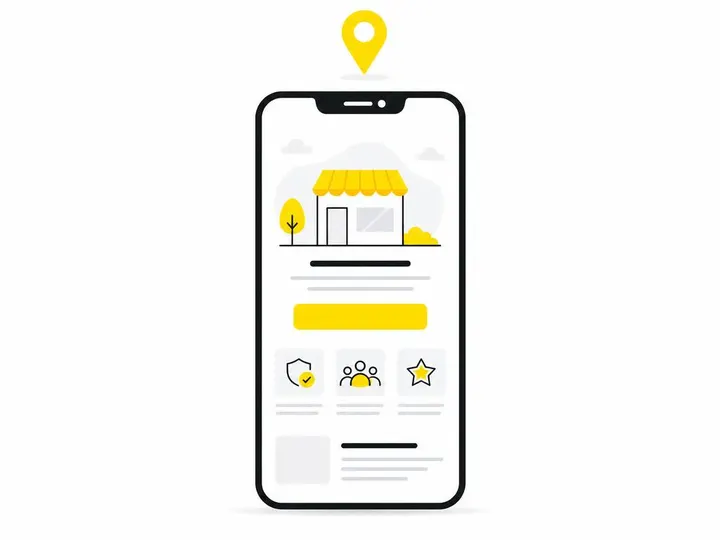
Google Business Profile is the most important free tool for local visibility in Australia. It's where customers find your hours, phone number, reviews, photos and website link when they search for your business by name or category.
What to fill in and why it matters in 2026
Claim your profile if you haven't already by searching your business name on Google Maps or Google Search. Then complete every field: business name (consistent with your legal registration), address, phone, website, hours, category (choose the most specific one available), service areas if you operate across multiple suburbs, and a business description. Because Google's AI Mode and Ask Maps now use this data to answer customer questions, accuracy and completeness are more important than ever. A vague profile may not appear in AI-powered results.
Service-area businesses: how to list without creating duplicate pages
If you're a plumber, electrician, accountant or any service provider operating across multiple areas, list your main office address and then specify your service areas using Google's service-area feature. Don't create separate profiles for each suburb; Google will delete duplicates and may penalise you. List one address and tell Google which suburbs, postcodes or regions you cover.
Start collecting reviews immediately
Customer reviews are trust signals. They influence whether someone calls you, and Google's algorithm considers them. How to ask customers for Google reviews is simpler than many owners think: send a text or email with a direct link to your profile and ask satisfied customers to leave a quick review. Aim for one or two reviews per week to start building momentum.
Step 4: Choose one or two social media channels and show up consistently
Social media is not where most Australians discover your business. Search, Google Business Profile and referrals drive the majority of leads. But social media builds trust, showcases your work and gives potential customers a way to stay in touch.
How to pick the right platform for your business
Australia recorded 21.0 million social media user identities in October 2025, with Facebook at 17.7 million and Instagram at 15.2 million users. If you're a service business (cleaner, accountant, builder), Facebook or LinkedIn makes more sense than TikTok. If you're visual (hairdresser, designer, trainer, decorator), Instagram or Facebook work well. Pick one platform, not five. Post consistently on one channel beats sporadic posts across many.
What to post when you have no time
You don't need to post daily. Twice a week is enough. Share customer testimonials, before-and-after photos of your work, answers to common questions, a behind-the-scenes look at your process or an invite to book an appointment. Building a social media content calendar takes two hours per month and removes the "what do I post today?" question. Write the captions in advance and schedule them using Buffer or Meta's native scheduler.
Step 5: Build a simple lead follow-up system
Most small businesses lose money by not following up leads properly. A customer calls on Friday afternoon and nobody answers. They email at 6 pm and get a reply on Monday. By then they've hired someone else. How to follow up website leads is less about technology and more about discipline.
Record every enquiry in a spreadsheet or simple CRM (even free tools like Trello or Google Sheets work). Note the date, name, phone, email, what they enquired about and what action you took. Respond to phone calls within one hour and emails within four hours. Follow up a lead that doesn't convert on day one, day three and day seven. Ask every happy customer for a review.
Step 6: When to add paid advertising
Only move to paid advertising once your website, Google Business Profile and review collection are working. Otherwise you're paying to drive traffic to an incomplete presence.
Google Ads vs Meta Ads: which fits your business?
Search advertising accounted for 43 per cent of tracked digital advertising expenditure in FY2026, or $8.6 billion of $19.8 billion, according to the IAB Australia Internet Advertising Expenditure Report FY2026. Google Ads work best when someone is actively searching for your service ("plumber near me", "bookkeeper Sydney"). Meta Ads (Facebook and Instagram) work best when you're building awareness and trust among people in your target location or interest group. Google Ads vs Meta Ads for Australian small businesses depends on your business type and budget. Start with whichever matches your customer's behaviour.
Start with the channel your customers use to find you
Ask your current customers how they found you. If most say "Google search" or "Google Maps", Google Ads is your first paid channel. If they say "Instagram" or "friend recommendation", try Meta Ads or focus on referrals and social proof first. Budget $500 to $2,000 per month for testing. Don't expect immediate ROI; give a channel at least four to six weeks before deciding whether to continue.
Your monthly marketing measurement routine
Set aside one hour each month to review your marketing. You're not looking for perfection; you're tracking progress and spotting problems early.
Six metrics worth reviewing each month
Google Business Profile actions (calls, clicks to website, direction requests) and review count
Website visitors and enquiry forms submitted (from Google Analytics 4)
Phone calls received and emails answered (from your enquiry log)
Cost per lead if you're running paid ads (total ad spend divided by number of enquiries)
Lead-to-customer conversion rate (how many enquiries became paying customers)
Email subscriber growth (if you're collecting emails for follow-up)
Setting up a simple marketing dashboard takes 30 minutes and then updates itself each month.
What to ignore (at least for now)
Ignore rankings, impressions, reach and follower counts. These vanity metrics feel good but don't pay your bills. A website with 100 visitors who convert to 10 enquiries beats a website with 10,000 visitors who convert to zero. Focus on the money trail: visitors to enquiries to customers.
Conclusion
This checklist is designed for Australian business owners without a marketing team or budget. You don't need to do everything at once. Start with Steps 1 through 3 this month: define your customer, publish a mobile-friendly website with clear calls to action, and claim your Google Business Profile. Spend two hours per week on Step 4 (social media) and dedicate 30 minutes daily to Step 5 (lead follow-up). Only add paid advertising once the first five steps are working and generating enquiries consistently.
The sequence matters more than the budget. A $2,000 investment in a proper website and Google Business Profile profile, combined with disciplined lead follow-up, will outperform a $2,000 ad spend on an incomplete digital presence. Track your six key metrics each month, adjust based on what the numbers tell you, and you'll build a sustainable flow of customers that doesn't rely on hope or guesswork.