Facebook Ad Offer Ideas for Small Business: How to Choose the Right One
On this page 7 sections
Key takeaways
- Match your offer to the buying stage, cold vs warm audience
- Low-friction offers outperform discounts for cold audiences
- Specific offers create measurable conversion events
- Test 3 to 5 genuinely different offer types before changing targeting
- Keep price, conditions and expiry dates accurate in every ad variation
Your Facebook ad targeting can be perfect, but if your offer isn't compelling, you're wasting money on clicks that never convert. The difference between a weak offer and a strong one often determines whether you pay $50 or $500 per qualified lead. In 2026, as Meta's AI systems like Andromeda handle more of the targeting work automatically, what you're actually offering becomes more important than ever.
Why Your Offer Matters More Than Your Targeting
Meta's algorithm now does much of the heavy lifting when it comes to audience matching. That sounds like good news for you, but it means the clarity and strength of your offer is what separates a profitable campaign from a money-draining one. When you run Meta's Andromeda update explained, the system assesses millions of ad combinations and pushes the ones most likely to convert. A vague offer like "Learn more" won't give Meta much signal to work with. A concrete offer like "Book a free 15-minute audit" or "Get your first order shipped free" tells the algorithm exactly what success looks like.
Australian businesses also benefit from a clearer picture of who sees your ads. According to recent industry data, 31.3% of Australians discover brands through social media ads. That's a substantial audience, but only if your offer is specific enough to turn discovery into action. The IAB Australia Internet Advertising Revenue Report shows social video advertising alone reached $2.4 billion in 2026, up 29.5% year on year. That growth means competition for attention is fierce. Your offer has to stand out, not just your targeting parameters.
The Two Mistakes Australian Small Businesses Make With Offers
Mistake 1: Leading with a discount on a cold audience
Offering 30% off to someone who doesn't yet know who you are or what problem you solve is expensive. Cold audiences haven't formed trust, so they're sceptical of the offer itself. They're also likely to redeem the discount and never return. You're training them to buy on price, not on value. Instead, lead cold audiences with something that reduces their perceived risk: a free assessment, a checklist, a sample, or a clearly defined introductory service. These lead magnet examples for Australian small businesses work because they prove you understand their problem without asking for a purchase first.
Mistake 2: Vague offers that can't be measured
"Grow your business today" or "Discover our products" sound good in copy, but they don't create a clear conversion event. You can't track whether someone who clicked actually qualified as a lead, booked a consultation, or added items to a cart. Your cost per lead becomes a guessing game. Without accurate conversion event data, Meta's system also struggles to optimise your campaign. By 2026, with AI-generated ad variations becoming more common, offer accuracy is even more critical. Meta's systems may produce unsuitable claims in automatically generated copy, and you remain responsible for misleading or inaccurate offers. Specificity protects you and improves campaign performance.
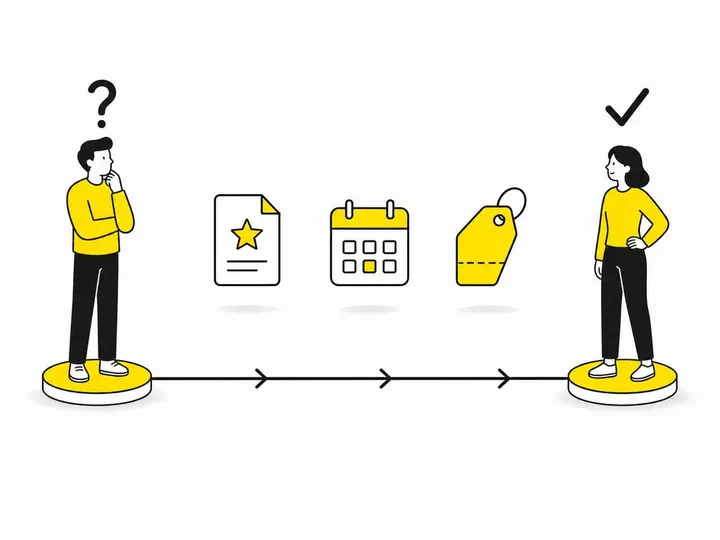
Match Your Offer to the Buying Stage
Cold audiences: reduce friction and perceived risk
A cold audience is seeing your ad for the first time. They're not actively looking for what you sell. Your job is to lower the barrier to entry so they take the first step without risk. Good offers for cold audiences include:
Free tools or calculators (a break-even ROAS calculator or budget planner)
Audit or assessment offers (e.g., "Get a free 15-minute website audit")
Educational content (checklist, guide, template)
Sample or trial period
Transparent starting price with no hidden terms
The goal is to collect a genuine lead, not make a sale. You build trust first, sell second.
Warm audiences: add incentive and urgency
A warm audience has already engaged with you before. They've visited your website, clicked a previous ad, watched a video, or joined your email list. They understand the problem and are closer to buying. Now you can add incentive and urgency. Discounts, limited-time bonuses, free shipping thresholds, or bundle deals work better here because you're not asking them to trust you on an offer alone. You're rewarding interest they've already shown.
Facebook Ad Offer Ideas by Business Type
Offer ideas for service businesses
Service businesses often struggle with converting cold audiences because buying a service requires more trust than buying a product off a shelf. Your offer should reflect that. Facebook ads for local service businesses work best when they lower the friction. Consider these offers:
Free discovery call (15 to 30 minutes, no obligation)
Fixed-price package or starting price (removes quote anxiety)
Free site or home assessment
Money-back guarantee if not satisfied after consultation
Packaged outcome (e.g., "Website copy audit plus one round of feedback")
Offer ideas for product and ecommerce businesses
Product businesses can move faster because purchase friction is lower. Meta's product-browsing feature, which rolled out from 28 October 2026, may also work in your favour if you have a catalogue. Users can browse products inside Facebook or Instagram before visiting your website. That said, test whether in-app browsing improves your cost per lead or conversion rate. Meanwhile, try these offers:
Free shipping on orders over a certain amount
First-order discount (e.g., 15% off)
Bundle or limited-edition product
Buy-one-get-one or tiered discount
Free sample with order
Offer ideas for hospitality, clinics and professional services
These businesses often book appointments or consultations rather than take immediate payments. Your offer should encourage booking, not hesitation. Try:
Book now and receive a discount on first service
Free initial consultation or assessment
Deposit required to secure appointment (shows intent)
Loyalty incentive for first-time customers
Clear, transparent pricing to reduce objection
How to Make Your Offer Specific Enough to Measure
Turn a vague promise into a clear conversion event
A conversion event is what Meta tracks and optimises for. Vague offers create vague conversion events. Here's how to tighten yours:
Weak: "Learn more about our services" → Strong: "Book a free 15-minute strategy call"
Weak: "Shop now" → Strong: "Get free shipping on orders over $50"
Weak: "Discover new products" → Strong: "Receive exclusive early access to our summer collection"
Weak: "Get more customers" → Strong: "Receive a fixed-price quote within one business day"
Once your offer is specific, you can measure it properly in Meta ads management for Australian small businesses. Set up your conversion event to match the actual offer: appointment booked, lead form submitted, product added to cart, or phone number captured.
Why accuracy in your offer matters more in 2026
As Meta's Andromeda system and other AI tools generate ad variations automatically, every version of your ad must deliver the same promise. If one variation says "Free shipping" and another says "Free shipping on orders over $100", you create confusion and waste budget on inconsistency. Accurate, consistent offers also protect you legally. Meta's Business Help Centre guidance emphasises that advertisers remain responsible for the accuracy of AI-generated or modified claims, so every variation must be checked for price, availability, guarantees, eligibility and expiry dates.
Testing Your Offer: A Practical Starting Point
Run 3 to 5 distinct offer concepts first
Rather than testing dozens of minor variations in copy tone or image style, test genuinely different offer angles. Test savings against convenience, risk reduction against education, urgency against clarity. Meta ad creative testing works best when you're testing the offer itself, not just the look. Run three to five distinct offer concepts to a relatively broad, cold audience. Let each campaign run for at least one to two weeks. Track which offers generate the lowest cost per lead and the highest-quality leads.
What to measure beyond clicks
Clicks are cheap. Qualified leads and conversions are what matter. When testing offers, measure:
Cost per lead (cost divided by number of leads generated)
Lead quality (how many leads became customers or bookings)
Cost per acquisition or booking
Return on ad spend (revenue generated divided by ad spend)
An offer that attracts fewer clicks but higher-quality leads is a win. An offer that costs twice as much per lead but generates twice as many paying customers is also a win. The only metric that matters long-term is profit, not volume or click-through rate. Set up building a Facebook ads funnel so you can track leads all the way to customer, then match your offer testing back to those final numbers.
Conclusion
Your offer is the engine of your Facebook ad campaign. Without a clear, specific, stage-appropriate offer, even perfect targeting and beautiful creative will waste your budget. The strength of your offer becomes even more critical in 2026 as Meta's AI systems take over much of the targeting and creative variation work. Your job is to supply the signal: a clear, measurable promise that tells both Meta's algorithm and your audience exactly what they'll get and why it's worth their attention.
Start by testing three to five genuinely different offer concepts to a cold audience. Measure cost per lead and lead quality, not clicks. Match your offer to the buying stage, cold audiences get low-friction offers that reduce risk, warm audiences get discounts and incentives. Once you know which offer concept works, you can scale with confidence and let Meta optimise the creative and targeting around a proven foundation.
The practical takeaway: test the offer before you scale the budget. A strong offer reduces your cost per lead and eliminates waste faster than any other change you can make.