Meta Ads Funnel for Australian Small Businesses: Turning Clicks into Enquiries
On this page 7 sections
Key takeaways
- 64% of Australian small businesses use Meta, but most waste spend on broken funnels
- Lead Ads remove friction and capture 40-60% more qualified leads than website clicks
- Mobile conversion is critical: 78% of Meta clicks arrive on mobile in Australia
- Retargeting warm audiences delivers 2-3x better ROAS than cold prospecting alone
- Properly structured funnels convert 5-12% of clicks; broken ones convert under 2%
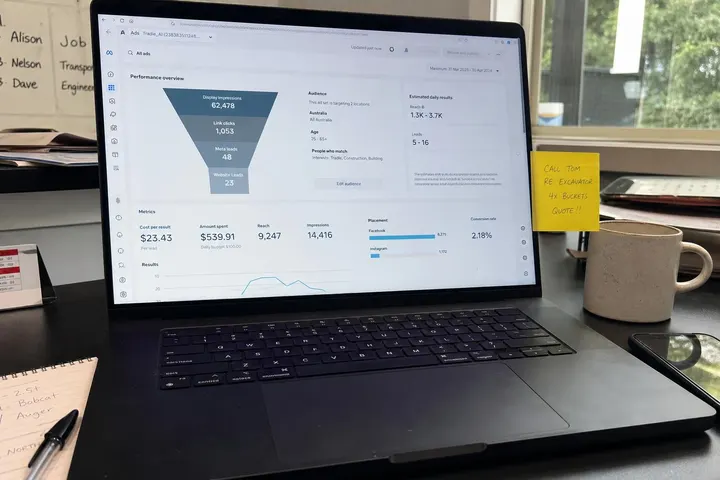
Most Australian small businesses running Meta Ads are throwing money at awareness campaigns, waiting for magic, and wondering why their enquiry form sits empty. The truth is simpler: they're missing a funnel altogether. A proper Meta Ads funnel turns cold clicks into warm leads by moving people through three deliberate stages, each one designed to move them closer to picking up the phone or filling out a form. Without it, you're just buying traffic.
What Is a Meta Ads Funnel (and Why Most Aussie Small Businesses Get It Wrong)
A Meta Ads funnel is a sequence of campaigns designed to guide potential customers from first awareness all the way through to an enquiry or sale. Most small business owners skip straight from awareness to asking for the sale, which is why their Meta Ads plans often disappoint. You wouldn't invite someone you've never met to dinner; you'd have a coffee first. Meta Ads work the same way.
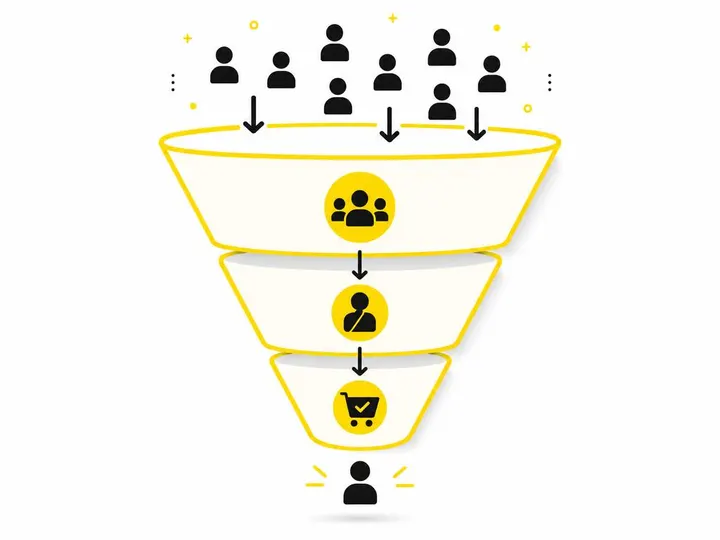
The funnel has three clear stages, and each one serves a specific purpose. Understanding this structure is the difference between a campaign that hemorrhages budget and one that actually fills your pipeline with qualified leads.
The Three Stages: Awareness, Consideration, Conversion
At the top of the funnel, you're introducing yourself to people who don't know you exist yet. Your job is volume and visibility, not leads. In the middle, you're talking to people who've noticed you and are thinking about it. Here you're building trust and answering objections. At the bottom, you're asking for the action: the enquiry, the phone call, the quote request. Each stage requires different messaging, different audiences, and different creative. Follow setting up your Meta Ads campaign guide to build this structure properly from the start.
Where Most Funnels Break: The Landing Page Problem
The single biggest mistake Australian tradies and service businesses make is sending all their ad traffic to their homepage or a generic contact page. A visitor who clicked your ad about bathroom renovations should land on a page about bathroom renovations, not your home page with seven navigation options and a stock photo. Even a 50% drop in conversion rate from a poor landing page means you're paying twice as much per lead. Audit your destination pages ruthlessly.
Stage 1: Top of Funnel. Getting the Right Eyes on Your Ad
Top of funnel is about reach and relevance within a defined area. You're casting a net, not a line, but it still needs to be in the right fishing spot.
Targeting Your Local Audience Without Wasting Budget
For Australian service businesses, geo-targeting is non-negotiable. There's no point showing your plumbing ad to someone in Melbourne if you work in Sydney. Use Meta Ads Manager to set a specific radius around your location (usually 5 to 25 kilometres, depending on your service area) and exclude suburbs you don't service. Layer in interests and behaviours relevant to your trade, and make sure you're targeting the right audience by excluding existing customers and people too young or too old to be your client. This cuts wasted clicks by 40 to 60 percent.
Creative That Stops the Scroll (and What Actually Works in Australia)
Video and carousel ads outperform static images by 2 to 3 times on Meta platforms. Australians respond to local voices, authentic testimonials from real customers, and work-in-progress footage. Avoid stock imagery. Show a real problem (cracked tile, leaky tap, messy garden) and a real solution. Writing ad copy that converts means leading with benefit, not features. Instead of "Expert plumbing services", try "Burst pipe at 2am? We answer our phones." Keep it under 125 characters so mobile users see the full message. Use a clear, single call-to-action: "Learn More" or "See Our Work".
Stage 2: Middle of Funnel. Warming Up the Fence-Sitters
This is where most of your efficiency wins happen. Once someone's clicked your ad, they've raised their hand. Now you warm them up before asking them to book or buy.
Why Retargeting Is Your Secret Weapon
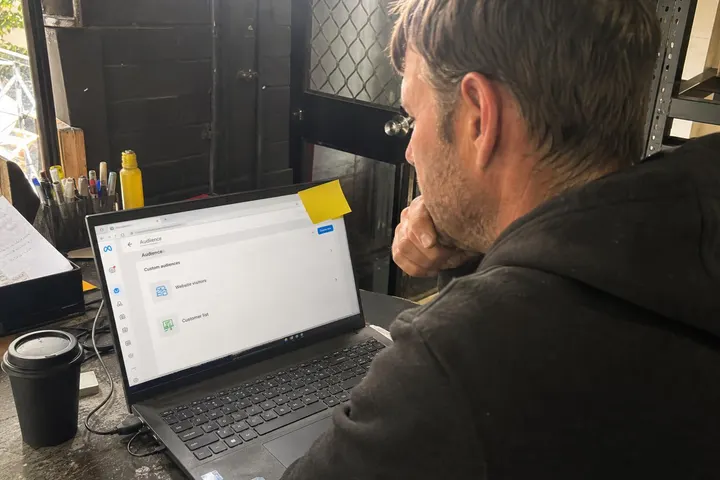
Retargeting is showing ads to people who've already visited your website or clicked your ad before. It's the secret weapon Australian small businesses ignore, and it's why their cost per lead stays high. The Meta Pixel fires on your website or landing page, creating a Custom Audience of people who've shown interest. Then you serve them different ads designed to move them closer to conversion. Retargeting campaigns typically cost 50 to 70 percent less per click than cold traffic, and how retargeting works is straightforward once you've set it up properly.
What to Show People Who Clicked But Didn't Convert
A visitor who looked at your services page but didn't fill out your form needs a gentle nudge, not an aggressive pitch. Show them testimonials, case studies, a FAQ video, or a limited-time offer. Lookalike Audiences (people similar to your best customers) can also be shown middle-funnel ads, expanding your reach to warm prospects. Frequency cap your middle-funnel ads at 3 to 5 per week per person, or they'll tune you out.
Stage 3: Bottom of Funnel. Turning Clicks into Enquiries
At the bottom of the funnel, you're talking to hot prospects ready to convert. This is where Lead Ads and tightly optimised landing pages shine.
Lead Ads vs. Landing Pages: Which Works Better for Tradies and Service Businesses
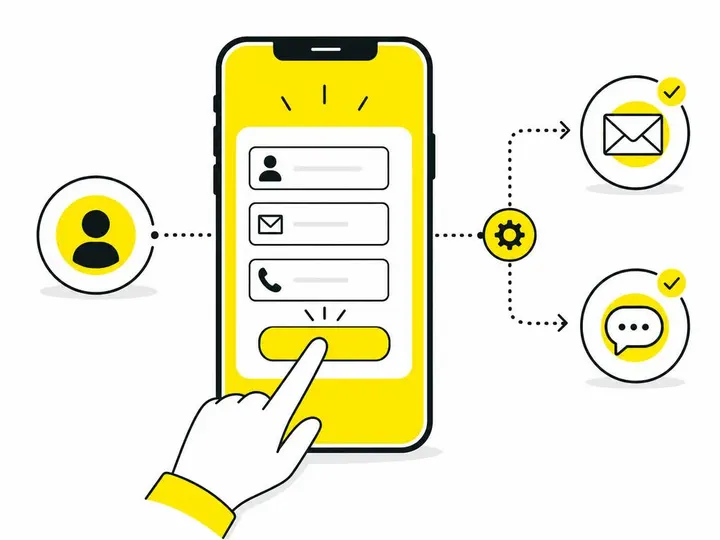
Facebook Lead Ads pre-fill a form with a user's name, phone, and email, so they don't have to leave Meta to submit details. For service businesses and tradies, Lead Ads typically capture 40 to 60 percent more conversions than sending traffic to an external website because friction is lower. However, you sacrifice control over the experience and data quality can vary. Landing pages give you full control and can be optimising your landing page for conversions to match your brand, but they require people to type, which costs you conversions. Most Australian service businesses should test both and measure the cost per lead from each.
Mobile-First Conversion: Why Speed and Simplicity Win
78 percent of Meta traffic in Australia arrives on mobile devices. If your landing page takes more than 3 seconds to load, half your visitors leave before even reading a headline. Use a single-column layout, minimal form fields (name, phone, email only), and a big, high-contrast submit button. Remove navigation menus and distractions. A/B test one variable at a time: button colour, headline, or form length. Track your conversion rate (clicks to form submission) and your cost per lead (total ad spend divided by leads).
Tracking What Matters: Measuring Funnel Performance
You can't improve what you don't measure, and most small business owners measure the wrong things.
The Four Metrics That Tell You If Your Funnel Is Working
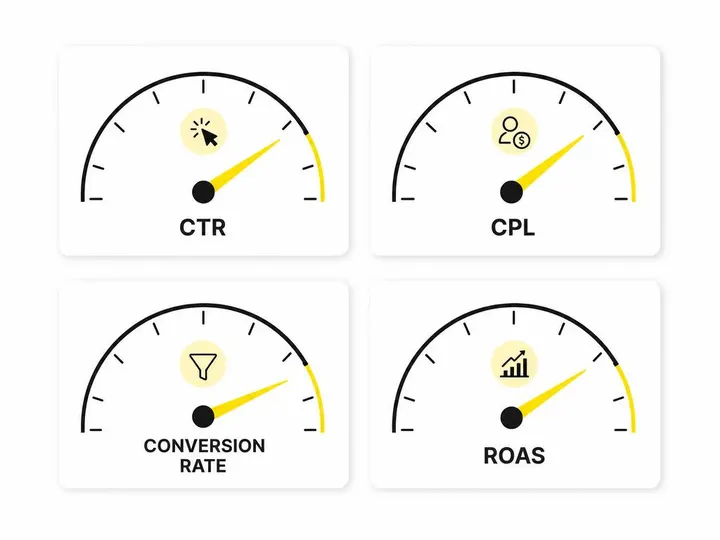
Track these four metrics in Meta Ads Manager:
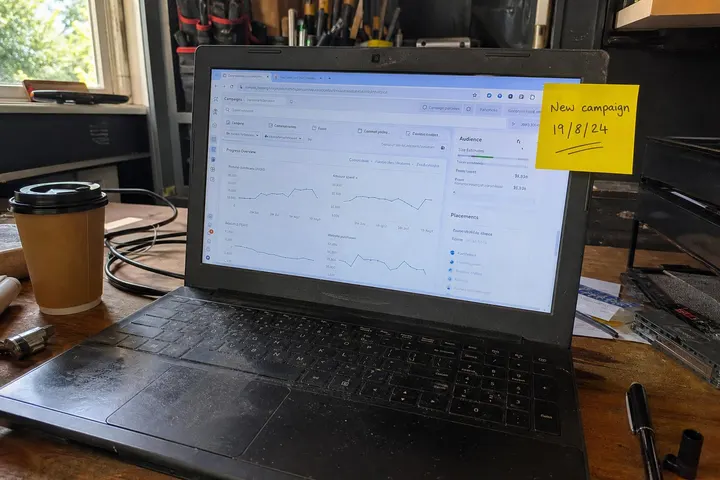
Click-through rate (CTR): Ad clicks divided by impressions. Australian service ads average 1.8 to 2.4 percent. Below 1 percent means your creative or targeting needs work.
Conversion rate: Form submissions divided by clicks. Anything above 5 percent is solid; above 12 percent is excellent. Below 2 percent signals a landing page problem.
Cost per lead (CPL): Total ad spend divided by leads. For Australian service businesses, expect AUD 15 to 60 per lead depending on your trade and location. If your CPL is above AUD 100, your funnel is leaking badly.
Return on ad spend (ROAS): Revenue from customers divided by total ad spend. For funnel-based campaigns, aim for 3 to 5 times return within 30 days. Below 2 to 1 and you're not scaling profitably.
When to Optimise and When to Scrap and Start Over
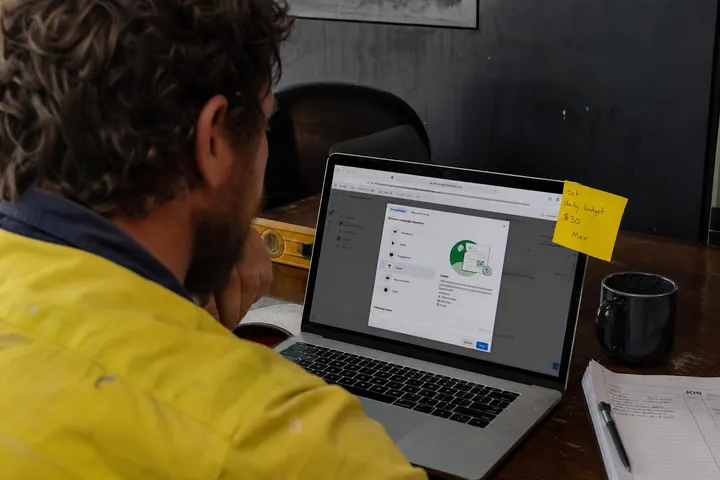
Run each stage for at least 2 to 4 weeks before judging it. Adjust one element at a time: audience, creative, copy, or offer. If your CTR is good but conversion rate is low, your landing page is the problem, not your ad. If both are low, your targeting is wrong. Budget typically starts at AUD 500 to 1,500 per month for a working funnel; less than that and you won't gather enough data to optimise.
Common Funnel Mistakes (and How to Fix Them Fast)
These three mistakes cost Australian small business owners thousands every month.
Sending Everyone to Your Homepage: Your homepage is for navigation, not conversion. Create dedicated landing pages for each service or offer. A plumber running ads about gas fitting should send clicks to a gas fitting page, not your home page.
No Follow-Up System for Leads: A lead without a fast follow-up is a wasted lead. Set up automatic SMS or email replies, and make sure your phone is answered within 2 hours during business days. Most enquiries die because you didn't call back in time.
Ignoring Retargeting and Relying Only on Cold Traffic: Cold traffic is expensive. Retargeting is cheap. If you're not showing ads to people who've already clicked or visited, you're leaving 50 to 60 percent of your budget on the table. Start with a retargeting audience on day one.
For specific guidance on our Meta Ads management service, or for help building your funnel from scratch, the investment in proper setup pays for itself in the first month of better conversion rates.
Conclusion
A Meta Ads funnel isn't magic, and it isn't complicated. It's three stages of deliberate messaging designed to move cold prospects into warm leads, and then into customers. Most Australian small businesses fail not because Meta Ads don't work, but because they skip the funnel and expect awareness campaigns to drive enquiries. They won't.
Start with clear top-of-funnel awareness campaigns to the right local audience. Retarget everyone who clicks with warm middle-funnel messaging. Finish with high-converting bottom-of-funnel campaigns to the hottest prospects. Measure your CTR, conversion rate, cost per lead, and ROAS. Optimise ruthlessly based on data, not gut feeling.
Get the funnel right, and what you should budget for becomes a profitable investment instead of a guessing game. If you're running Meta Ads now and your funnel isn't structured this way, stop what you're doing, draw it out on paper, and rebuild it properly this week.