Lead Nurturing for Australian Small Businesses: What to Send After Someone Enquires
On this page 7 sections
Key takeaways
- Reply within one hour to dramatically increase conversion odds
- Most sales need five or more touchpoints before a prospect commits
- SMS gets a 98% open rate and is ideal for fast first responses
- A four-to-five message sequence covers most small business sales cycles
- Automation tools let you run follow-up sequences without lifting a finger
Most Australian small businesses and tradies are losing money on leads they've already paid for. Someone fills out a contact form or calls in with a genuine enquiry, and then nothing happens. No follow-up. No call back. No email. The lead goes cold within hours, and the business loses the job to someone who actually bothered to stay in touch.
The gap between getting a lead and actually converting it into a booking is where the real profit lives. Yet many small business owners treat lead nurturing like an afterthought. They think one follow-up is enough. It isn't. How to follow up website leads properly is one of the fastest ways to boost your conversion rate without spending more on advertising.
Why Most Australian Small Businesses Lose Leads They Already Paid For
You've paid for that lead. Whether it came through Google Ads, Facebook, a referral, or a website form, you've invested time and money to get someone interested enough to enquire. Then you let them slip away.
The follow-up gap is costing you real money
According to HubSpot lead response time and conversion statistics, Australian businesses lose around 24% of qualified leads simply because they don't follow up consistently. That's not a small number. If you're getting 50 enquiries a month, you're throwing away 12 of them.
The problem is worse than poor response times. Most businesses send one message and call it done. But Salesforce State of Sales research on touchpoints needed to close shows that 80% of sales require five or more touchpoints to close. One message isn't follow-up. It's just contact.
How long before a lead goes cold?
Speed matters. A lot. If you respond within one hour, you're seven times more likely to qualify that lead. But most Australian small businesses take over 24 hours to get back to someone. By then, the lead has already messaged two other businesses.
The research is blunt: email follow-ups have a 45% open rate when sent within one hour, but drop to 7% after 24 hours. That first hour is your most expensive real estate.
The First 60 Minutes: Your Most Important Window
The first hour after an enquiry arrives is when you make or break the deal. Here's exactly what you need to do.
What to send in your instant reply
Your first message has one job: confirm that you received the enquiry and tell them what happens next. Keep it short. Tell them your name, acknowledge what they asked for, and give them a timeframe for when they'll hear from you again. That's it.
Example: "Hi Sarah, thanks for enquiring about plumbing services for your blocked drain. We've got your details and will give you a call within the next 2 hours to discuss your situation and provide a quote. Talk soon, Mike."
This does three things. It proves you're real. It reduces their anxiety (they know you got it). And it sets expectations so they're not confused about what comes next.
SMS vs email: which to use first?
Use SMS for your first contact if you have their mobile number. A text message has a 98% open rate within three minutes. An email sits in an inbox and gets lost. Instant SMS response to web enquiries is far more effective than waiting for someone to check their email.
The Australian Direct Marketing Association data backs this up: Australian SMEs report 3.5 times return on investment from SMS campaigns when used for appointment reminders and follow-ups. But only use SMS for genuine customer contact, not spam. One message confirming receipt. That's your first touch.
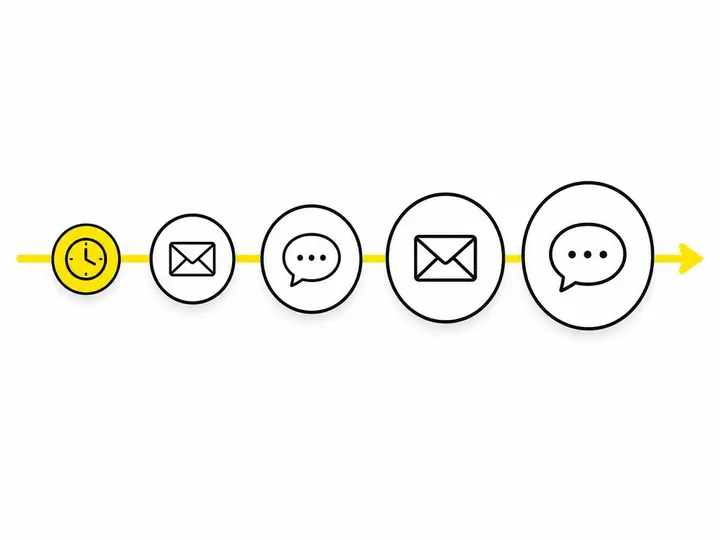
The 5-Touch Follow-Up Sequence That Works for Service Businesses
After your instant acknowledgement, you need a structured lead nurturing sequence that keeps you in front of the prospect without being pushy. Here's what works.
Message 1: Immediate acknowledgement (hour 0 to 1)
SMS or phone call. Confirm receipt. Set expectation. Done.
Message 2: Value and social proof (day 2 to 3)
Send an email with something useful. A case study showing a similar job you've done. A before-and-after photo. A FAQ that answers questions they might have. Prove you know what you're talking about. Include a soft call to action: "If you have any questions, just reply to this email."
Message 3: Remove objections (day 5)
By now, the lead is probably thinking about cost, timing, or whether you're trustworthy. Address one of these directly. Maybe it's a testimonial from someone in their area. Maybe it's your qualifications or insurance details. Maybe it's a transparent pricing guide. Give them a reason to say yes.
Message 4: Urgency or offer (day 7 to 8)
You've built trust. Now create a reason to act now rather than next month. This could be a limited-time discount, an availability slot filling up, or seasonal pricing. Make it genuine. Fake urgency kills trust fast.
Message 5: The gentle final nudge (day 10 to 14)
This is your last touch before you move them to a different segment or stop active outreach. Keep it simple: "Hi Sarah, just checking in to see if you had any other questions about the drain work. Happy to help." Then move on. Not every lead converts, and that's okay.
How to Automate Your Follow-Up So It Happens Every Single Time
Manual follow-up fails because you forget or get busy. The solution is to build email automation so your sequence runs automatically while you focus on the customers you've already won.
Tools Australian small businesses actually use
You don't need enterprise software. Three tools work well for Australian tradies and service businesses:
- HubSpot (free tier available) – Simple automation, good for tradies with no technical experience
- GoHighLevel – Popular with agencies and service businesses across Australia; includes SMS and email
- ActiveCampaign – More advanced but still user-friendly; good for tracking customer journeys
You can also use your CRM (Customer Relationship Management) system to track every touchpoint. Best CRM for Australian tradies will centralize all customer communications so nothing gets missed.
Setting up a simple automation without an IT team
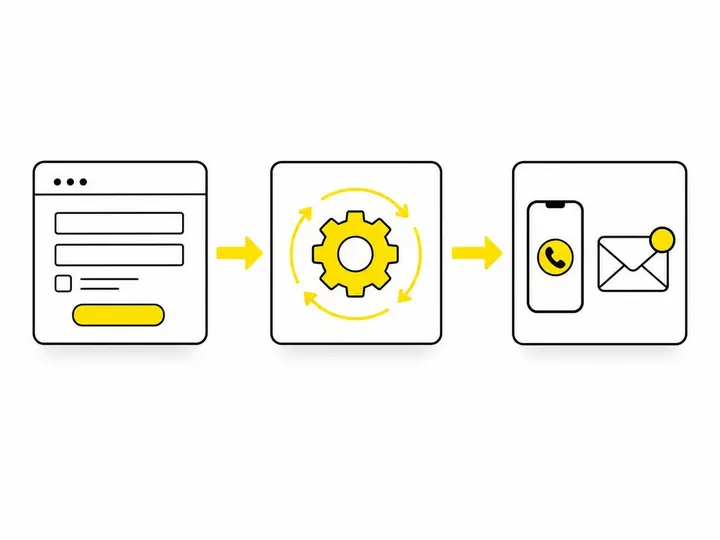
You don't need to code. Most platforms have templates. You set the trigger (new enquiry arrives), and the sequence fires automatically. Automating quote follow-up for small business means your plumbing quote gets a follow-up email whether you remember it or not.
Start with email. Add SMS later. Getting notified about new leads instantly also matters. You need to know when a lead arrives so you can make that first-hour phone call.
Common Mistakes That Kill the Nurture Sequence
Even with automation, most small businesses make the same errors.
Sending too late or too infrequently
Your first message at hour 12 has already lost the lead. Your follow-ups on days 14, 21, and 45 look desperate, not professional. Stick to the timeline. Day 2 to 3, day 5, day 7 to 8, day 10 to 14. It works.
Making every message about the sale
If all five touches are "Buy now," the lead unsubscribes or blocks you. Three messages should provide value or build trust. Only two should push for a decision.
Giving up after one or two touches
This is the biggest mistake. One email and you assume they're not interested. Wrong. It takes five touches. If you stop at two, you're leaving money on the table. How to qualify leads as a tradie means staying in touch long enough to know if someone is genuinely uninterested or just busy.
What a Real Follow-Up Sequence Looks Like for a Tradie
Example: A Sydney plumber's five-touch sequence
Hour 1 (SMS): "Hi David, thanks for contacting us about the burst pipe. I'm Tom from ABC Plumbing. We'll give you a call within 2 hours. Cheers."
Day 3 (Email): Subject: "Quick question about your burst pipe." Body: "Hi David, I wanted to share what we typically find with burst pipes in older Sydney homes. Here's a case study of a job we completed last month in Marrickville. The key is getting it fixed fast to avoid water damage. Reply if you'd like to discuss timing."
Day 5 (SMS): "David, just following up. Got any questions about the cost or timeline? We can usually schedule urgent jobs within 24 hours."
Day 8 (Email): Subject: "Emergency plumbing availability this week." Body: "Quick heads-up: we've got two urgent slots available Wednesday and Thursday before they're booked out. If the burst pipe is still a concern, I'd recommend booking one of these. Let me know."
Day 12 (SMS): "Hi David, just checking in. Have you had the pipe looked at yet? We're still here if you need us."
That's it. Five messages over 12 days. Three build trust. Two create action. No spam. No pressure. Just consistent, helpful contact. And if David doesn't respond, you know he's either gone elsewhere or it wasn't urgent. Either way, you tried.
Track your open rate and response rate for each message. This tells you which part of your sequence works and which doesn't. Over time, you'll know which days and times get the best results for your market.
You can also measure cost per booked job by tracking how many leads convert from each sequence. This helps you understand which marketing channels are actually worth the spend.
Conclusion
Lead nurturing isn't complicated. It's not sexy. But it works. The difference between a tradie who converts 10% of enquiries and one who converts 30% usually isn't better advertising. It's better follow-up. Australian small business owners are losing real money because they treat the first hour like it's the only hour that matters, then abandon leads after one or two touches.
The system is simple: respond fast, build trust over five touches, use automation so it happens every time, and never stop after message two. Most of your competitors will quit by then. You won't.
Start today. Set up an automatic SMS for hour one. Build a five-message email sequence. Plug it into your CRM or email platform. Let it run. Track your results. In 30 days, you'll see your conversion rate climb. That's not a guess. It's what the data says happens when Australian small businesses actually follow up properly.