Website Chat vs Contact Form: Which Gets More Leads for Australian Small Businesses?

On this page 8 sections
Key takeaways
- Live chat can engage 3x more visitors than a contact form alone
- An unmanned chat widget loses leads faster than no chat at all
- Contact forms work best when paired with same-hour automated follow-up
- Most tradies and sole traders get better results from a streamlined form
- AI chatbots close the gap when live staffing is not possible
Live chat and contact forms both pull leads from your website, but they work in completely different ways and deliver wildly different results. For Australian small businesses in 2026, choosing between them isn't really a choice at all, because the numbers show chat drives more conversions faster. But the real question isn't which one wins outright. It's which one matches your actual capacity to respond, and whether running both together actually hurts your lead flow or helps it.
What Is a Contact Form and Why Do Small Businesses Still Use Them?
A contact form is a simple on-page tool that collects visitor information and sends it to your email inbox when someone fills it in and clicks submit. You get their name, phone, email, and whatever extra details you ask for. Then you follow up manually whenever you get around to it, usually within 24 to 48 hours.
How a contact form works on a small business website
A visitor lands on your site, spots a form (often in the sidebar, footer, or dedicated contact page), types in their details, and hits send. That data goes straight to your inbox or a basic CRM. No real-time back-and-forth. No waiting for someone to respond in the moment. The visitor leaves your site, and your team handles the follow-up asynchronously.
The form itself is static. It doesn't change based on what time of day it is or whether you're actually available. It sits there 24/7, always ready to capture a lead, whether you're in the office or closing the pub for the night.
Why contact forms suit tradies and solo operators
If you're a sole tradie with no admin staff, a contact form is low friction. You're not paying for live chat software or staffing someone to watch a chat widget. You're not training a chatbot. You just set up the form once, keep it on your site, and handle inquiries as they come. It's predictable, you own the pace, and there's no risk of visitors seeing an unmanned chat widget and feeling ignored.
Contact forms also work well when you need detailed upfront information. When you're quoting a kitchen renovation or a roof repair, which fields to include on a tradie contact form matters hugely. You can ask for photos, measurements, exact location, scope of work, and budget constraints before you even pick up the phone. That means fewer follow-up questions and faster, sharper quotes.
What Is Website Chat and What Types Are Available?
Website chat is a real-time or semi-automated messaging widget that lets visitors talk to your business instantly (or feels instant). There are three main flavours: live chat with a human, a bot that handles responses automatically, or a hybrid that switches between them depending on when the visitor arrives.
Live chat: real-time, staffed conversations
A human sits at their desk during business hours, watching a chat widget on your site. A visitor pings a question, and someone on your team responds in seconds or minutes. The conversation happens in real time, right there in the browser. Examples include Tidio and Intercom, which are popular with Australian SMBs because they integrate with CRM systems and handle high traffic without getting tangled up.
Live chat works because speed rewires how visitors perceive your business. Intercom research on chat-assisted conversion shows that visitors who chat are three times more likely to convert than those who leave via a contact form.
Chatbots: automated, always-on responses
AI chatbots for small business websites in Australia use machine learning to answer questions 24/7 without human input. A visitor asks about pricing, opening hours, or whether you service their suburb. The bot responds immediately with a templated answer, qualifies the lead, and captures their contact details. No humans required. No response time gaps at 10 PM on a Sunday.
Chatbots are cheap to run (often under $50 per month) and they never get tired. The trade-off is that they can only handle routine questions. Anything complex or ambiguous, and the visitor gets frustrated or bounced back to a form.
Hybrid chat: bot handles after hours, human takes over during business hours
This is the sweet spot for most small businesses. During your operating hours, a real person handles chat. When you close, a bot takes over, answers basic questions, and logs the lead for your team to follow up the next morning. You're not paying for 24/7 staffing, but you're also not abandoning visitors when they reach out after hours.
Head-to-Head Comparison: Chat vs Contact Form for Lead Generation
Chat and contact forms are built for different jobs, and their lead-generation performance reflects that.
Conversion rates and engagement
Live chat visitors convert at roughly three to five times the rate of contact form submitters. Chat engagement rates hover between 45 and 70 percent of visitors who see the widget; contact forms typically collect responses from only five to 15 percent of site visitors, depending on how many fields you ask them to fill. The reason is simple: chat feels frictionless. A form feels like a commitment.
Response time and speed to lead
This is where chat dominates. A chat response in two minutes changes behaviour. A contact form reply 24 hours later doesn't. Zendesk data on live chat engagement rates shows that chat responses within the first minute increase conversion likelihood by up to 2.5 times compared to same-day email. Speed to lead is the metric that actually moves the needle. The faster you reply, the more likely you close the deal.
Lead quality and intent
A contact form forces clarity. If you've asked for a detailed scope of work, you get pre-qualified leads. A chat conversation can meander. Someone asks if you do gutters, you say yes, they ask how much it costs, you say it depends, and suddenly you've spent ten minutes on a lead that might not convert. That said, chat leads tend to be hotter because they've already decided to engage with you in real time. They're not just *thinking* about calling; they're actively talking to you right now.
Setup cost and ongoing effort
A contact form is free or cheap. Tidio and similar tools charge based on conversation volume, typically $0 to $100 per month depending on usage. A chatbot adds another $30 to $100 on top. Contact forms have almost zero ongoing cost, but they require manual follow-up discipline. Chat systems require someone to monitor them, or an AI to handle it automatically.
When Website Chat Wins for Australian Small Businesses
Chat outperforms when you have someone available to respond in real time and your visitors are arriving with straightforward questions that don't need a three-page intake form.
High-traffic service pages where visitors need quick answers
If you're running a digital marketing campaign and driving traffic to your services page, chat answers the quick questions right there and accelerates the buying cycle. Someone lands on your page about plumbing, sees a chat widget, asks "Do you service Parramatta?", gets a yes in 30 seconds, and books a call. That's conversion velocity. A contact form can't compete with that speed.
Businesses with staff available to monitor chat during business hours
Chat only works if someone is actually watching it. If you have an admin assistant, a receptionist, or even a business partner who can keep an eye on the widget during your open hours, chat becomes your fastest lead generation tool. If you're solo and fielding it yourself while juggling the actual business, an unmanned chat widget becomes a liability because visitors see it's open, try to chat, and get ignored.
When a Contact Form Is the Smarter Choice
A contact form wins when you're solo, when you need detailed information upfront, or when your lead cycle is long and deliberate.
Sole traders and micro-businesses without dedicated admin
If you're operating alone, a contact form is kinder to your workflow. You're not tied to your desk watching for chat pings. You work at your own pace, batch your follow-ups, and handle them properly instead of juggling live conversations while trying to run the job site or the shop. how to follow up website leads quickly matters, but it doesn't have to happen in the next two minutes.
Complex quotes that need detailed information upfront
contact form fields that get more quotes let you collect the specifics before you even respond. A kitchen designer needs photos and measurements. A plumber needs to know whether it's a new install or a repair. Asking these questions in a chat back-and-forth is inefficient. Putting them in a form means the visitor does the legwork upfront, and you get the lead with all the context you need to quote accurately.
The Best of Both: Running Chat and a Contact Form Together
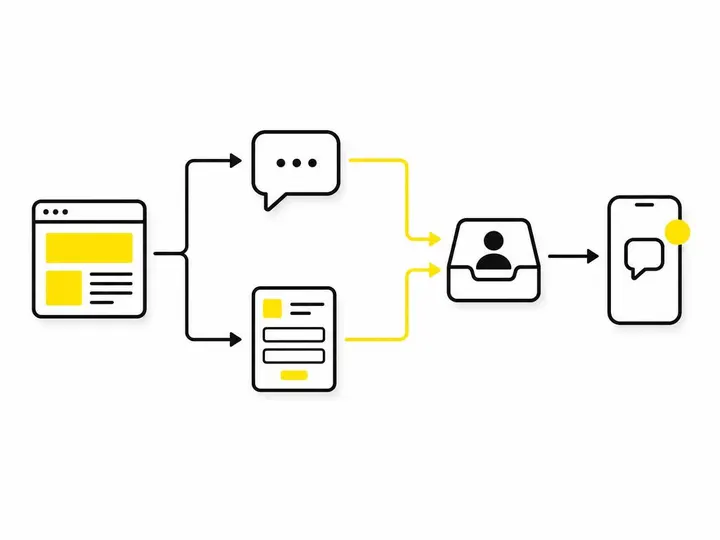
The real move for most Australian small businesses isn't choosing one. It's running both on the same site without cannibalising conversions or confusing your visitors.
How to avoid splitting your leads and confusing visitors
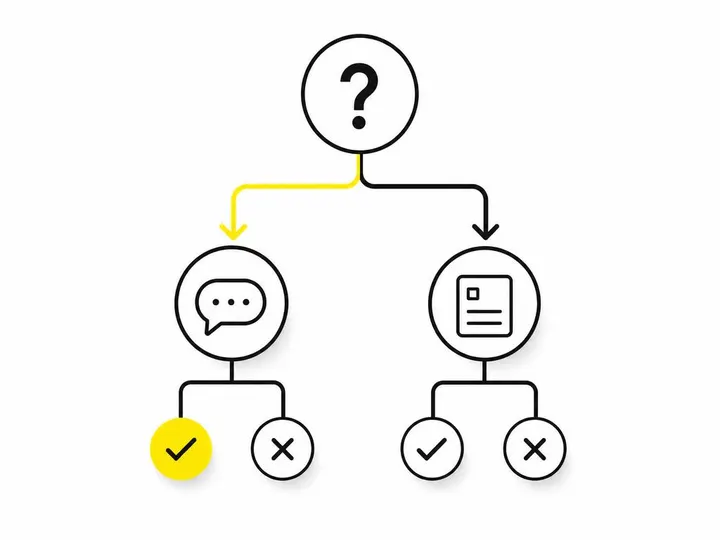
Put chat on your service pages where visitors are ready to ask quick questions and book. Put your contact form on a dedicated contact page or in the footer, positioned as the option for people who want to send a detailed message. Don't force every visitor through the same door. Let chat handle hot, ready-to-engage leads. Let the form capture people who want to think it over or send a longer message.
Make sure your CRM integrates with both tools so all leads land in the same place. If chat goes to one inbox and forms to another, you've just created admin chaos and response-time gaps.
Using automated SMS or email follow-up to close the response gap
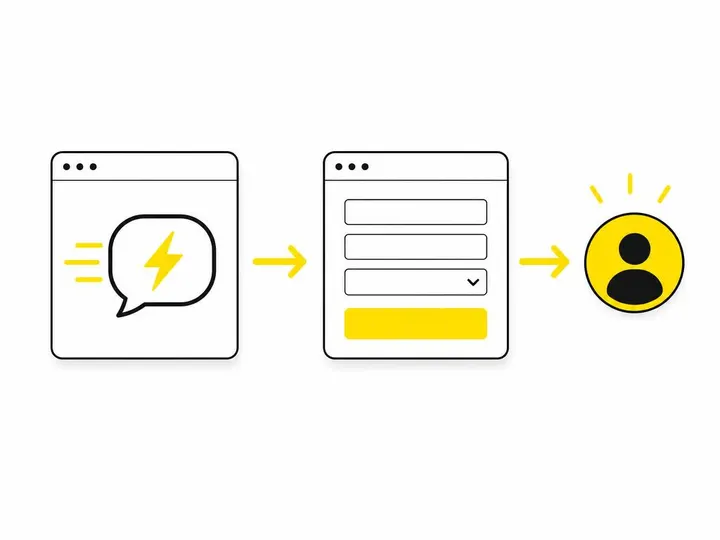
sending an instant SMS when someone fills in your form transforms the contact form equation. When a visitor submits a form, they get an immediate automated SMS saying "Thanks, we got it, someone will call you within two hours." That instant acknowledgement closes the gap between submission and human follow-up. Pair that with using AI to respond to leads faster, and you've got a contact form working at near-chat speed without the overhead of monitoring a chat widget.
Practical Recommendations by Business Type
Tradies and home services
Start with a solid contact form on a mobile-friendly site because most site visitors are on their phones. mobile-friendly website design for small business means your form actually works without friction on a phone screen. Add automated SMS replies so form submitters know they've been heard. If you have time (or hire someone part-time to manage it), layer on a hybrid chat widget that runs during your business hours. This combo gets you the best conversion rates without overcomplicating your operations.
Retail and hospitality
Chat wins here because visitors often need immediate answers about hours, location, or availability. A pub or cafe with a chat widget can answer "Are you open tonight?" and "Do you have a table for four at 7?" in seconds, turning potential no-shows into bookings. Back it up with a contact form for group bookings or catering inquiries that need more detail.
Professional services
If you're an accountant, lawyer, or consultant, a best homepage layout for tradie websites principle (clarity and trust first) applies. Keep chat light or skip it. Use a detailed contact form that asks about their situation, budget, and timeline. This pre-qualifies leads and respects the fact that your service cycle is measured in weeks or months, not minutes. Pair it with fast email follow-up and CRM automation.
Conclusion
The winner between chat and contact forms isn't universal. Live chat converts faster when you have someone to man it and your visitors need quick answers. Contact forms work better when you're solo, need detailed upfront information, or operate on a longer sales cycle. For most Australian small businesses, the answer isn't either-or. It's both, working together on different parts of your site, feeding the same CRM, and backed by automatic SMS reply for website enquiries so nothing feels slow.
The real driver of lead generation isn't the tool. It's response time and integration. Whatever you choose, make sure you can actually respond quickly and every lead lands in your CRM so you can follow up properly. A fast contact form beats a slow, unmanned chat widget every time. A staffed chat widget beats a contact form left to fester for 48 hours. Pick the one that fits your team's actual capacity, layer on automation where it makes sense, and test the results over eight to twelve weeks. The data from your own site will tell you whether chat or forms are pulling better leads for your specific business.