Real Estate SEO Keywords: What Home Buyers and Sellers Search in Australia
On this page 8 sections
Key takeaways
- Buyer and seller searches need separate keyword strategies and separate pages
- 52% of buyers searched within 5 to 20 km of home, making suburb pages essential
- Vendor intent keywords like 'property appraisal [suburb]' are under-targeted by most agencies
- Feature-based terms like granny flat, pool and EV charging are growing fast in buyer searches
- Google Trends helps compare suburb and feature terms before you create content
- Local SEO and Google Business Profile signals matter most where portals cannot compete
Home buyers and sellers in Australia search differently, and your agency website won't rank for broad terms like "houses for sale" on Google. Instead, the keyword opportunities that actually convert lie in suburb expertise, feature-based searches like "properties with EV charging near me" and vendor-intent queries that happen long before someone calls an agent. Understanding this distinction and building content around it is what separates agencies that win listings from those left competing on the portals.
Why Real Estate Agents Need a Keyword Strategy Beyond the Portals
The vast majority of home searches in Australia still flow through realestate.com.au and Domain, so many agents assume their website doesn't need to rank on Google at all. That's backwards. Your website and local SEO strategy should target a completely different set of keywords than the portals do, reaching buyers and sellers at different moments in their journey.
Why broad listing terms are a dead end for agency websites
Trying to rank your agency website for "houses for sale" or "units for sale in [suburb]" will cost you money and time you don't have. Those keywords are dominated by the portals themselves, which have massive link authority and content depth. Your website loses every time. The realestate.com.au Consumer Sentiment Update, November 2026, surveyed more than 18,000 Australian buyers and sellers and found that buyers still prioritise major portals for discovery. Fighting them on their home turf is a waste of budget.
What agents can actually rank for in 2027
Instead, rank for keywords that show local expertise, answer specific buyer and seller questions, and address the gaps the portals don't fill. This includes suburb guides, lifestyle-focused searches like "best suburbs for families near [station]", vendor-intent phrases such as "how much is my house worth in [suburb]", and informational queries from cautious sellers. These terms have lower search volume but vastly higher intent and lower competition. Real estate SEO services that focus on these keyword buckets deliver measurable lead generation without trying to outbid the portals.
Understanding Buyer Intent: What Home Buyers Search in Australia
Australian buyers search using three main keyword patterns: location-based terms that reflect proximity and suburb interest, property-type and feature keywords that have shifted dramatically in the past two years, and lifestyle-driven searches that reveal what buyers actually value.
Location and proximity searches
The realestate.com.au Consumer Sentiment Update, November 2026 found that 52% of buyers searched for properties between 5 and 20 kilometres from their current home, making "near me" and neighbouring-suburb content especially valuable. Buyers search for "houses near [train station]", "units within 10km of [suburb]", "properties close to [school]" and "homes with access to [beach]". These are perfect targets for suburb pages and local search optimisation that ranks you above the portals for people who already know where they want to live.
Property type and feature keywords on the rise
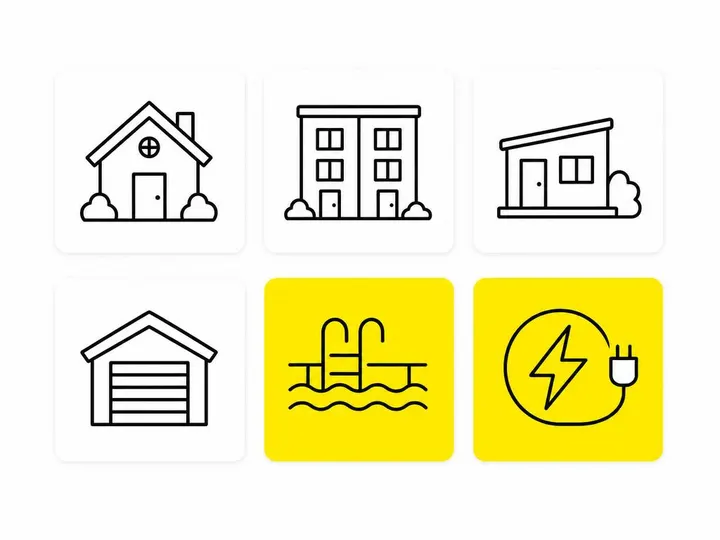
REA's AI search data shows the features buyers actually care about: public transport access, beach proximity, swimming pools, acreage, granny flats, studios, garages, duplexes, dual occupancy and waterfront properties are driving search volume. Electric vehicle charging is an emerging keyword too, rising from 6% of searches in January 2024 to 11% by January 2026. If you're writing listing descriptions and suburb pages, these features must be mentioned explicitly and backed by local evidence, not generic copy.
Lifestyle and amenity terms on the rise
Buyers no longer search just "3 bedroom house". They search "quiet suburbs near the city", "family-friendly neighbourhoods with good schools", "walkable suburbs near cafes" and "inner-city apartments with green space". These conversational, lifestyle-focused phrases are growing in search volume as AI-assisted property discovery becomes normal. Your suburb pages and listing copy need to answer these questions with specific, current local data.
Understanding Vendor Intent: What Sellers Search Before They Call an Agent
Sellers search differently than buyers, and they start searching long before they're ready to list. The realestate.com.au Consumer Sentiment Update, November 2026 showed that only 18% of consumers intending to sell said it was a good time to sell, down from 48% a year earlier. That caution means sellers are doing months of research before they contact an agent, and they're searching for reassurance, process clarity and local evidence.
Early-stage vendor research keywords
Sellers start with questions like "how much is my house worth in [suburb]", "property values in [area]", "real estate market trends [suburb]" and "how to prepare my home for sale". These are low-intent keywords, but they reach prospects in the awareness phase. Content that answers these questions with current, local data positions your agency as trustworthy before the seller is ready to move.
Mid-funnel seller searches
As sellers get serious, they search "real estate agent [suburb]", "best agent in [area]", "agent fees [location]" and "how to sell my house in [suburb]". These are higher-intent keywords that show the seller is comparing options. Your agency website, Google Business Profile and local search results matter here. This is where real estate website pages that win listings make the difference between being found and being ignored.
High-intent vendor keywords
Finally, sellers search "sell my house fast", "property appraisal [suburb]", "home valuation [area]" and "selling a house during a downturn". These convert immediately. A strong suburb page or appraisal-focused landing page that ranks for these keywords will generate qualified vendor inquiries without paying for paid ads.
How to Build Suburb Pages That Rank for Both Buyers and Sellers
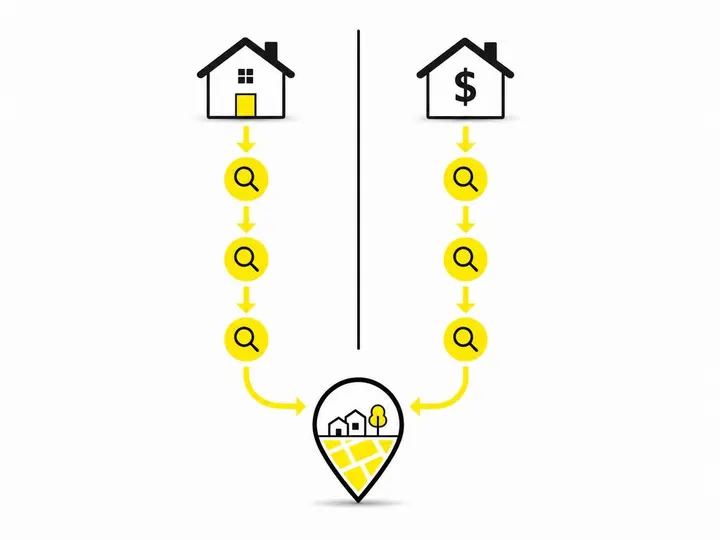
A suburb page that ranks on Google and converts both buyers and sellers combines local data, lifestyle description, market context and a clear call to action. Here's what you need to include and why it works.
What a strong suburb page needs to cover
Start with current median price, price per square metre and recent price movement. Add transport links, beaches, parks, schools, shopping and local character. Include recent sales examples (with permission), local property types that dominate, and typical market conditions for sellers. Finally, explain your process, your local experience and offer a free valuation or buyer consultation. Each claim needs to be supported by current local data, not generic suburb copy. This structure serves both buyer discovery ("what's it like to live here?") and seller confidence ("this agent knows the market").
Keeping suburb content current so it stays useful
A suburb page from 2024 that still quotes 2024 prices will lose relevance as it ages. Set a quarterly or bi-annual review schedule to update median prices, recent sales and market conditions. This keeps the page useful for buyers and sellers, and it signals freshness to Google. SEO content writing for suburb pages is a live asset, not a "set and forget" piece.
Using Google Trends and Search Console to Find Real Estate Keywords
Free tools from Google give you direct insight into what buyers and sellers in your areas are searching for right now. Use them before you create any new page or content strategy.
How to use Google Trends for suburb and feature comparisons
Visit Google Trends Australia and search for suburb names, property types and local keywords. You'll see seasonal patterns (school holidays drive family-focused searches), year-on-year trends and related queries. For example, search "properties near [station]" and "granny flat [suburb]" to see which terms are rising in your area. Google Search Central's Google Search Central documentation updates, November 2026 explicitly recommends using Google Trends to understand search behaviour and refine your content strategy. This is especially valuable for agents who want to build pages around emerging features like EV charging or dual occupancy.
What Google Search Console tells you about existing pages
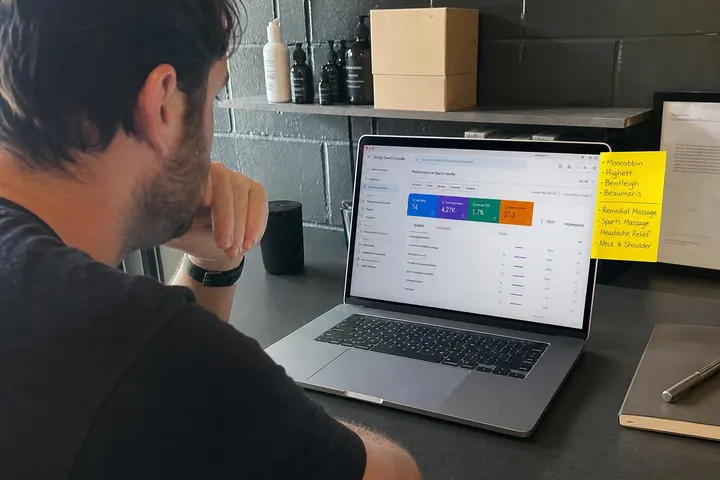
If you already have a website, using Google Search Console for keyword research shows you exactly which queries are bringing visitors to your site today. Look at your top pages, the keywords they rank for and their average position. This data tells you where to double down (add more suburb pages like your top performers) and where to fix (why isn't your valuation page ranking for "property appraisal [suburb]"?). It's real, local data specific to your business.

Optimising Listing and Agency Content for Conversational and AI Search
AI-assisted property discovery is becoming a standard search behaviour in Australia. This changes how you write both listing descriptions and agency content on your website.
Why AI-assisted property discovery changes your keyword approach
When a buyer asks an AI assistant "show me quiet suburbs with good transport and pools near [city]", the assistant pulls from search results, structured data and listing information across the web. Your listing fields, your suburb page content and your agency copy all feed into that answer. This means you can't rely on bedroom and bathroom counts alone. You need to describe lifestyle, location specificity and features clearly, in natural language. AI assistants prioritise pages that answer questions completely and accurately.
How to write listing copy that works in conversational search
Instead of "3 bed, 2 bath, timber floors", write "Three-bedroom Queenslander on tree-lined street, 800 metres to [train station], near [school], north-facing yard with established gardens and room for a pool." This describes lifestyle and specificity in conversational language that AI assistants can understand and quote. It also ranks better for the feature and location searches that buyers are running.
Putting It All Together: A Keyword Framework for Real Estate Agents
Build a keyword strategy around buyer and vendor buckets, then create content types that serve each one.
Buyer keyword buckets
Location and proximity: "houses near [station]", "units within 5km of [suburb]", "properties close to [school]"
Features and lifestyle: "houses with pools in [area]", "dual occupancy [suburb]", "properties with EV charging near me"
Market discovery: "best suburbs for families", "quiet suburbs near the city", "affordable suburbs [area]"
Comparison and research: "[suburb] vs [suburb]", "which suburb has better schools", "properties available in [suburb]"
Vendor keyword buckets
Awareness: "how much is my house worth", "property values [suburb]", "market trends [area]"
Consideration: "real estate agent [suburb]", "how to sell my house", "selling costs [location]"
Decision: "property appraisal [suburb]", "sell my house fast", "best time to sell [area]"
Content types that serve each bucket
Create suburb pages for location, lifestyle and market discovery. Build feature-focused pages like "properties with granny flats in [suburb]" for feature buckets. Write vendor guides like "how to sell in [suburb]" and "preparing your home for sale in [area]" for seller buckets. Use real estate marketing ideas and marketing strategies for agents to distribute this content through social media marketing for real estate agents and paid channels like Facebook ads for real estate agents. Each piece of content targets a specific keyword and buyer or seller stage.
Conclusion
Real estate keyword strategy in 2027 is about matching the right content to the right search intent. Buyers search for lifestyle, features and proximity; sellers search for reassurance, pricing and process. Competing on broad listing terms against the portals is a waste of your budget. Instead, build suburb expertise through locally-relevant pages, answer vendor questions before they call, and optimise your listing copy for AI-assisted discovery.
Use free tools like Google Trends and Google Search Console to understand what your local market is actually searching for. Create suburb pages that combine buyer lifestyle interests with seller market evidence. Update that content quarterly so it stays fresh and useful. This approach builds visibility that the portals can't take from you, generates qualified leads and positions your agency as the local expert.
Start by auditing what you rank for today in Google Search Console, compare it against the keyword buckets outlined here, and identify the highest-impact gaps. That's your roadmap for the next quarter.