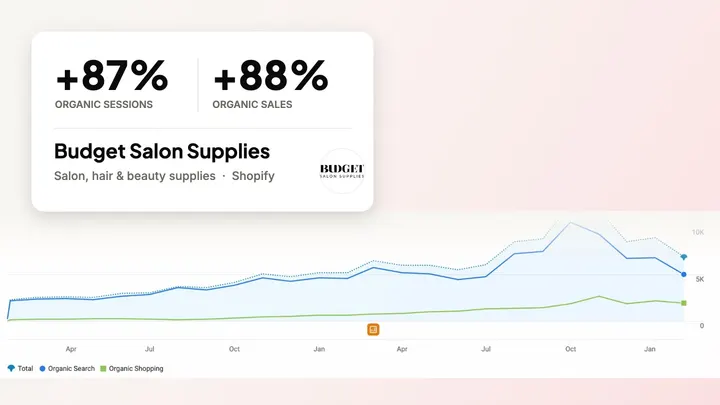
The challenge
Engagement: September 2024 to February 2026. Platform: Shopify, 1,000+ pages. Market: Australia. Services: technical SEO, on-page, content, link building and AI search optimisation (AEO/GEO).
Budget Salon Supplies sells professional hair, beauty and nail supplies from Sydney to salons and shoppers across Australia. The Shopify store had more than 1,000 pages and steady demand, but in September 2024 organic search brought in about 3,400 sessions a month, only 124 keywords ranked in Google's top 3, the domain had a Domain Rating of 1, and AI tools never mentioned the brand.
Our audit found nine problems in four areas:
- Technical SEO: poor Core Web Vitals from large product images, a heavy theme and scripts left behind by old apps. Shopify's default duplicate product URLs, tag pages and filter pages were all open to Google, so it spent its crawl on thousands of pages that should never rank.
- On-page and content: titles, meta descriptions and H1s were missing, copied across pages or did not use the words shoppers search for. Most product pages had a few lines of manufacturer copy, many collection pages had no text at all, and there was no blog or buying guide to answer questions before purchase.
- Site structure: every collection sat at one level, with brands, product types and hair concerns mixed together, so Google could not tell which page should rank for which search. Products and collections rarely linked to each other, and some products had no internal links at all.
- Authority and AI search: almost no backlinks (Domain Rating 1), so established beauty retailers outranked the store on category keywords. Google AI Overviews, ChatGPT and other assistants did not cite or recommend the site.
A tenth problem arrived mid-project. In October 2025 a .co.nz copy of the store, with the same products, descriptions, titles and collections, started competing with bsalonsupplies.com.au in Google. Google saw two copies of more than 1,000 pages, kept switching between them, split the ranking signals across two domains, and rankings dropped.
Our approach
We fixed the technical problems first, then rebuilt the structure and content, then built backlinks and optimised the site for AI search.
- Fix the foundation (Sep to Dec 2024). A full technical audit of every URL on the store. We noindexed tag and filter pages, set canonicals on duplicate product paths, compressed images, added lazy loading and removed unused apps and scripts to lift Core Web Vitals. We rewrote titles, meta descriptions and H1s for the top revenue pages and added Product, Breadcrumb and Organization schema.
- Build structure and content (Jan to Jun 2025). We rebuilt the collections into a clear hierarchy by brand, product type and hair concern, so each important search has one page to rank. We wrote unique copy and FAQs for collection pages, rewrote thin descriptions for the best sellers, launched the blog with buying guides and how-to content, and linked guides to collections and collections to products.
- Build backlinks and AI visibility (Jul 2025 to Feb 2026). Link building from beauty, salon and Australian business sites. Content written so AI tools can quote it: direct answers, FAQ sections and comparison tables (AEO/GEO). Indexing checks on Bing and other search engines, and monthly checks of rankings, crawl health and AI citations.
The .co.nz fix. We mapped every duplicated URL across both domains and set up hreflang for en-AU and en-NZ with self-referencing canonical tags, so Google shows .com.au in Australia and .co.nz in New Zealand. We then tracked the recovery page by page in Search Console.
The results
Organic search sessions increased from 3,429 in September 2024 to 10,612 in October 2025, the best month of the project. Sessions fell back from November after the .co.nz duplicate caused the October ranking drop, and were 6,061 in February 2026.
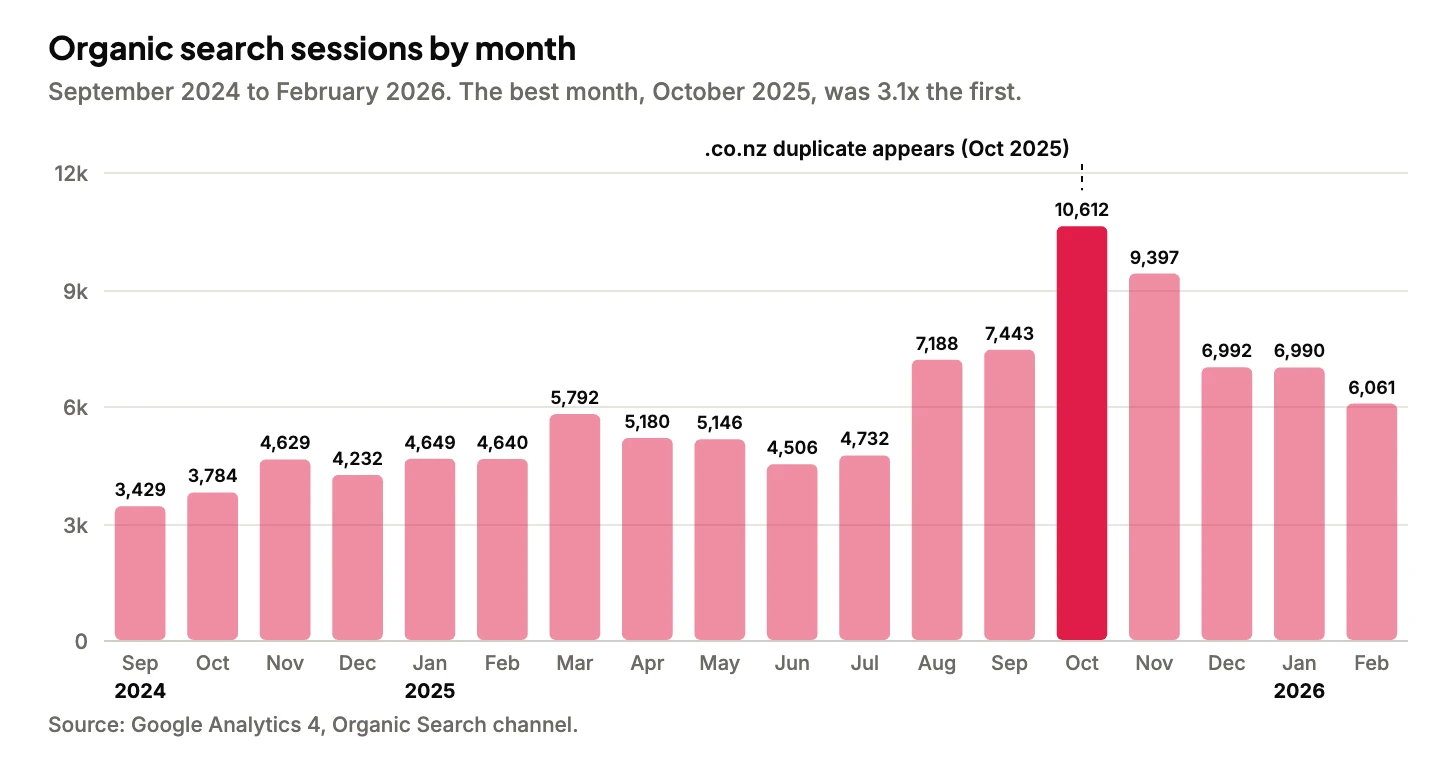
Comparing the same six months year on year (September to February), organic search sessions rose from 25,363 to 47,495 (+87%) and organic users from 23,308 to 42,425 (+82%). Organic users followed the same curve as sessions, from 3,138 in September 2024 to 9,620 in October 2025.
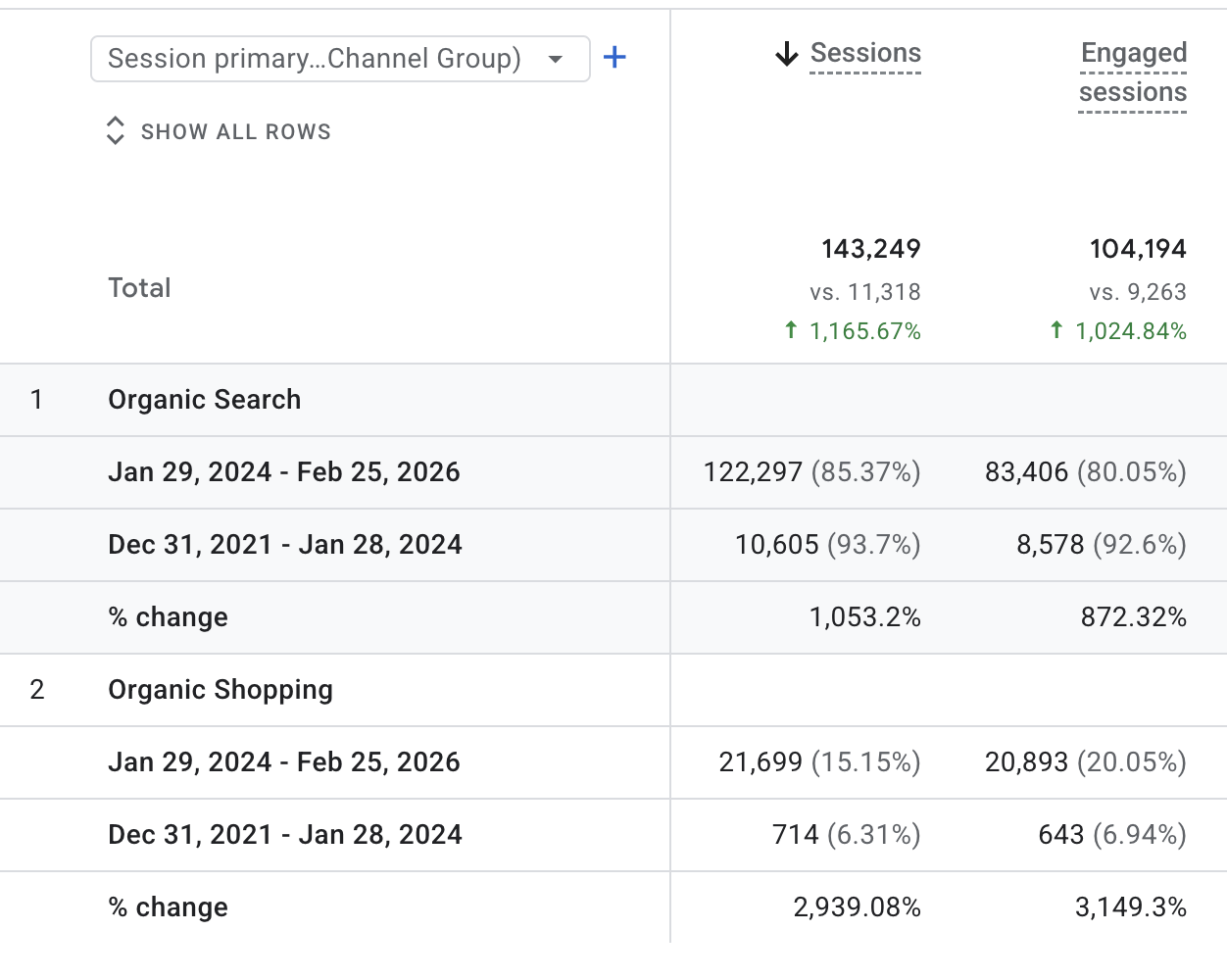
Across the whole GA4 window, 29 January 2024 to 25 February 2026, the store recorded 143,249 organic sessions: 122,297 from organic search and 21,699 from organic shopping.
Organic sales
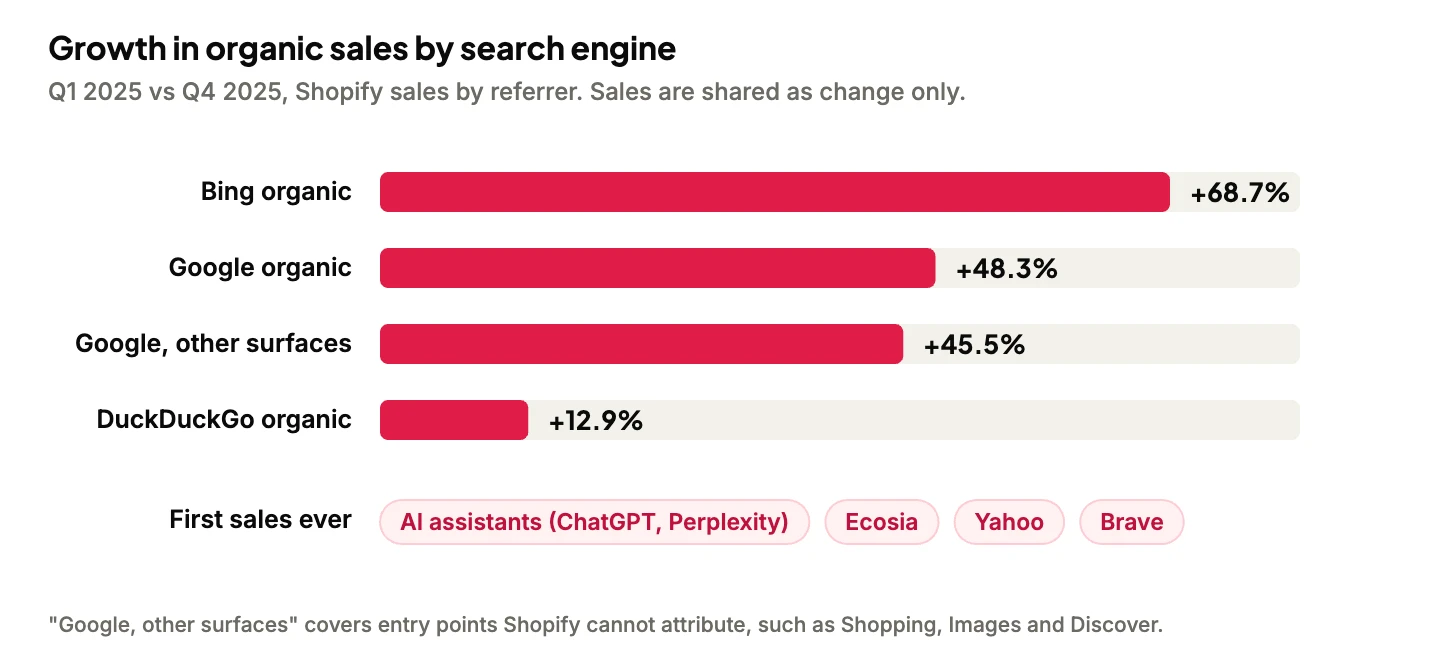
Organic sales increased 88% comparing Q1 and Q4 2025 (Shopify sales by referrer), organic orders increased 75.4%, and the organic conversion rate rose from 2.08% to 3.13%. Sales increased from every organic source, Bing fastest, and AI assistants, Ecosia, Yahoo and Brave made sales for the first time.
Rankings
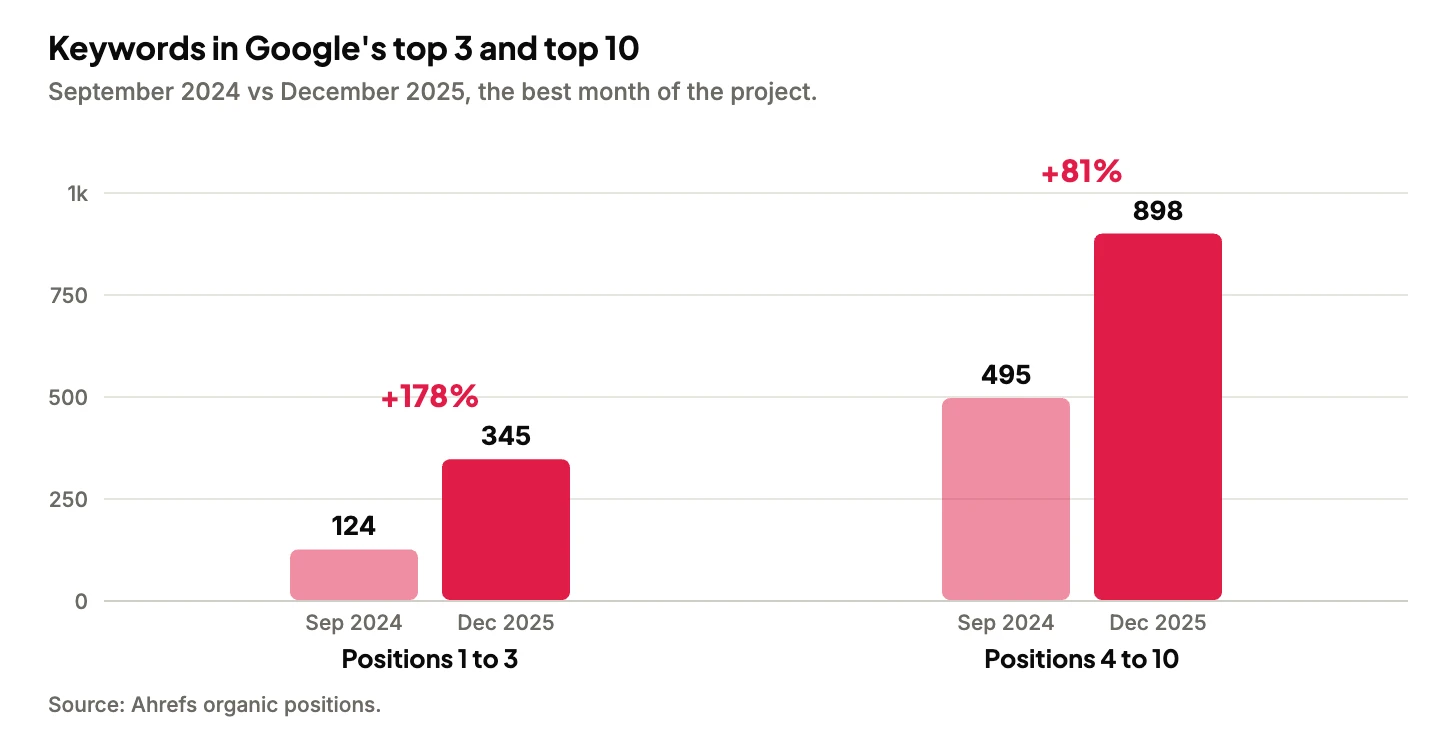
Between September 2024 and December 2025, keywords in Google's top 3 increased from 124 to 345 (+178%), keywords in positions 4 to 10 from 495 to 898 (+81%), and keywords on page 1 from 619 to 1,243 (+101%). Click-through rate in Search Console rose from 0.74% to 0.90% (+22%), so clicks still increased 3% (13.7K to 14.1K a quarter) even though impressions fell from 1.8M to 1.6M after the October .co.nz issue.
Authority
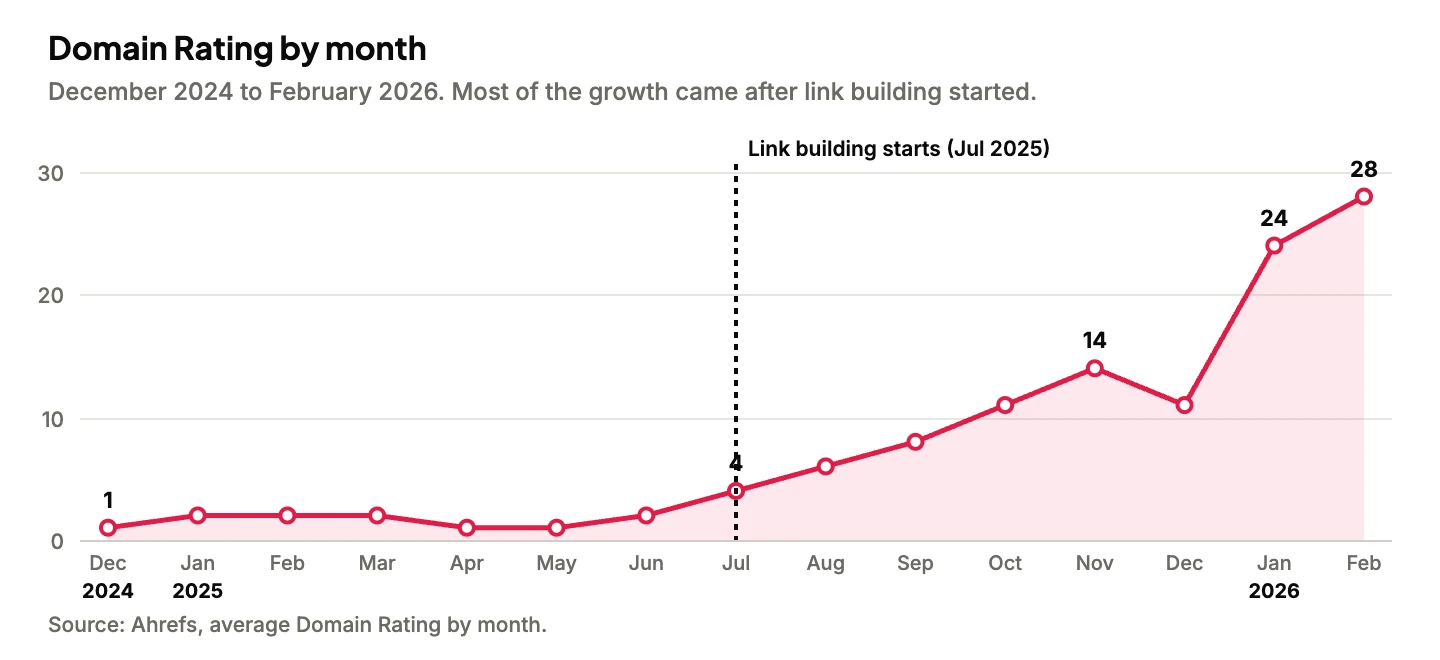
Domain Rating increased from 1 to 28 (Ahrefs). It sat between 1 and 2 for the first seven months, then climbed every month once link building started in July 2025.
AI search
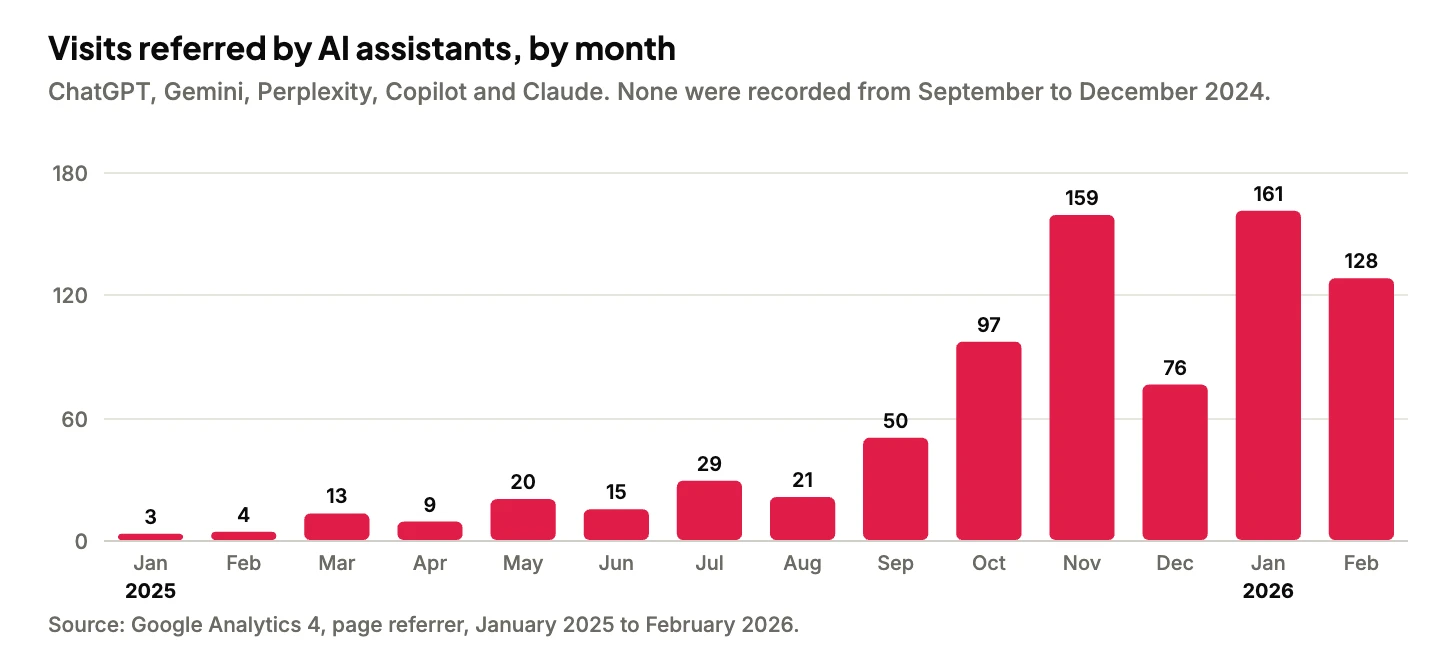
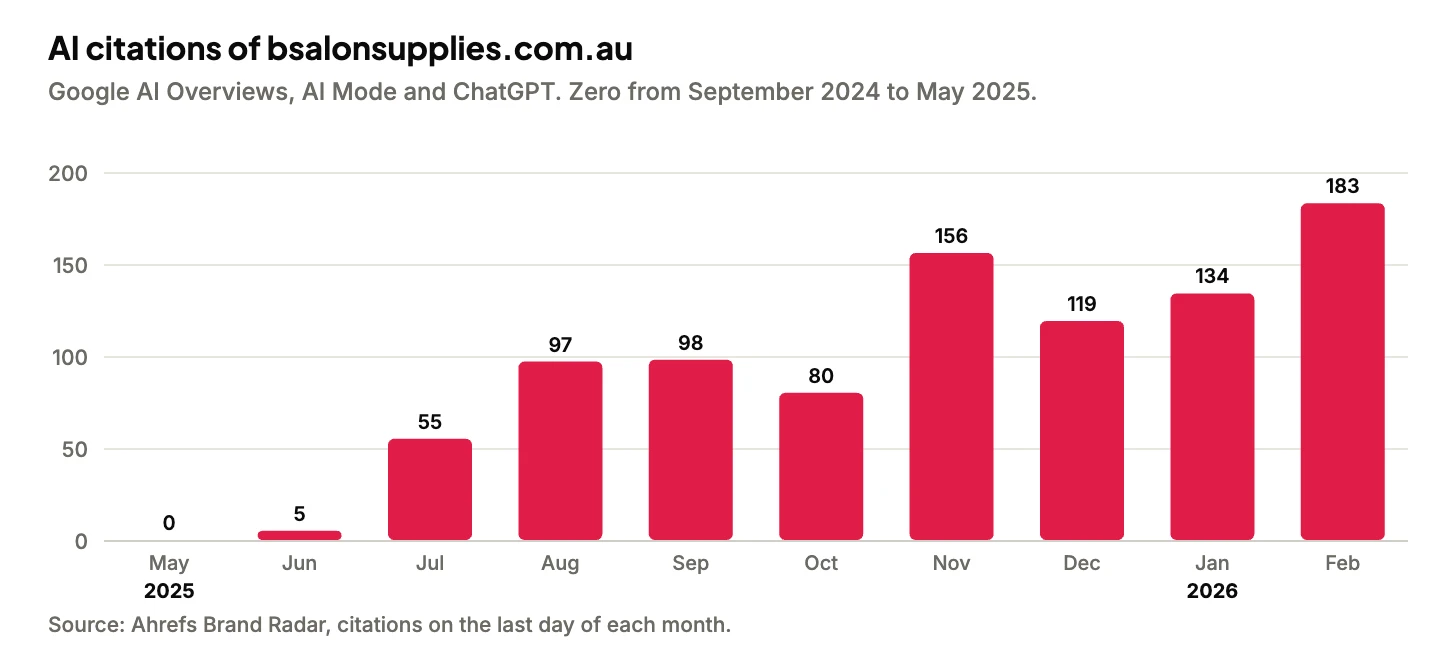
In September 2024 no AI tool cited the site. After the AEO/GEO work started in mid 2025, AI citations across Google AI Overviews, AI Mode and ChatGPT grew from 0 to 183 (Ahrefs Brand Radar), most of them in AI Overviews. Visits referred by ChatGPT, Gemini, Perplexity, Copilot and Claude increased 96x year on year, from 7 to 671 (September to February), and in Q4 2025 shoppers from ChatGPT and Perplexity placed orders for the first time.
After the engagement
Search Console for the 16 months to November 2026, which runs nine months past the end of our work, shows the content and schema work still holding. Four of the store's six most-clicked pages are buying guides we wrote (permed-hair shampoos, clipper blades, ionic vs ceramic straighteners, K18 vs other repair treatments), and the 59 guides brought 9,620 clicks and 2.1 million impressions. Product snippets and merchant listings, the rich results that come from the Product schema we added, account for 72% of all clicks, and merchant listings convert at a 5.15% click-through rate against a site average of 0.85%.
Every result, before and after
All numbers come from the client's Google Analytics, Search Console, Shopify and Ahrefs accounts.
| Metric | Before | After | Change | Period and source |
|---|---|---|---|---|
| Organic search sessions, best month | 3,429 | 10,612 | +209% | Sep 2024 vs Oct 2025, GA4 |
| Organic users, best month | 3,138 | 9,620 | +207% | Sep 2024 vs Oct 2025, GA4 |
| Organic search sessions | 25,363 | 47,495 | +87% | Sep to Feb, year on year, GA4 |
| Organic users | 23,308 | 42,425 | +82% | Sep to Feb, year on year, GA4 |
| Organic sales | % change only | +88% | Q1 vs Q4 2025, Shopify | |
| Organic orders | % change only | +75.4% | Q1 vs Q4 2025, Shopify | |
| Organic conversion rate | 2.08% | 3.13% | +50% | Q1 vs Q4 2025, Shopify |
| Click-through rate | 0.74% | 0.90% | +22% | Q1 vs Q4 2025, Search Console |
| Google clicks per quarter | 13.7K | 14.1K | +3% | Q1 vs Q4 2025, Search Console |
| Keywords in Google's top 3 | 124 | 345 | +178% | Sep 2024 vs Dec 2025, Ahrefs |
| Keywords on page 1 | 619 | 1,243 | +101% | Sep 2024 vs Dec 2025, Ahrefs |
| Domain Rating | 1 | 28 | +27 | Dec 2024 vs Feb 2026, Ahrefs |
| AI citations | 0 | 183 | New | Sep 2024 vs Feb 2026, Ahrefs |
| Visits from AI assistants | 7 | 671 | 96x | Sep to Feb, year on year, GA4 |
| Sales from AI assistants | None | First orders | New | Q1 vs Q4 2025, Shopify |
What we fixed, and what changed
| Issue we found | What we did | What changed |
|---|---|---|
| Duplicate .co.nz store | Mapped duplicate URLs, added hreflang and self-referencing canonicals | Google shows .com.au to Australian searchers and .co.nz to New Zealand searchers |
| 1,000+ pages with no structure | Rebuilt collections by brand, product type and hair concern | Each topic has one page that ranks for it; organic sessions up 87% |
| Thousands of useless URLs crawled | Noindexed tag and filter URLs, canonicalised duplicate product paths | Google crawls collections and products instead of tag and filter URLs |
| Poor Core Web Vitals and slow pages | Image compression, lazy loading, app and script cleanup | Faster pages on mobile; organic conversion rate from 2.08% to 3.13% |
| Missing and duplicate titles, metas and H1s | Rewrote them around real search terms | CTR from 0.74% to 0.90% |
| Thin product and collection content | Unique copy and FAQs for collections and best sellers | Keywords in the top 3 from 124 to 345 |
| No blog or buying guides | Launched buying guides and how-to content | The store ranks for buying questions and has pages AI tools can cite |
| Weak internal linking | Links from guides to collections to products | Collections and best sellers get far more internal links |
| No backlinks | Link building from relevant beauty, salon and Australian sites | Domain Rating from 1 to 28 |
| Not cited by AI tools | Direct answers, FAQ sections, comparison tables and schema (AEO/GEO) | 183 AI citations and the first orders from ChatGPT and Perplexity |
Two lessons for large Shopify stores. Fix the structure before adding pages: once each collection covered one topic, rankings and organic traffic increased. And start optimising for AI search now: direct answers, structured data and backlinks help with Google and AI tools at the same time.
Sources: Google Analytics 4 (sessions, AI referrals), Shopify sales by referrer (sales, orders, conversion rate), Google Search Console (clicks, CTR, top pages, search appearance) and Ahrefs (positions, Domain Rating, AI citations). Sales are shared as percentage change only.