Real Estate Marketing Ideas That Win More Listings in 2027
On this page 8 sections
Key takeaways
- Build appraisal campaigns around local suburb data, not generic promises
- Turn every listing into a reusable local content series for SEO and social
- Use verified reviews and vendor testimonials as listing evidence
- Combine portal reach with Meta retargeting to capture passive vendors
- Measure cost per appraisal and listings won, not likes or impressions
Most agents spend the bulk of their marketing budget on portals, then wonder why appraisal enquiries are patchy between campaigns. The portals do their job well, but they mainly reach buyers. The real estate marketing ideas that win more listings in 2027 are the ones that reach future vendors months before they pick up the phone.
This guide covers the tactics that work for Australian agents right now: suburb appraisal campaigns, listing content series, social proof, compliant Meta ads, virtual tours and the metrics that tell you whether any of it is paying off. If your website isn't pulling its weight yet, solid real estate SEO underpins almost everything below.
Why Do Most Agents Stop at the Portal?
Most agents stop at the portal because portals deliver buyer enquiries reliably, but they do very little to find the vendors who will list next.
Portal reach is strong, but it only captures active searchers
The numbers are big. According to REA Group's October 2026 audience figures for realestate.com.au, the site reached 11.8 million Australians in August 2026, including 5.7 million exclusive users, and nearly nine in 10 residential property seekers. Domain, now owned by CoStar, reported that Domain and Allhomes together reached 7.6 million Australians in September 2026, with its exclusive audience up 11.5% month on month to 1.5 million.
Use these figures in listing presentations to show vendors you'll put their home in front of both audiences. Two cautions: quote the source and month, and don't compare post-July figures with older ones. Ipsos iris changed its methodology in July 2026, and REA itself warns against those comparisons.
The vendor you want is not searching yet
A homeowner thinking about selling next spring isn't scrolling listings for their own suburb every night. They're on Facebook, Instagram and Google, quietly checking what nearby homes sold for and which agents seem to know the area. That's where your marketing needs to meet them.
Build Appraisal Campaigns Around Local Proof
An appraisal campaign generates enquiries from not-yet-active vendors by pairing a clear appraisal offer with evidence that you sell homes in their specific suburb.
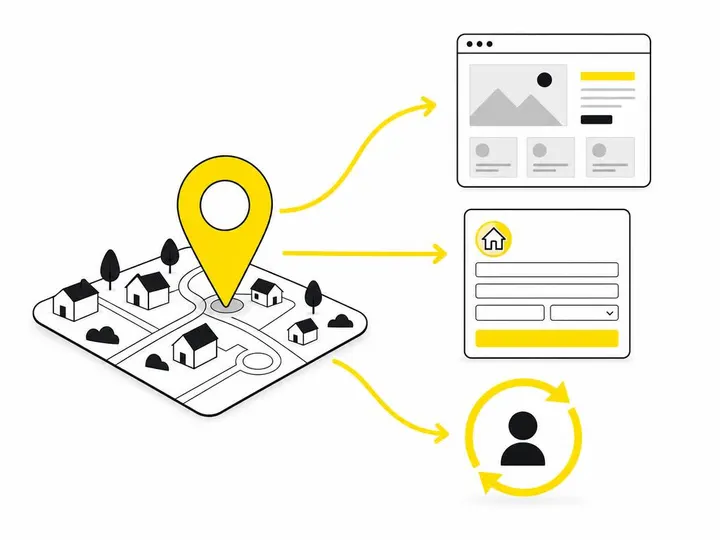
Create suburb-specific landing pages
Build one page per core suburb rather than a single generic "free appraisal" page. The approach is the same one used for suburb-specific landing pages in other local industries: unique content, local results and a clear reason to enquire. A Paddington vendor wants to see Paddington sales, not a list covering half of Sydney.
What to include in an appraisal campaign
Recent sales in that suburb with dates, property type and your role
A short quarterly market update written in plain English
Two or three vendor testimonials from the area
Review screenshots linked to your Google profile
A simple form offering an appraisal or a written market report
Retarget visitors who viewed but did not enquire
Most people who view an appraisal page leave without filling in the form. Facebook retargeting ads let you stay in front of them with fresh sales results and market updates for weeks afterwards, which is often exactly how long a vendor takes to decide.
Turn Every Listing Into a Local Content Series
Every listing can become a six-part content series that sells the home now and proves your local expertise to future vendors later.
The six-post listing sequence
Street appeal: the first impression and the street itself
Floorplan: how the layout suits real families
Lifestyle: how the home is lived in day to day
Amenities: schools, cafes, transport and parks nearby
Buyer profile: who this home suits and why
Result: the campaign outcome, shared once the sale is complete and the vendor agrees
Why this builds long-term SEO authority
A year of listing series gives you dozens of genuine, suburb-focused pages and posts. Google rewards that depth, and vendors researching agents find a body of local work rather than a thin brochure site.
Repurposing listing content on social
Each post can be cut into a reel, a carousel and a story. Domain's September 2026 audience report notes it has been the most-engaged property brand on Facebook and Instagram for three years, and PRD's October 2026 commentary makes the same point: video and storytelling reach people before they start searching.
What Social Proof Actually Wins Listings?
The social proof that wins listings is specific and verifiable: real sale results, genuine reviews and vendors speaking on camera about their experience.
What counts as useful social proof for agents
Recent suburb sales, Google reviews, before-and-after campaign examples and a clear explanation of your process all count. If you're not actively collecting reviews after each settlement, it's worth learning how to get more leads from reviews.
How to present sale results without making vague claims
Avoid "number one agent" or "record results" unless you state the basis and timeframe, for example "most houses sold in Marrickville by our office, 1 January to 30 June 2026, based on agency records". Specific claims build trust; vague ones invite scepticism and potential consumer law problems.
Vendor video testimonials and review screenshots
A 45-second clip of a vendor explaining why they chose you and how the campaign ran is more persuasive than any brochure. Pair it with review screenshots so prospects can see you didn't cherry-pick one happy client.

How Can Agents Use Meta Ads for Listings and Stay Compliant?
Agents can promote listings on Facebook and Instagram as long as the ads follow Meta's advertising policies and the price-quoting rules in their state.
How portals and paid social work together
Portals catch active buyers. Meta Ads (Facebook and Instagram) reach the people scrolling in the evening, including neighbours who may sell next. Every listing ad also builds an audience you can retarget with appraisal content later. Our guide to Meta ads for real estate agents goes into setup in more detail.
Compliance rules for listing promotion on Meta
Meta classifies housing as a special ad category, which restricts targeting by age, gender and detailed demographics
Any price or price guide must match your genuine estimate and the agency agreement under your state's price-quoting compliance rules
In NSW and Victoria, underquoting penalties are significant, so check copy before every ad goes live
Update or pause ads promptly when the price guide changes
Using custom audiences to reach likely vendors
Build custom audiences from appraisal page visitors, people who watched your suburb videos, and your database. Use these for appraisal messaging rather than listing ads, and keep the copy focused on local results.
Add Video and Virtual Tours to Your Appraisal Pitch
Video and virtual tours strengthen your appraisal pitch because they show vendors a distribution plan that goes well beyond photos and a portal listing.
What vendors actually respond to
Vendors want to know buyers will see their home properly. A short agent-led walkthrough from a previous campaign, plus a suburb video, makes your plan tangible during the listing presentation.
Using 3D tours and walkthroughs as distribution proof
Domain is pushing Matterport tours harder in 2026, including through its activity around The Block. Present 3D tours as an addition to quality photography, floorplans and open homes, not a replacement. They're especially useful for interstate buyers and time-poor professionals.

Which Metrics Show Your Marketing Is Working?
The metrics that matter are the ones tied to vendor outcomes: appraisal enquiries, presentations, signed authorities and listings won.
The metrics that tell you if your marketing is working
Appraisal enquiries per month, by suburb
Qualified vendor conversations
Listing presentations booked
Signed agency agreements
Cost per appraisal and cost per listing won
Moving beyond vanity metrics
Likes, impressions and video views are useful signals but poor scorecards. Many appraisal leads won't list for six to 18 months, so nurturing leads who are not ready to list with regular market updates is where much of your return actually sits.
Conclusion
Portals like realestate.com.au and Domain remain essential for selling homes, but they won't fill your pipeline with future vendors. Suburb appraisal campaigns, listing content series, specific social proof, compliant Meta ads and virtual tours reach owners before they start searching.
Start small: pick your strongest suburb, build one appraisal landing page with recent sales and testimonials, set up retargeting, and track cost per appraisal for 90 days. Once that suburb is producing enquiries, repeat the process in the next one.