Landscaping Marketing: How to Win More Design and Construct Jobs
On this page 8 sections
Key takeaways
- Show the full project process, not just the finished photo
- Target suburb and service combinations with dedicated landing pages
- Keep your Google Business Profile stocked with project photos and reviews
- Turn every job into a social content series across Reels and carousels
- Spring and early summer are peak enquiry periods — ramp up before then
Most landscapers don't have a lead problem. They have a lead quality problem. The phone rings for hedge trims, one-off mows and "can you give me a rough price over the phone" enquiries, while the $40,000 backyard redesigns go to someone else. Good landscaping marketing fixes that by changing who finds you and what they see when they do.
This guide covers how to attract design and construct clients through your portfolio, local search, social media and timing. If you want the technical side handled for you, our SEO for landscapers covers most of what follows. Either way, the principles are the same.
Why is landscaping marketing different in 2027?
Landscaping marketing in 2026 is harder because more businesses are competing for the same local homeowners, and the profitable jobs go to businesses that present as designers rather than installers.
A $13.1 billion sector with 37,700 businesses competing locally
Australia's landscaping and gardening sector was estimated at $13.1 billion in 2026, with about $8.7 billion in landscaping services. Around 37,700 businesses share that pie, roughly 19,300 of them landscapers, according to IBISWorld Australian landscaping industry report figures cited in a recent industry analysis. Most are small local operators fighting over the same few suburbs.
The outlook is good. Future Market Insights identified Australia as the fastest-growing market in its global landscaping forecast, with a projected 6.9% annual growth rate from 2026 to 2036. Growth doesn't help you much if homeowners can't tell you apart from the next ute with a trailer, though.
Design and construct jobs pay better, and so does attracting them
Outdoor projects for new homes are estimated at $15,000 to $60,000 (an indicative range from industry sources, not official data). One design and construct job can be worth more than a year of fortnightly maintenance on a single property. Those clients also research harder, compare portfolios and pay for confidence. That's what your marketing needs to deliver.
What should a landscaping portfolio include to justify premium pricing?
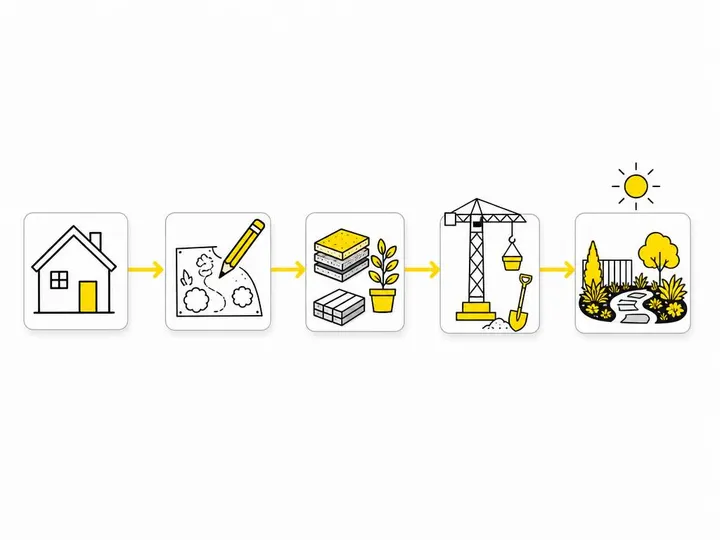
A portfolio that justifies premium pricing shows your thinking, not just the finished garden: the brief, the problem, the design response and the build.
Document the brief, the constraints and the concept
Anyone can photograph a fresh lawn. What design-led clients want to see is how you handled a sloping block, poor drainage, a tight side access or a council setback. Write two or three sentences per project covering what the client asked for, what made it tricky and what you proposed. Include concept sketches or plans if you have them.
Show construction stages, material choices and planting decisions
Progress photos prove you build what you design. Explain why you chose spotted gum over composite decking, or natives over a thirsty exotic hedge. Drought-tolerant planting and irrigation are worth mentioning often, as water management is one of the trends Future Market Insights links to demand.
Include indicative budget ranges where appropriate
A line like "this project sat in the $35,000 to $50,000 range" quietly filters out people expecting a $5,000 makeover. It saves you wasted site visits and tells serious buyers you're upfront about money.
How do landscapers rank in suburb-level Google searches?
Landscapers rank in suburb-level searches by combining relevant suburb landing pages, a complete and active Google Business Profile, and a steady flow of detailed reviews.
Create suburb and service landing pages that target real project intent
Build pages around how people actually search: "landscape design and construction Northern Beaches" or "backyard landscaping Sutherland Shire". Each page needs genuine local projects, the suburbs you service, FAQs and testimonials. Thin pages with the suburb name swapped out won't rank. Our guide to suburb landing pages walks through the structure.
Optimise your Google Business Profile as a project showcase
Your Google Business Profile is often the first thing a homeowner sees in the Google Maps local pack, so treat it like a gallery. List landscape design, construction, paving, retaining walls and planting as separate services. Upload project photos regularly, answer questions and post updates. A simple Google Business Profile content plan makes this a 20 minute weekly habit rather than a chore.
Keep an eye on Google AI Mode too. On 29 October 2026, Google announced ads in AI Mode were expanding to Australia, which may change how searches like "landscape designer near me" look. A strong profile and website give AI tools more to draw on, whatever the format turns out to be.
Build reviews that mention suburb, project type and outcome
Reviews matter, but they aren't everything. An Australian analysis of 720 Google Maps listings across 36 searches, conducted on 24 September 2026, found:
The top three listings had a median of 66 reviews
Positions four to 20 had a median of 31
Reviews alone did not determine rankings
So keep asking, and nudge clients to mention their suburb and project naturally ("our new deck and garden in Cronulla"). Here's more on how to get more leads from Google reviews.
What social media content attracts design enquiries?
The social content that attracts design enquiries shows a full project journey, from bare site to finished garden, so viewers see your process and not just a pretty photo.
Turn each project into a content series from start to finish
One project can fill a month: site assessment, concept, excavation, structures going in, planting and final reveal. Each post links back to the project page on your website, where interested homeowners can enquire.
Reels and carousels for transformation content
Instagram Reels suit quick transformations and timelapses of a pour or a wall going up. Carousels work well for before, during and after sequences with a short caption explaining design choices. Need inspiration? See these Instagram Reels ideas for job sites.
What to know about Instagram video developments in 2026
On 26 October 2026, Meta began testing 90 minute horizontal videos for selected creators in Brazil and the US. There's no Australian date, so don't plan around it yet. Separately, the Meta Commercial Terms 2026 took effect on 30 October. Early wording raised concerns about Meta crawling business websites, though reporting says the stated purpose was later narrowed to advertising and integrity. It's worth reading before you link your site to your business accounts. If you'd rather not keep up with all this, consider social media management for landscapers.

Time your marketing around seasonal search demand
Landscaping searches in Australia peak in spring and the lead-up to summer, so your marketing effort and budget should ramp up from late winter.
When Australians search most for landscapers
A 2026 keyword analysis found seasonal keyword demand for "landscaping" rose from 8,100 searches in July to 14,800 in spring. "Landscaper" hit 9,900 searches in January, February and July. Practically:
July to August: refresh pages, publish new projects, gather reviews
September to December: increase ad spend and posting frequency
January to February: push follow-ups and holiday-break planners
How rising dwelling commencements create new-home landscaping demand
Australia recorded 52,201 dwelling commencements in the April to June 2026 quarter, up 14.4% year on year. Check the Australian Bureau of Statistics building commencements data for your region. Those homes need gardens within a year or two, so a "new home landscaping" page targeting growth suburbs is a smart bet.
What makes a landscaping business the most money?
The most profitable landscaping businesses earn more by winning better clients on design and construct packages, not by squeezing in more low-margin maintenance jobs.
Focus on design and construct packages, not hourly maintenance
Package your offer clearly: design consultation, concept plan, then construction. Paid design fees signal value and weed out tyre kickers. Maintenance can still be useful as an add-on for past build clients.
Qualifying leads before the site visit saves time and raises close rates
Add budget range, timeframe and project type fields to your enquiry form. A quick phone call before driving out means fewer wasted afternoons and more visits with people ready to proceed.

Putting it all together: a practical landscaping marketing checklist
Write up your five best projects with brief, constraints, materials and budget range
Build suburb and service pages for your core areas
Complete every Google Business Profile section and post weekly
Ask every client for a review mentioning suburb and project
Turn each project into a four to six post social series
Lift spend from September, prepare in July
Qualify every lead before the site visit
Conclusion
Winning more design and construct work comes down to showing your thinking, being visible in local search and reaching homeowners when they're planning. A portfolio that explains the brief and budget, suburb pages backed by real projects, an active Google Business Profile and consistent project content will do more than any single ad campaign.
Start small. This week, pick your best recent job and write it up properly with photos, the problem you solved and a budget range, then share it on your website, Google profile and Instagram. Repeat that for every project and your marketing will start attracting the clients you actually want.