How to Create a Referral Program for Your Tradie Business

On this page 9 sections
Key takeaways
- Pick one clear incentive cash, gift card or discount — and stick to it
- Ask for referrals at job completion, not weeks later
- Track every referral so you know what the program is worth
- Keep the ask simple: one message, one action, one reward
- Do not incentivise Google reviews — reward referrals only
Most small trade and service businesses already run on word-of-mouth marketing. They just don't run it on purpose. A referral program for tradies turns the occasional "my neighbour recommended you" call into a steady, trackable lead source that costs far less than most paid channels. It also sits neatly alongside the other lead generation ideas for Australian tradies you may already be using. Here's how to set one up, stay on the right side of Australian law, and tell whether it's paying off.
Why Are Referral Leads Worth Chasing?
Referral leads are worth chasing because they arrive already trusting you, they convert more easily, and they usually cost less per job than any other source.
Warmer leads, less sales work
Someone referred by a friend has already heard that you turn up on time and do good work. You spend less time justifying your quote and more time booking the job.
Lower cost per job than paid ads
With Google Ads or lead marketplaces, you pay for every click or enquiry whether you win the work or not. With a referral program you normally pay only once a job is booked. Your cost per lead is effectively zero, and your cost per job is whatever reward you choose.
The catch: referrals are inconsistent without a system
Left alone, referrals arrive in bursts and dry up right when you need them. A program gives customers a reason to recommend you and gives you a way to measure the results.
What Makes a Referral Program Work for a Trade Business
A referral program works when the reward is easy to explain, the ask comes at the right moment, and referring someone takes the customer less than a minute.
A clear, easy-to-explain incentive
If you can't explain it in one sentence on site, it's too complicated. "Refer a friend and we'll give you $100 when they book" is about right.
The right moment to ask
Ask when the customer is happiest, which is usually when the job is finished. Three months later, the goodwill has faded.
A dead-simple process for the customer
Give them a card, a link or a text they can forward. Don't make them fill in forms or remember codes.
What Incentive Should You Offer for a Referral?
Offer a reward your customers genuinely value that you can comfortably cover from the profit on an average job. For most trades, that lands somewhere between $50 and $200.
Cash or bank transfer
Cash is simple and everyone understands it. Record each payment properly and check with your accountant about how to treat it.
Gift cards
A gift card for a local restaurant or a hardware store feels more like a thank you than a transaction. Some customers prefer that.
Discount on their next job
A discount costs you less than cash and brings in repeat work. It only appeals if they'll need you again, so it suits pest control or electrical maintenance better than a once-a-decade roof replacement.
Charitable donation in their name
Some customers feel awkward taking money from a business. A donation to their local footy club or a charity they choose gets around that and builds goodwill in your area.
What amount is worth offering?
Base it on your average job value and your customer lifetime value. A $150 reward on a $4,000 bathroom job is easy to justify. The same reward on a $180 call-out isn't. Many businesses also offer the new customer a small discount so both people get something.
How to Set Up the Program Step by Step
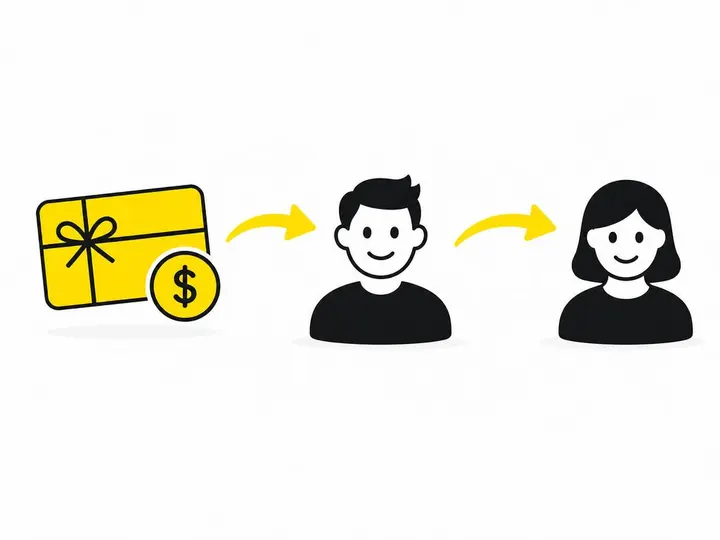
You can set up a referral program in an afternoon: write the rules, choose how people refer, decide when you pay, and start tracking.
Step 1: Define the rules in plain English
Decide who qualifies, any minimum job value, and whether rewards expire. If the rules won't fit on the back of a business card, simplify them.
Step 2: Choose how customers refer someone
The easiest option is to ask the new customer to mention the referrer's name when they call. You can also use referral cards with the customer's name written on them, or a referral field on your website form. Make sure whoever answers the phone asks how the caller heard about you. Set up missed call text-back for tradies too, so referred callers you miss while you're on the tools don't ring a competitor instead.
Step 3: Decide when the reward is paid out
Pay once the referred job is completed and paid for, not when you send the quote. State this upfront so nobody feels short-changed.
Step 4: Build a simple tracking system
For every referral, record who referred, who was referred, the job value and whether the reward has been paid. More on this below.
When Should You Ask a Customer for a Referral?
The best time to ask for a referral is at job completion, when the customer has just seen the finished work and is thanking you for it.
The best time to ask is at job completion
Hand over a referral card with the invoice, or mention it during the final walk-through.
What to say (with a word-for-word script)
"Glad you're happy with it. Most of our work comes from people like you recommending us, so if you know anyone who needs a hand, pass on this card. When they book a job with us, we'll send you $100 as a thank you."
Following up by SMS or email without being annoying
Send one short message within a week with the referral details, then add a brief reminder to a natural touchpoint later on, such as a service reminder. When a referred enquiry does come in, respond fast. Our guide on following up on leads quickly covers how.

What Are the Legal Rules Around Referral Incentives in Australia?
Referral rewards are legal in Australia, but you must describe them accurately, never pay for reviews, and follow the Spam Act when you message customers.
Australian Consumer Law and misleading claims
Under Australian Consumer Law (ACL), your referral offer must be honest. If you advertise $100, pay $100, and don't bury conditions in fine print that changes the deal.
Why you must not incentivise Google reviews
Never tie a reward to leaving a review. Google's policy on reviews and prohibited content bans incentivised reviews, and the ACCC guidance on fake or misleading reviews warns that they can mislead consumers. Keep your referral program and review requests completely separate. If reviews are part of your plan, read our guide on turning reviews into enquiries the right way.
Spam Act 2001 rules for follow-up messages
A referral SMS or email is a commercial electronic message under the Spam Act 2001. That means you need to follow three rules:
- Consent: get express consent, ideally a tickbox on your quote or booking form, rather than relying on inferred consent.
- Identify yourself: include your business name and contact details.
- Unsubscribe: include a working opt-out and honour it within five business days.
How Do You Know If Your Referral Program Is Working?
Your referral program is working if the profit from referred jobs comfortably exceeds the rewards you've paid and the time it takes to run.
Simple spreadsheet method
Use one row per referral, with columns for date, referrer, new customer, job value and reward paid. Review it monthly.
Using your CRM or job management software
Tools like Tradify and ServiceM8 let you set a lead source on every job, so referral work shows up in your reports automatically. See our roundup of job management software for tradies if you're still using paper.
The one metric that tells you if it is worth keeping
Watch your cost per referred job. If you paid $1,500 in rewards across 15 jobs, that's $100 per job. Compare it with your other channels, and factor in the repeat work those customers bring over time.

Common Mistakes Tradies Make With Referral Programs
The most common mistakes are going quiet about the program, making rewards hard to claim, forgetting to pay, and relying on referrals alone.
Setting it up and never mentioning it again
Mention it on every invoice, in every completion chat and on your website.
Making the reward too complicated to claim
Forms, codes and long waiting periods kill participation quickly.
Forgetting to pay the reward out
A missed payment turns a fan into a critic. Pay promptly and send a thank you.
Relying on referrals as your only lead source
Referrals rise and fall with your past work volume, so keep other channels running alongside them.
Conclusion
A good referral program comes down to a simple reward, a well-timed ask, clear rules and honest tracking. Keep rewards separate from reviews, get consent before sending follow-up messages, and pay every reward on time.
This week, write your one-sentence offer, print some cards, and add a lead source field to your job management software. Then compare your cost per referred job against your other channels after three months.