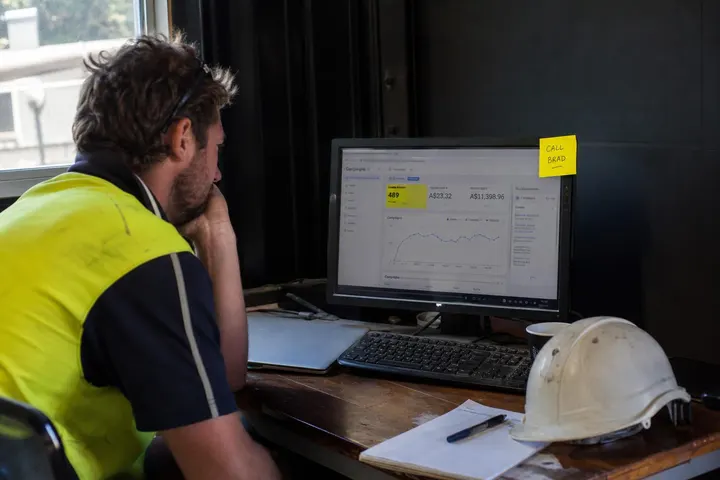
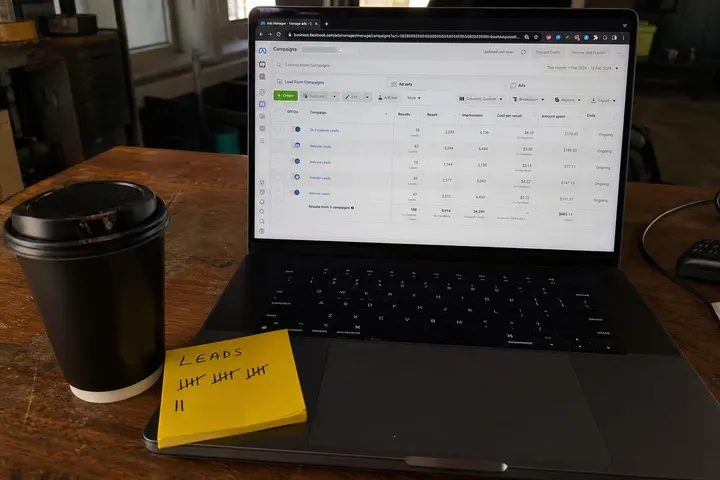
Facebook Lead Ads: How They Work and How to Follow Up Fast
On this page 8 sections
Key takeaways
- Instant Forms pre-fill contact details, reducing friction for the lead
- Higher Intent form type filters out casual clickers with an extra review step
- Real-time CRM connection beats manual CSV downloads every time
- Call or text within the hour while interest is still high
- Record every outcome so Meta can optimise towards actual sales
Facebook lead ads let people send you their details without ever leaving Facebook or Instagram, which makes enquiries cheap and easy to collect. The catch is that easy to submit also means easy to forget, so the businesses that do well with lead ads are the ones that follow up fast. Here is how they work, how to set them up properly and what to do the moment a lead arrives.
The audience is certainly there. The Digital 2026 report from DataReportal, We Are Social and Meltwater puts Australian social media users at around 21 million (77.7% of the population), with Facebook reaching roughly 80.6% of them. Whether lead ads suit you better than sending people to your website depends on your offer, and we unpack that in Facebook lead ads vs website forms.
What Are Facebook Lead Ads and How Do They Work?
Facebook Lead Ads are ads that open a Meta Instant Form inside Facebook or Instagram, so people can request a quote, booking or callback without visiting your website.
The journey from ad to Instant Form
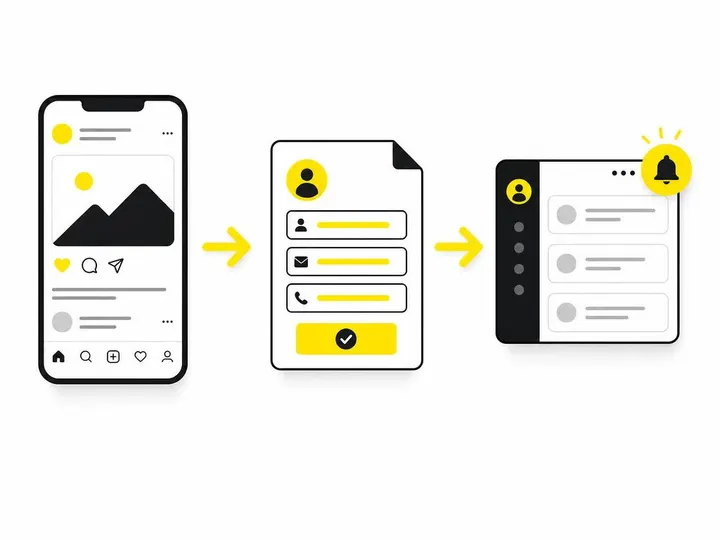
- Someone scrolling Facebook or Instagram sees your ad, for example "Free 20 minute bookkeeping review".
- They tap a button like "Get quote" or "Sign up".
- An Instant Form opens, with their name, email and phone number already filled in from their profile.
- They answer any questions you have added, check their details and submit.
- A thank you screen appears, which can include a button to call you or visit your site.
What information gets collected
Contact details come pre-filled, and you can add custom questions such as postcode, preferred appointment time or which service they need. Keep it short. Every extra field costs you submissions.
How the lead reaches you
Each submission is stored in Meta Leads Centre. From there you can view it, download it, or have it pushed straight into your email, spreadsheet or CRM through an integration.
How to Set Up a Facebook Lead Ad That Attracts the Right People
A good lead ad uses the Leads objective, sends people to an Instant Form and asks just enough to separate genuine buyers from casual browsers.
Choosing your campaign objective
In Ads Manager, choose the Leads objective and select Instant Forms as the conversion location. Target the suburbs or regions you actually service.
Building your Instant Form
Write a short intro that restates the offer, add your questions, link your privacy policy (Meta requires one) and set a thank you screen that tells people what happens next, such as "We'll call you within the hour during business hours".
Higher Intent vs. More Volume: which form type to use
- More Volume: quick to submit, cheaper leads, but more accidental or half-interested enquiries.
- Higher Intent: adds a review screen where people confirm their details before submitting. Fewer leads, usually better ones.
For most service businesses where every lead needs a phone call, Higher Intent is the safer default.
Adding qualifying questions
One or two multiple choice questions do the heavy lifting. A dental clinic might ask "Is this for a check up, cosmetic work or an emergency?" A cleaning business might ask "Home or office?" Multiple choice beats free text because it is quick to answer and easy to sort.
How Do You Get Leads Out of Facebook in Real Time?
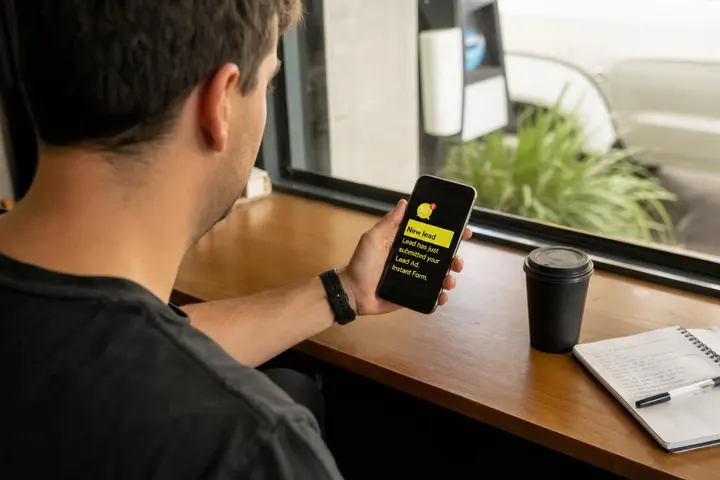
You get leads out of Facebook by checking Meta Leads Centre, switching on email notifications, or connecting a CRM integration that delivers each lead to you the moment it is submitted.
Option 1: Leads Centre (low volume, no tech required)
Fine if you get a handful of leads a week and someone checks it several times a day. The risk is that leads sit unseen.
Option 2: Email notifications
A basic step up. Leads land in your inbox, though emails are easy to miss when you are with a client.
Option 3: CRM or automation integration (recommended)
A CRM integration maps each form field into your system, stores the Meta lead ID, sends an SMS alert to whoever is on duty and triggers an automatic reply. It is worth the setup once you are getting regular leads. Our guide on how to automate lead notifications walks through the common tools.
What Does a Fast Follow-Up Sequence Look Like?
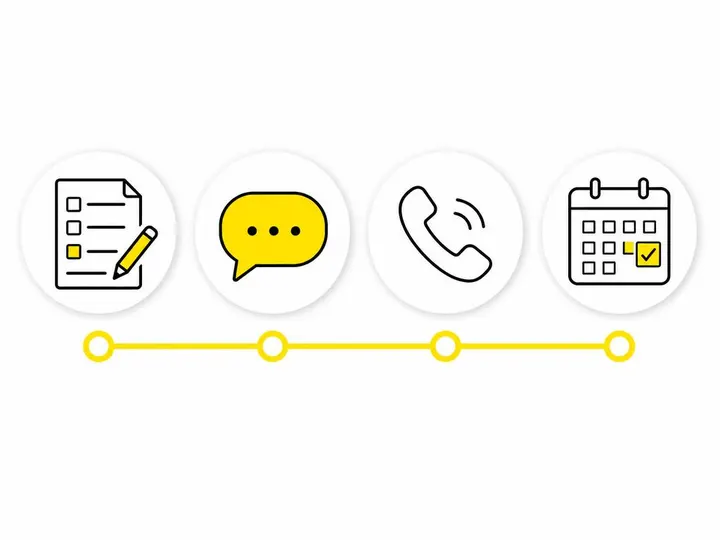
A practical sequence is an instant SMS or email acknowledgement, a phone call within the hour, a second attempt later that day, and a few short messages over the following days.
Step 1: Immediate SMS or email acknowledgement
Send it automatically: "Thanks Sarah, it's Mark from Harbour Physio. We'll call you shortly from 02 XXXX XXXX." People forget what they submitted on Facebook, so this reminds them who you are.
Step 2: Phone call within the hour
Lead ads capture people in the moment. The longer you wait, the more likely they have rung a competitor or simply moved on.
Step 3: Second attempt and a short follow-up sequence
No answer? Leave a brief voicemail, try again later that day, then send two or three short messages over the next few days. For a fuller template, see a practical lead follow-up process.
Running campaigns during staffed hours
Meta itself recommends running lead campaigns when someone can respond. If nobody answers enquiries on weekends, consider scheduling or pausing ads then.
How Do You Improve Lead Quality Without Killing Volume?
Improve lead quality by adding small, deliberate filters one at a time while tracking booked customers, not just cost per lead.
Require a phone number and consider SMS verification
Making phone mandatory and turning on SMS verification removes most fake numbers. It will cost some volume, but the leads you lose were rarely going to buy. More tactics are in our guide to filtering out poor leads.
Use conditional logic to screen mismatches early
Conditional logic shows different questions or endings based on answers. If someone selects a suburb you do not service, the form can politely tell them before they submit.
Send lead outcomes back to Meta
Record whether each lead was contacted, qualified, booked and won, then send those stages back through the Conversions API (CAPI). Meta reportedly stopped offering the "Maximise number of qualified leads" goal for new campaigns without a CAPI connection from April 2026, with existing campaigns affected from August 2026. Datahash has a useful explainer on how Facebook Lead Ads work and how to track them, and our own guide covers Meta Conversions API for small businesses.
The 200-lead minimum: is Meta's optimisation right for your volume?
Meta's guidance reportedly asks for at least 200 leads a month, daily uploads and a conversion stage within 28 days of the lead. Many small businesses will not reach that. Track outcomes anyway; the data still tells you which ads bring real customers.
Privacy, Consent and Australian Compliance
Running lead ads in Australia means telling people how you will use their details, linking a privacy policy and only sending marketing messages they have agreed to receive.
What to tell leads about how you will use their data
Say plainly on the form what you collect, why, and how you will contact them, for example by phone and SMS about their enquiry.
Australian Spam Act obligations
Under the Spam Act 2003, commercial emails and SMS need consent, must identify your business and must include a working way to unsubscribe. Add an optional checkbox if you want to send ongoing promotions, and have your wording checked by someone qualified.
Meta's updated Commercial Terms (October 2026)
Meta's updated Commercial Terms took effect on 30 October 2026 and reportedly allow Meta to crawl websites linked to business accounts. Review them, and keep an eye on broader updates like these Meta AI and ad changes advertisers need to know in 2026.
Common Questions About Facebook Lead Ads
Do lead ads work on Instagram too? Yes. The same Instant Form runs across Facebook and Instagram placements.
Are lead ad leads lower quality than website leads? Often, because submitting is so easy. Higher Intent forms, verification and fast follow-up close most of the gap.
How should I measure success? By cost per paying customer, not cost per lead. A $15 lead that never books is more expensive than a $40 lead that does.
Conclusion
Facebook lead ads are one of the simplest ways for Australian small businesses to collect enquiries, but the form is only half the job. Use the Higher Intent form type, ask one or two smart questions, get leads into your hands instantly and follow up within the hour. Track which leads become customers so you can judge your ads on real results.
Your practical next step: submit a test lead on your own form today and time how long it takes for someone in your business to know about it. If you would rather have the whole system built and managed, our Meta lead generation service handles the ads, forms and lead delivery for you.