Trust Signals on a Tradie Website That Turn Visitors into Calls
On this page 8 sections
Key takeaways
- Display your licence number and insurance visibly on every page
- Embed Google reviews with star ratings near your call-to-action
- Before-and-after photo galleries keep visitors on-site far longer
- A clear workmanship guarantee removes the biggest buying hesitation
- Real team photos outperform stock images for building personal trust
Trust is the invisible barrier between a website visitor and a phone call. On a tradie website, trust signals work harder than any headline or call-to-action button ever will. Most tradies underestimate how much a potential customer is quietly investigating them before they dial, and that investigation starts the moment they land on your site. Without the right signals in the right places, even a beautifully designed website will sit silent.
Why Trust Is the Real Conversion Problem on Tradie Websites
A visitor landing on your tradie website is not thinking about design aesthetics or clever copy. They are thinking about whether you will show up on time, do good work, and not disappear if something goes wrong. That fear is the only thing that matters.
What visitors are actually thinking when they land on your site
According to the BrightLocal Local Consumer Review Survey 2024, 76 percent of consumers read reviews before calling or visiting a business. Before they even look at your pricing or service menu, they are searching for proof that you exist, that your work is real, and that other people trusted you. If your website does not answer these questions in the first ten seconds, you lose them.
Research from Roy Morgan shows that 68 percent of Australians check a tradie's qualifications and licence status before making contact. They are not being paranoid. They are being sensible. Your job is to make that checking process effortless by putting the signals right in front of them.
Why a nice-looking website still fails to generate calls
A slick design with pretty colours and smooth animations counts for almost nothing if the fundamentals of trust are missing. A visitor can sense within seconds whether you are a real, established business or an amateur operation. The common tradie website design mistakes that cost jobs are usually not about aesthetics at all. They are about missing or hidden trust signals. When licence numbers are buried in the footer, reviews are nowhere to be found, and your team is represented by stock photos, you are telling visitors that you have something to hide.
Reviews and Star Ratings: The Non-Negotiable Starting Point
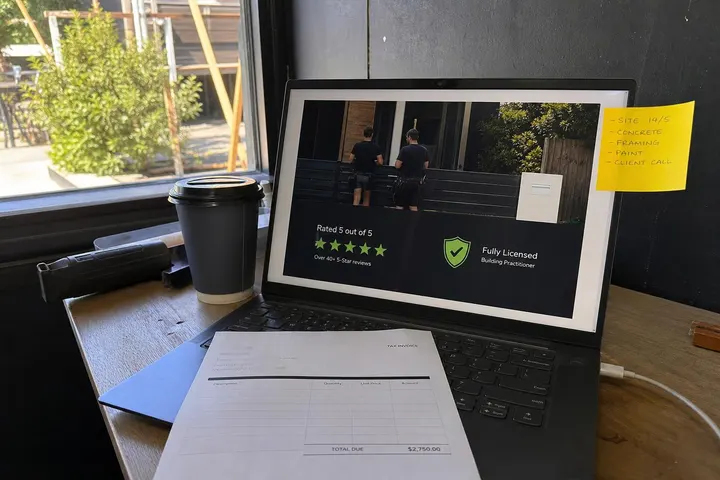
Customer reviews are the single strongest trust signal a tradie website can display, with 91 percent of consumers trusting reviews as much as personal recommendations.
Where to embed reviews for maximum impact
Your Google Business Profile is your foundation. Every review posted there feeds directly into Google Search and Maps results, which means new customers see your star rating before they even visit your website. But once they land on your site, reviews need to live on your homepage and on every relevant service page. Do not hide them behind a tab or a "Testimonials" link buried two clicks deep. A visitor scrolling your homepage should see at least three to five real customer reviews within the first screen.
Embedding reviews from Google, Trustpilot, or your own collected testimonials gives visitors immediate proof of your track record. A single four-star review is better than no reviews. A dozen five-star reviews is what turns hesitation into a phone call.
How to get a steady stream of fresh Google reviews
Most tradies wait passively for reviews to arrive. Instead, ask directly. After you finish a job, send a text or email with a link to your Google Business Profile and a simple message: "If you were happy with the work, we would love a quick review." Make it easier for happy customers than for unhappy ones to leave feedback. The reviews that matter most are those from genuine customers doing genuine projects.
Aim for at least one new review per week. That signals to Google that your business is active and to visitors that you are still working regularly.
Using AI to respond to reviews and keep your profile active
You can use AI to manage customer reviews by automating professional responses to feedback. This keeps your profile active without consuming hours of your week. Tools like Google's own review management features allow you to respond quickly and professionally to every review, which tells visitors that you take feedback seriously. A review without a response sits there like an open wound. A review with a thoughtful reply shows you care.
Licence Numbers, Insurance and Certifications
Displaying your licence number and proof of insurance is not optional compliance jargon. It is a trust signal that directly changes visitor behaviour.
What to display and exactly where to put it
Your licence number should appear on your homepage, ideally near the top of the page or in a dedicated trust section. Do not bury it in a footer. If you are a Queensland tradie, include your QBCC licence number and link to the QBCC licence check so visitors can verify it instantly. If you are in NSW, provide your Fair Trading licence and link to the Fair Trading NSW contractor licence requirements.
Include a statement that your business is fully insured and mention the type of insurance that matters to customers: public liability, workers compensation, or professional indemnity. A badge or tick mark next to "Fully Licensed and Insured" has measurable impact. Research from Trustpilot shows that displaying certification badges increases click-to-call rates by 28 percent.
Industry bodies and badges worth showing in Australia
If you are a member of the Master Builders Association, Master Electricians Australia, or another relevant industry body, say so. Display their logo on your website with a link to their member directory if available. These associations exist precisely because they create trust. Use that trust by association. If you hold a Google Guaranteed badge (for certain service categories), make it prominent. These badges are not just nice to have. They are proof that you have passed background checks and customer satisfaction requirements.
Before-and-After Photos and Project Portfolios
Before-and-after photos increase time-on-page by 4.2 minutes compared to 1.8 minutes for websites without them, and they are one of the few trust signals that actually changes how visitors perceive your capability.
How to photograph your work with just a phone
You do not need a professional photographer. A smartphone with good natural light and a clean background is enough. Take a before photo on day one of the job. Take the after photo when the light is best, with the finished work as the centre of attention. Avoid cluttered backgrounds. Use a consistent angle if possible. The point is not to win an award. The point is to show real, recent work.
Include photos from jobs in suburbs where your potential customers live. A Geelong plumber showing kitchen renovations in Geelong gets more conversions than one showing bathroom work in Adelaide.
Organising a portfolio by job type and suburb
Organise your before and after photos by service type. A customer searching for kitchen renovation wants to see kitchen renovations, not a random mix of every job you have done. Label each project with the date, the suburb, and a one-line description of the work. This helps both visitors and Google understand what you specialise in. It also gives you an excuse to link to your tradie service pages from your portfolio, which improves your internal linking structure.
Guarantees and Clear Service Promises
A well-worded workmanship guarantee removes one of the biggest objections a customer has: the fear that they will be left holding a poor result.
Workmanship guarantees: what to offer and how to word them
State your guarantee clearly. For example: "We guarantee all workmanship for 12 months. If you are not satisfied with the quality of our work within 30 days, we will put it right at no extra cost." This is concrete. It has a time frame. It says what you will actually do. A vague promise like "quality guaranteed" means nothing and signals weakness.
A guarantee only works if it is visible. Put it on your homepage, in your service page headers, and ideally on your quote or enquiry form. When a customer is deciding whether to call, a strong guarantee tips the scales in your favour.
Response time and pricing transparency as trust signals
Commit to a response time and display it. "We respond to all enquiries within 24 hours" tells visitors you are organised and you take them seriously. If you can respond faster, say so. Transparency on pricing is harder for tradies because every job is different, but you can display typical price ranges or say "Get a free, no-obligation quote within 48 hours." This removes the fear of calling a tradie and being trapped on a sales call. When customers know what to expect, they are more willing to make contact.
Real Team Photos and an About Section That Connects
Stock photos damage trust. Real photos of your actual team build it.
Why stock photos hurt trust
A visitor can spot a stock photo in milliseconds. The image of a generic tradesman in a high-visibility vest with a perfectly staged building in the background reads as dishonest. It makes your business feel hollow. Real photos of your actual team, even if they are not professionally taken, say that you are established and you have nothing to hide. Take a photo of your crew on the job site. Take a photo of you in your workshop or van. These are trust signals. Stock images are noise.
What to include in a short about section for a tradie
Your about section does not need to be long. Three or four sentences are enough. Say how long you have been in business, what makes your approach different, and who the business is run by. A founder's name and face matter. If customers can see the person behind the business, they feel safer. Include a line about your background or why you got into the trade. "I have been a electrician for 18 years and started this business because I got tired of working for large companies that did not care about the customer" is real and it works. Keep it personal. Keep it true.
Putting It All Together: A Trust Signal Checklist for Your Website
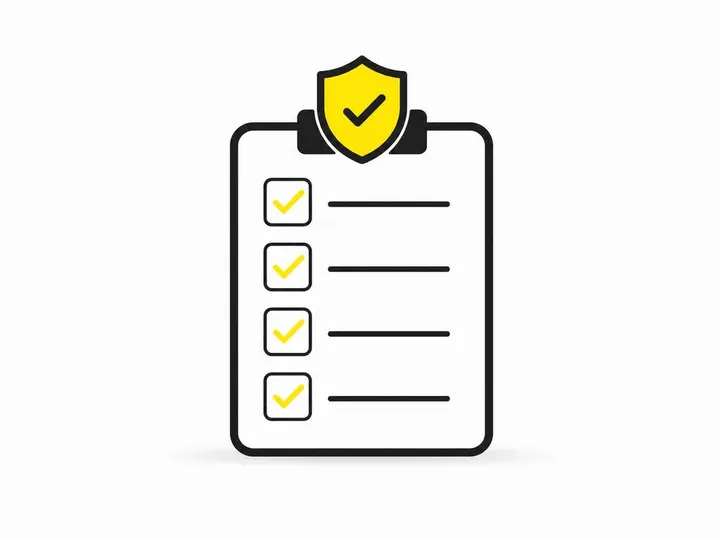
A fully trusted tradie website displays its strongest signals in the places where visitors look first and makes every element easy to verify.
Above-the-fold trust: what to show in the first screen
Your homepage header should include your business name, your licence or certification badge, and at least one testimonial or star rating from a customer. Within the first screen, a visitor should see a before-and-after photo gallery or project portfolio link. Include a clear statement of what you do and who you serve. For example: "Licensed plumber serving Geelong and the Bellarine Peninsula for 15 years." Below the fold, show three to five customer reviews with names, dates, and ratings. This is what converts a curious visitor into someone who picks up the phone.
Your best homepage layout for tradie websites prioritises trust above everything else. Every element should answer the question: "Can I trust this business to do good work?"
Footer and sitewide trust elements
Your footer should include your full business name, ABN, address, phone number, and licence number. It should also include links to your social media profiles, your Google Business Profile, and any industry association memberships. A copyright year that is current (not outdated) signals that the website is maintained. Mobile visitors need to be able to click directly to call you. Ensure your phone number is clickable on every page. Mobile-friendly design is itself a trust signal because it shows you understand how customers actually use the web today.
Make sure your entire site is mobile-friendly because most visitors will be on their phones, often while they are standing in the room with the problem they need fixed. If your website does not work on mobile, you have failed the trust test before anything else.
Conclusion
Trust signals are not decoration. They are the foundation of every conversion on a tradie website. When a visitor sees real reviews from real customers, your actual licence number, photos of your real team doing real work, a clear guarantee, and a mobile-friendly site that makes it easy to call you, they move from hesitation to action.
The tradies who understand this do not compete on price or flashy design. They compete on credibility. They show up as real people doing real work. They make verification effortless. They remove friction at every step. The result is more calls, more quotes, and more jobs.
Start by auditing your current website against this checklist. Add your reviews to your homepage. Put your licence number where people can find it. Replace any stock photos with real images of your team. Write a short, honest about section. Then measure the change in your enquiry rate. The trust signals that matter are the ones that drive calls, and they work faster than you might expect.