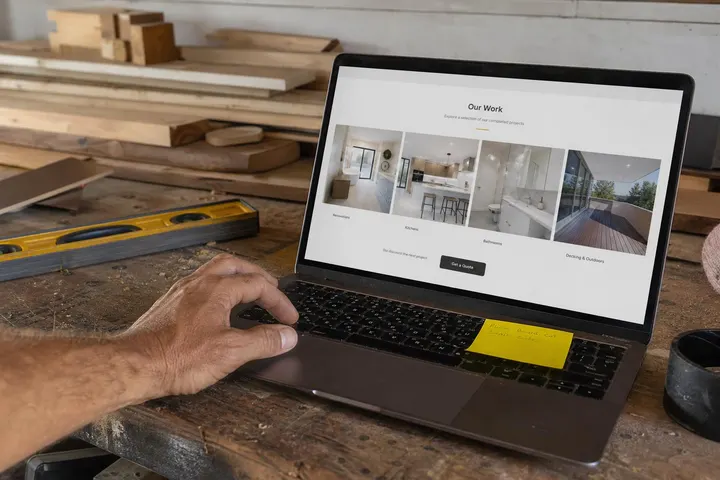
Case Study Page Website: How Australian Small Businesses Turn Results into Enquiries
On this page 7 sections
Key takeaways
- A case study page explains the problem, work and outcome a portfolio only shows the result
- Structure each case study with a clear CTA so readers know what to do next
- Only claim measurable results you can substantiate with real records
- Get written permission from the customer before naming them or showing their project
- Update case studies regularly recent proof converts better than stale old projects
A portfolio page shows what you've built. A case study page proves how you work and what happens when customers hire you. For Australian small business owners, that difference is worth thousands of dollars in qualified enquiries, because most prospects don't just want to see a finished project they want to know whether you can solve their specific problem, how you'll handle their constraints, and what they can actually expect as a result.
Case Study Page vs Portfolio Page: What Each One Actually Does
A portfolio page displays images and brief descriptions of completed work; a case study page tells the story of how a customer's problem was solved, what you actually did, and what changed as a result.
A portfolio is typically a gallery or grid view. It answers the question "Do you do good work?" A case study answers "How will you help me?" Tradies, designers, accountants, builders and service providers all benefit from case studies because they eliminate guesswork. When a prospect lands on your site, they want to know whether your experience matches their industry, budget, timeline and specific challenge.
According to recent analysis, fewer than one in eight Australian small business websites displays a testimonial containing a specific, measurable result. Meanwhile, 75% of consumers reportedly always or regularly read online reviews before choosing a local business, according to the 2024 BrightLocal Local Consumer Review Survey. That gap is real: people want proof, but most businesses are only offering vague praise.
Why a portfolio alone rarely wins the job
A portfolio proves you can do the work. It shows craftsmanship, attention to detail and a track record. But it doesn't explain what a prospect should expect if they hire you.
A prospect sees a kitchen renovation photo but doesn't know the timeline, budget or how you managed the site
They see a website design but don't know what problem it solved or how it affected enquiries
They see a finished garden, but they don't know whether you worked within their budget or how you handled unexpected soil conditions
A portfolio shows the "after." A case study explains the "why," the "how" and the honest "what happened next."
What a case study adds that photos cannot
A case study provides context, decision-making insight and measurable outcomes. It builds trust because it's transparent about constraints and specifics rather than showing only the flattering angle.
A strong case study tells a prospect: "This is the kind of customer we work with. This is the kind of problem we solved. This is what it actually took, and this is what changed." It also demonstrates that you're confident enough to stand behind your results and willing to be named and specific about what you delivered.
For your own business, how to build a portfolio page remains important, but complementing it with case studies is what turns browser interest into genuine enquiries.
The Structure of a High-Converting Case Study Page
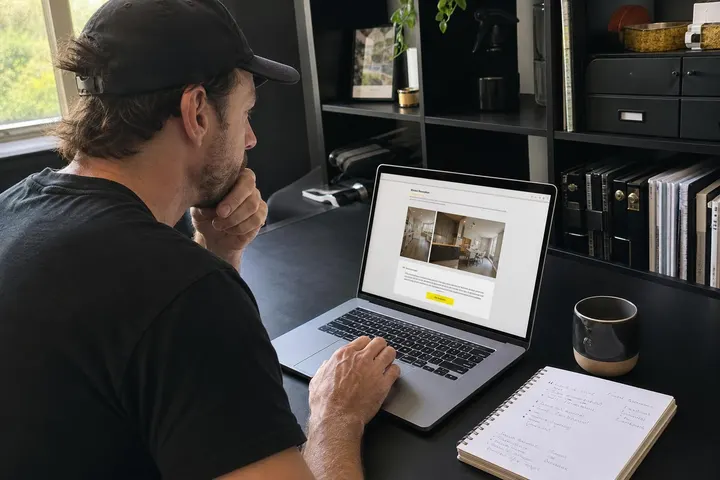
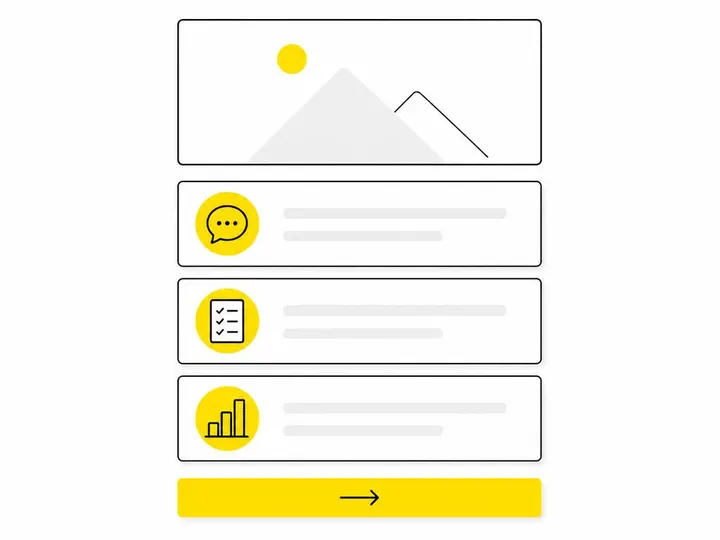
A case study that generates enquiries follows a repeatable structure: customer context, the original problem, scope and constraints, before-and-after evidence, clear outcome, a brief quote, and a call to action.
Customer type, location and context
Start by identifying the customer type and location (with their permission). "A family-owned café in Surry Hills" or "a growing electrical contractor in the south-west suburbs" immediately tells a prospect whether this case study is relevant to them. Include industry, approximate business size or customer type (residential, commercial, retail) so readers can see themselves in the story.
The original problem or goal
Describe the situation the customer faced before they hired you. Don't soften it. "The business was losing jobs to competitors because their website looked outdated" or "They were spending five hours per week on manual scheduling" sets up why the work mattered. This is where a prospect recognises their own frustration.
Scope of work and constraints
Explain what you actually did and any constraints that mattered. Budget limits, time pressure, existing systems, site conditions or business disruption during the work these details make your result credible. "We redesigned the site in eight weeks while the business stayed open" is more believable than "We redesigned the site," because it acknowledges the real-world challenge.
Before-and-after evidence
Include images, screenshots or data that show the change. For a renovation, a side-by-side photo works. For a service like web design or accounting, show metrics: page load time, form submissions, invoice accuracy or customer response time. Before-and-after evidence is what transforms a claim into proof.
The outcome stated clearly and honestly
This is where Australian Consumer Law matters most. State exactly what changed, how it was measured and over what timeframe. "Enquiries increased by 28% in the first three months" is specific and testable. "The customer was very happy" is not.
If results varied (for example, outcomes differed by season or location), include that context. If the outcome was indirect (better team morale, fewer call-backs), say so. ACCC guidance on fake and misleading reviews emphasises that businesses must not misrepresent who wrote a testimonial or present selected results in a way that misleads readers about typical performance.
A short customer quote
A one or two-sentence quote from the customer, in their own words, is powerful. It should feel genuine and speak to something specific: how you worked, your communication style, or how the result exceeded expectation. Never fabricate or substantially reword a quote without permission. Keep the customer's name and title with the quote, or indicate that they preferred to remain unnamed.
Related services and a prominent enquiry CTA
At the end of the case study, list related services the customer hired you for or that a similar prospect might need. Link to those service pages or to a contact form. Make the next step obvious.
How to State Results Without Overclaiming
Claiming results you can't prove, or presenting selected cases as typical performance, breaches Australian Consumer Law Section 18 (misleading or deceptive conduct) and potentially Section 29 (misleading representations about testimonials).
Replace vague praise with specific evidence
Instead of "dramatically improved efficiency," state "Reduced invoice processing time from eight days to two days." Instead of "customers loved it," say "Received 47 five-star Google reviews in the six months following the rebrand."
Specific claims are easier to substantiate and more convincing to a prospect. They also protect you from regulatory risk.
Add context so results feel credible, not inflated
If you increased a customer's enquiries by 40%, note what else contributed: Did they also run ads? Did the season matter? Did they follow your recommendations about follow-up? Context doesn't weaken a result; it makes it believable.
If a result only applied to one customer or was affected by external factors, say so. "This customer tripled service bookings in nine months; that result reflected the combination of website improvements, a new local partnership and seasonal demand."
What Australian Consumer Law says about testimonial claims
Australian Consumer Law — sections 18 and 29 require that testimonials be genuine, accurately represented, and not presented in a way that misleads consumers about typical outcomes. A case study claiming a specific result must be supported by records (invoices, screenshots, customer records) and presented truthfully.
Turning One Case Study into Multiple Enquiry Assets
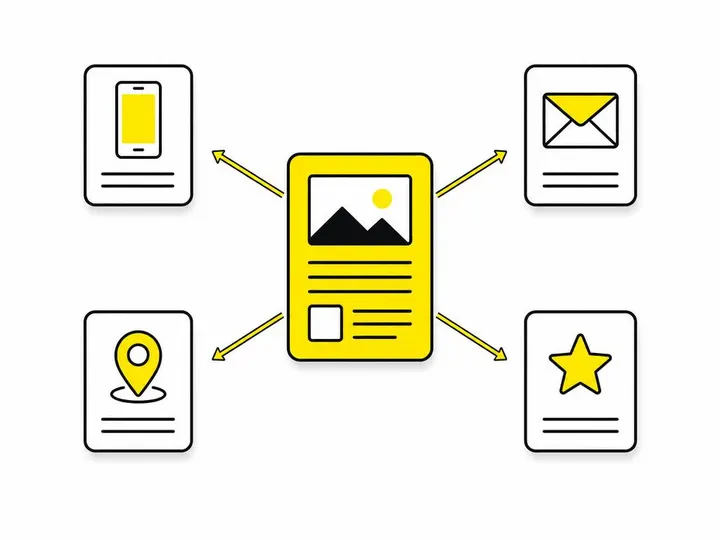
A strong case study can be repurposed across your website, email, social media and sales follow-up without rewriting it from scratch.
Repurposing a case study across your marketing channels
Extract a before-and-after image for a social media carousel or email signature
Pull the customer quote for a testimonial block on your service pages
Use the outcome metric ("28% more enquiries") as a proof point in your sales follow-up email
Create a short video interview or voiceover using the case study narrative
Post a summary and link on your Google Business Profile to show recent work and results
For detailed guidance on marketing ideas from completed projects, structure each repurposed asset to keep the core claim consistent. Don't claim the result was bigger in one channel than another, and always retain the customer's permission and original quote.
Keeping the underlying claim consistent everywhere
If your case study says "Reduced turnaround time by 35%," don't say "Cut delivery time in half" in an email. A prospect comparing your materials will notice the contradiction, and it raises doubt about your accuracy.
One data source, one story, many formats. That consistency reinforces trust.
The Trust and Compliance Checklist Before You Publish
Before publishing a case study or customer testimonial, check off these steps to comply with Australian Consumer Law and build genuine trust.
Get permission and keep the original quote
Write to the customer and ask permission to feature their project as a case study, naming their business, location and outcomes
Retain a copy of their written approval
If they provided a quote, keep the original message (email, form submission or recorded conversation) and confirm they approve the version you'll publish
Never paraphrase or significantly reword a testimonial without re-confirming permission
ACCC rules on testimonials and reviews
Verify that:
The customer is real and identifiable (use their name, business, suburb or suburb with permission)
The result described is accurate and supported by your records
You're not suppressing negative feedback or creating a misleading impression of typical outcomes
You've disclosed any incentive or relationship (for example, if the customer is a long-term partner or if you gave them a discount in exchange for a testimonial)
Presenting selected testimonials without misleading readers
If you publish five case studies from your last twenty projects, don't claim they represent "what customers typically experience." Include a mix: some quick wins, some longer-term results, and ideally, a range of customer types or industries. That breadth signals honesty.
Building trust signals on your website means case studies are just one layer. Combine them with Google reviews, team credentials, guarantees and transparent pricing to create a complete picture.
Keeping Your Case Studies Fresh
Outdated case studies can signal that your business is stagnant or that you haven't worked on recent projects worth sharing.
Why recent proof outperforms old projects
A case study from 2023 or earlier is still valuable, but a prospect reading it in 2026 may wonder whether you've stayed current. Recent analysis found that consumers increasingly value fresh reviews and recent social proof, suggesting businesses should update case studies rather than leave a static set of old projects online.
At a minimum, add publication or completion dates to your case studies so readers understand the timeline. Better still, refresh your case study list every six to twelve months to feature at least one recent project.
A simple review and update schedule
Twice per year, review your case studies and ask:
Are these projects still representative of the work you do?
Have you completed better, more recent projects you could feature instead?
Do the outcomes still look impressive, or have customer expectations changed?
Is the customer still willing to be publicly associated with the project?
If you've improved your process, achieved faster timelines or solved a more complex problem recently, swap out an older case study and update your web pages.
When you update your case studies or publish new ones, that's also a good opportunity to improve your overall effective website layouts. Research by Testmate found that basic information was difficult to find on many Australian business websites, with key details often buried in long paragraphs. A scannable case study format short headings, visible outcomes, clear project facts respects your visitor's time and improves the chance they'll read to the CTA.
Conclusion
A case study page does what a portfolio cannot: it proves to a prospect that you understand their kind of problem, that you can deliver results they care about, and that you're willing to be transparent about how you work. It transforms a completed job into marketing evidence that builds trust and generates real enquiries.
The structure is straightforward: customer context, the original problem, scope, before-and-after evidence, clear outcomes, a genuine quote, and a next step. The key to standing out is being specific, honest about constraints, and willing to name your customer and measurable results. That's what separates a real case study from vague praise.
Start with one or two case studies from customers you know were genuinely happy, get their permission, document the actual outcome, and publish it on your website. Then repurpose that story across your Google Business Profile, service pages and email follow-up. As you complete more projects, refresh your case studies so they stay recent and representative of your current work. That combination of proof, transparency and regular updates is what turns website visitors into enquiries.