How to Optimise for AI Search in Australia: Get Your Business Mentioned in AI Answers

On this page 7 sections
Key takeaways
- Google treats AI search as an extension of SEO, not a separate system
- No special files or AI-only tactics are confirmed to help
- Answer-first content increases your chance of being cited
- Consistent local details across GBP and directories matter
- Track whether your business appears in AI answers, not just rankings
Most Australian businesses assume AI search means they need a secret new optimisation formula. The truth is simpler and more practical: AI search optimisation is still SEO, just aimed at systems that summarise answers instead of ranking pages. Your job is to be clear, complete, locally visible and cite-worthy. That builds on the basics you should already be doing.
What is AI search and why does it matter for Australian businesses?
AI search means generative AI systems like Google's AI Overviews and AI Mode now sit inside or alongside traditional search results, reading multiple sources and writing an answer for the user. Instead of your site ranking first, you might be cited as one of the sources that answer the question. That's a visibility shift, not a disappearance.
How AI Overviews and AI Mode work
Google AI Overviews appear directly in search results and pull text, facts and context from indexed pages Google already ranks. AI Mode lets users ask follow-up questions in conversation, still drawing from the same indexed sources. Since 20 May 2026, these two features are connected: a user can move from an AI Overview into a multi-turn conversation. Both are live in Australia. The key point is that both systems start with ordinary search indexation. If your page isn't eligible for normal search results, it won't appear in AI answers either.
How many Australians are using AI tools to find information
The numbers show rapid adoption, though Google remains dominant. Roy Morgan research on Australian AI tool usage found that 58% of Australians aged 14 and over used AI tools in an average four-week period in March 2026, with ChatGPT alone reaching 10.5 million Australian users. Separately, 12% of Australians reportedly identified AI tools as their main way of finding information online in 2026, up from 5% the year before. Clearly, AI discovery is growing fast. But Google still accounted for 87.61% of Australian search-engine referrals in October 2026. The sensible move is to strengthen your visibility in both spaces at once by focusing on search fundamentals.
Does AI search need a different strategy to regular SEO?
Optimising for AI search does not require new tactics, additional technical files or keyword stuffing. It means writing clearer answers, building stronger authority signals and staying visible in standard search results.
What Google actually says about AI search optimisation
Google's guidance, updated 10 July 2026, is explicit: Google says its AI answers need no special SEO. There are no new technical requirements, no special optimisation methods and no need for alternative files such as llms.txt. Pages still need to be crawlable, indexed and eligible to appear with a normal search snippet. What changes is the emphasis: AI systems are looking for content that directly and authoritatively answers questions, with clear structure and verifiable facts. That's good practice for ordinary search too.
The one Search Console control you should know about
On 31 August 2026, Google rolled out a Search Console control that lets you include or exclude your content from AI Overviews, AI Mode and related generative features. The default is inclusion. If you exclude your site, your content won't appear in those generative answers, but ordinary search rankings are not affected. Use your monthly Search Console tasks to check this setting and ensure it's set according to your strategy. For most small businesses, inclusion makes sense: being cited as a source in AI answers is a form of visibility and trust, even if it doesn't drive a direct click.
The local SEO signals that become AI-answer assets
AI systems read the same signals that search engines use to rank ordinary results: business details, reviews, content quality and local authority. When those signals are strong and consistent, AI systems are more likely to cite your business as a trustworthy source.
Keep your Google Business Profile complete and consistent
Your Google Business Profile is one of the first places AI systems look for local business facts: your name, address, phone, hours, services, description and media. A Google Business Profile content plan should include regular updates to your service list, posts about seasonal offers, local events and new team expertise. AI systems reward businesses that keep this information fresh and match it consistently across their website and other directories.
Get your details right across directories and your website
AI systems cross-reference business information across Google, directories like TrueLocal and Yellow Pages, your website, and industry-specific sites. If your address, phone number, business name or service area differs between sources, AI systems treat your business as less reliable. Conduct a quick audit: check that your name, address, phone and primary service categories are identical on your website, Google Business Profile and two to three key Australian directories. Inconsistencies confuse AI and ordinary search alike.
Reviews as trust signals for AI systems
Google reviews are not just for customer confidence. AI systems use review volume, recency and rating as signals of business legitimacy and reliability. A business with 50 recent five-star reviews is more likely to be cited in an AI answer than a business with two reviews from 2024. Systematically getting more Google reviews is one of the highest-impact local SEO moves for AI visibility too.

How to write content that AI systems are likely to cite
AI systems prefer content that answers questions clearly, backs answers with evidence and keeps information specific and attributable.
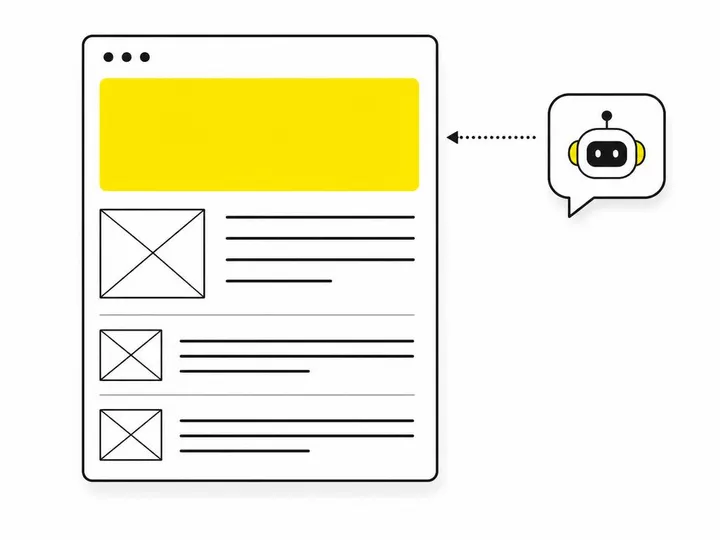
Lead every service page with a direct answer
Your service page structure should start with a concise answer to the most common question about that service. Instead of "We provide digital marketing services," write: "Digital marketing for Australian small businesses typically costs between $500 and $3000 per month, depending on services and complexity. Most see measurable results within 8 to 12 weeks." Follow with detail, process, qualifications, location and FAQs. AI systems pull direct answers from page openings; make those openings useful and factual.
Cover the full decision journey, not just the sale
Structure your content around the questions a customer actually asks over time. Lead with the answer, then cover: comparisons to alternatives, risks or common mistakes, timeframes, costs, local considerations, team expertise, and frequently asked questions. This depth signals authority to AI systems and gives them multiple relevant phrases to work with when answering follow-up questions.
Build first-party evidence AI systems can rely on
AI systems are more willing to cite businesses that publish original, verifiable information: pricing guides, case studies with measurable results, staff expertise and qualifications, industry memberships, licences, and clearly dated business information. A tradies' site that says "10 years installing guttering across Brisbane" is more cite-worthy than vague claim language. Include your ABN, team credentials, recognised memberships or certifications and specific project outcomes where honest to do so.
How to measure your AI search visibility
AI search visibility is not yet fully trackable in Google Search Console or standard SEO tools, but you can test it manually and build a simple record.
Testing prompts manually in Google AI Mode and ChatGPT
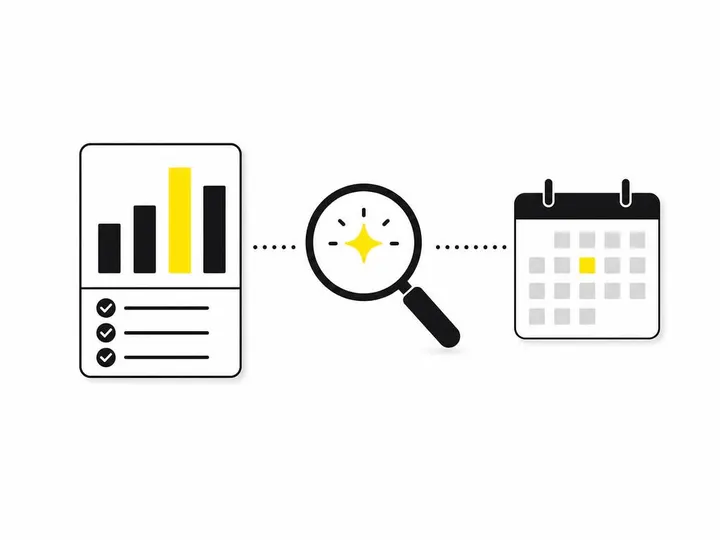
Pick 5 to 10 keywords or questions central to your business. Once per month, search them in Google AI Overviews and in ChatGPT. Record whether your business is mentioned, which competitors appear, what sources are cited and whether the information is accurate. Use our AI visibility checker to log these tests and spot trends over time. If you're cited in 3 out of 10 key prompts, and that grows to 6 out of 10 in three months, your AI visibility is climbing.
What to record and how often to check
Each month, note the test date, the prompt, whether you appeared, the position in the AI answer, and any factual errors. Track patterns: are you cited for broad questions but not local ones? For product pages but not service pages? This tells you where to strengthen content. Check monthly for the first quarter, then quarterly after that. AI systems update their indexes frequently, so consistent, incremental improvement is more realistic than overnight jumps.
The honest bottom line on AI search optimisation in 2026
AI search is real, growing and worth paying attention to. But it is not a separate universe from ordinary search. Professional SEO support that focuses on local search optimisation, clear content structure, authority signals and technical health serves both AI and traditional search results. The businesses that will be cited most often in AI answers in 2026 are the ones that already rank well in Google and have strong local visibility. If your basic SEO foundations are weak, chasing AI mentions will not help. If they are solid, AI visibility is a natural next step, not a complete overhaul.
The most practical approach is this: do the foundational work first. Keep your Google Business Profile current and consistent. Build reviews and local authority. Write service pages that lead with clear answers. Make sure your website is fast, mobile-friendly and crawlable. Then test your visibility in AI systems monthly. That is not a secret formula, but it is the one that works.
Conclusion
AI search optimisation is not a mystery or a separate discipline. It is an extension of good SEO practice, applied to systems that prioritise answer clarity, authority and consistency. AI search visibility service starts with the same foundations as ordinary search: technical excellence, local relevance, answer-ready content and trust signals. Google remains Australia's dominant search referral source, and that is unlikely to change soon. But AI tools are growing fast, and businesses that start testing their visibility now and refining content to be cite-worthy will be ahead of the curve.
Your next step is practical. Check your Google Business Profile; make sure your business details are identical across your website and two to three Australian directories. Pick five key customer questions and test them in Google AI Mode and ChatGPT. Record the results. Then update one service page per week to lead with a direct, factual answer. Within three to six months, you will see whether your AI visibility is climbing. That is a measurable, honest way to know whether this matters for your business.
Frequently asked questions
How do I get my business to show up in Google AI Overviews?
Is there a special file like llms.txt I need to add to my website for AI search?
llms.txt file improves your visibility in Google AI Overviews or AI Mode. Google's official guidance states there are no additional technical requirements for appearing in its generative AI features beyond what makes a page eligible for a normal search snippet.