AI Lead Qualification for Small Business: What to Automate and What to Keep Human
On this page 8 sections
Key takeaways
- AI handles data collection and first-response well; humans close the deal
- Responding within 5 minutes lifts conversion probability dramatically
- Automate info-gathering, not relationship-building or complex pricing talks
- A simple lead score with 3 to 5 criteria is enough to start
- Always have a clear handoff trigger so no hot lead falls through the cracks
Lead qualification is where most small businesses leak money and time without realising it. Every unqualified enquiry your team chases, every after-hours call that goes unanswered, every quote that disappears into a black hole because no one followed up these aren't sales problems. They're lead management problems. AI can fix the backlog, but only if you know what to automate and what to guard with a human decision.
Why Lead Qualification Is a Bottleneck for Most Small Businesses
Lead qualification sounds simple until you're running a small business with five jobs on the books and twelve fresh enquiries in your inbox before 9am. You can't respond to all of them. You don't have time to ring back every missed call. You don't know which jobs are genuinely viable until you've had a real conversation. The result: leads get lost, response times stretch out, and your conversion rate takes a hit.
The volume-versus-capacity problem
Australian small businesses receive an average of 5 to 15 daily enquiries across email, phone, and web forms. Most have one or two people responsible for qualification and first contact. That person is also scheduling, invoicing, managing jobs, and handling problem calls from upset clients. Something has to give, and it's usually the new leads.
How AI handles lead response for small businesses shows how fast response changes the game: responding within 5 minutes instead of 45 minutes increases your conversion probability by 900%. That's not a typo. But getting a human on the phone in 5 minutes is impossible when you're on a job site. Automated first contact and qualification questions can bridge that gap without losing the lead.
What poor qualification actually costs you
When you chase unqualified leads, chase them hard, and then lose them halfway through because no one followed up, you waste time and money. ABS data on Australian small business conditions shows that small business turnover has contracted, which means every lead matters more. If 40% of your leads are out of area, unaffordable, or actually just window shopping, spending half your week chasing them is unsustainable.
Poor qualification also damages relationships. A customer who calls and gets voicemail, no text back, and a callback three days later has already made a decision to call someone else. Speed and consistency matter more than the pitch.
What AI Lead Qualification Actually Does
AI lead qualification isn't about replacing your sales instinct or judgement—it's about handling the repetitive, information-gathering work that humans find tedious and error-prone at scale.
Collecting job details automatically
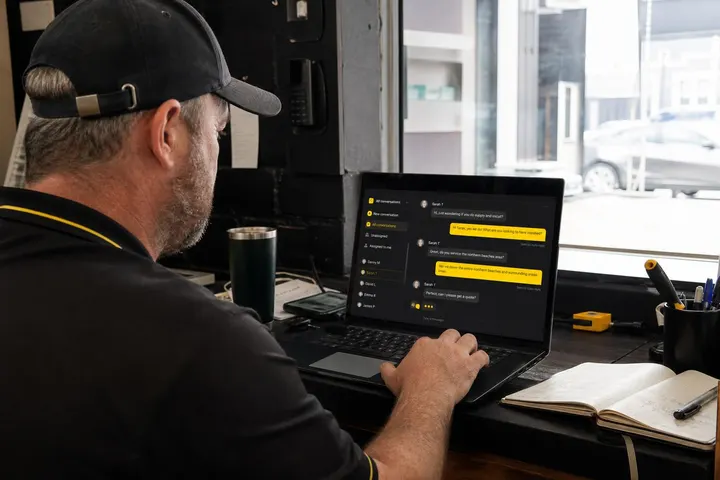
An AI chatbot or automated form can ask your qualifying questions instantly, 24/7, and collect consistent data every time. Instead of your team manually filling in details from rambling voicemail messages, the system captures job type, location, timeline, budget ballpark, and contact details in a structured format. Using a chatbot to qualify website visitors means you capture leads during after-hours, on weekends, and while you're busy with clients.
Scoring and sorting enquiries
A basic lead scoring system flags hot enquiries automatically. If someone in your service area with a job this month and a realistic budget comes in, that lead gets a high score and lands at the top of your queue. An out-of-area job or a "just gathering quotes" vibe gets a lower score. Your team works the hot ones first. This doesn't require a complex AI algorithm even simple rule-based scoring (location + timeline + budget answers) works.
Sending an instant first response
The fastest way to improve conversion is to reply instantly. An automated message can confirm receipt, set expectations for human follow-up, and ask the first qualifying question before your team even sees the enquiry. Automating missed call follow-up means a customer who calls you during a job gets an instant text-back saying you'll ring within an hour, not silence followed by a callback tomorrow.
What to Automate: The Safe Zones
Automate the tasks where speed, consistency, and 24/7 availability matter more than human judgment.
After-hours and weekend enquiries
If someone fills out your form or calls at 6pm on Friday, an instant chatbot response keeps them warm. You follow up Monday morning when they've had time to think. If you let them sit until Monday without acknowledgement, they've already rung three other tradies.
Gathering basic job information
Ask your core qualifying questions via form or chatbot: job type, location, timeline, and rough budget. Let the system ask these; humans are good at conversation, bad at asking the same question 20 times a day and staying consistent.
Filtering out unqualified or out-of-area leads
If you only service Greater Sydney and someone from Dubbo submits an enquiry, a rule-based system can auto-reply with a polite decline and a referral suggestion. You don't need to spend time determining they're outside your area. Knowing which channel sends your best leads also helps you tune your automation to focus on the sources that matter.
Nurture sequences for leads not ready to book
If someone is researching (three to six months out), send them useful content and reminders automatically. When they're finally ready, they'll think of you. Manual nurture for dozens of not-yet-ready leads kills your team's bandwidth.
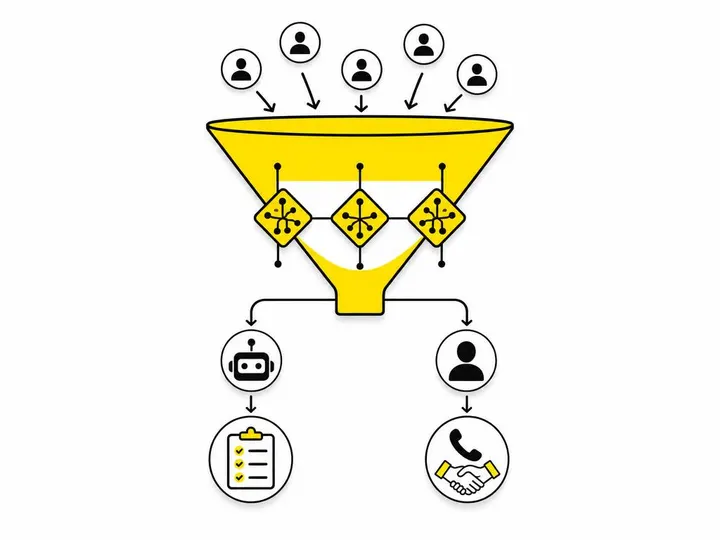
What to Keep Human: The Lines You Should Not Cross
Automation has limits. Know where they are, or you'll lose money and reputation.
Pricing and complex scope discussions
Never let a chatbot negotiate price or scope. A customer with a genuinely complex job needs to talk to someone who understands the trade, the site challenges, and what "realistic" actually means. An AI quote system that doesn't account for hidden conditions or site-specific complexity is a liability.
Upset or emotionally charged enquiries
If a customer is angry or distressed (water damage, safety issue, repeat problem), they need a human voice immediately, not a chatbot holding script. The emotional intelligence and empathy required here can't be automated without damaging the relationship.
High-value or repeat clients
Your best customers should hear from you directly, always. If a repeat client books a new job, they shouldn't get the bot first. Hand these off manually and immediately.
Any situation requiring trade judgement or site inspection
If the job is unusual, the budget is vague, or you need to see the site before quoting, a human conversation and site visit are non-negotiable. AI can't replace your eye and experience.
How to Build a Simple AI Qualification System Without a Big Budget
You don't need enterprise CRM software or a development team to start. Here's a practical process Australian small businesses are using now.
Step 1: Map your qualifying questions
Write down the five to seven questions you ask every lead: job type, location, timeline, budget, and what problem they're solving. These are your qualification template. Keep it short more than seven questions and people abandon the form.
Step 2: Choose your tools
Tools like Zapier, GHL (GoHighLevel), and HubSpot let you connect a web form or chatbot to your email and SMS automatically. You don't need all three. Start with one: if you have a website, GHL or HubSpot's free tier gives you a basic form, chatbot, and CRM in one place. Zapier bridges tools you already use (Google Forms, Typeform, your email) with automation. Budget 0 to $100/month to start.
Step 3: Set your handoff triggers
Decide upfront: which answers trigger immediate human follow-up? If timeline = "this month" and location = "in my service area" and budget = "realistic," send an SMS alert to your phone and an email to your team right now. If timeline = "maybe next year," add them to a nurture sequence instead. Automating your quote follow-up process shows how to set these triggers so hot leads land on someone's desk seconds after submission, not days later.
Step 4: Review and tune monthly
After four weeks, review which leads converted and which didn't. Are you missing hot prospects because your scoring is wrong? Are you getting alerts for leads that never convert? Adjust your questions and triggers. This is not a set-and-forget system.
Common Mistakes Australian Small Businesses Make With AI Qualification
Over-automating and losing the personal touch
If every interaction from first enquiry to booking is a bot, customers feel like they're talking to a vending machine. Use automation to respond fast and gather info; use humans for the actual relationship. The handoff should feel natural, not jarring.
No clear handoff to a human
The worst setup is a lead that qualifies on paper but never gets assigned to anyone. It sits in a system, waiting. Use Automatic SMS reply for missed calls and automated CRM assignment so the moment a lead hits your threshold, it lands with a named person responsible for next steps. No ambiguity.
Asking too many questions upfront
A 15-question form kills conversion. Ask three to five upfront; gather the rest in the human conversation. The goal of qualification is to get them on the phone with someone who can help, not to fill out your entire intake form before they speak to a human.
Is AI Lead Qualification Worth It for Your Business?
When it makes sense
You get more than five enquiries a week. You have more than one person, but still lose track of leads. You want to respond within 5 to 10 minutes instead of hours or days. You're losing jobs to faster competitors. You're chasing unqualified leads and wasting time. Forrester Research on lead response time and conversion rates shows that businesses reducing first-contact response time from 45 minutes to 5 minutes see measurable conversion lift. If you're not there yet, automation is worth the effort.
When to wait
You get fewer than three leads a week and you're keeping up fine. Your business model is high-touch and every job needs a site visit and personal discussion before qualification even matters. You don't have a website or online enquiry channel yet. Start there first, then add qualification. Deloitte Australia Tech Trends report on AI adoption shows that small businesses get the most value from automation when they're already capturing leads at scale; if you're not there yet, build the lead source first.

Conclusion
AI lead qualification isn't magic. It's a system that handles the repetitive information-gathering work so your team can focus on relationships, judgment calls, and actual sales. The key is knowing where to draw the line: automate speed and consistency (first response, basic questions, lead scoring, after-hours replies), keep humans in the room for decisions that matter (scope, price, upset customers, site judgement).
Most Australian small businesses leave money on the table because they respond too slowly and chase unqualified leads too hard. A simple system using tools like GHL, Zapier, or HubSpot to capture enquiries, ask qualifying questions, and route hot leads to your team immediately costs less than $100 a month and can recover 10 to 20% of lost leads within three months. Start small: map your questions, set your handoff triggers, and review the results monthly. The system will pay for itself fast.