What to Post on Facebook for a Small Business When You Have No Time
On this page 8 sections
Key takeaways
- Finished job photos and before-and-afters are your highest-value posts
- Batch-create a week of posts in one 30-minute session
- Questions and polls drive engagement without needing polished content
- Customer reviews repurposed as posts do double duty as social proof
- Scheduling tools mean you only need to post once, not daily
You're running a small business, not a social media agency, so the idea of posting daily on Facebook feels like a pipe dream. The good news: you don't need to. What you need is a ruthless system that turns 30 minutes into a week's worth of content, and a clear picture of what actually works when you're time-poor and have zero tolerance for busy work.
Why Facebook Still Matters for Australian Small Businesses in 2026
Facebook is not dead, despite what Instagram influencers claim. Eighteen million Australians use Facebook every month, and unlike TikTok or LinkedIn, this platform skews directly toward the people who hire tradespeople, buy local services, and spend money on small businesses. That is your market.
18 million monthly users and counting
Meta's Australian user base remains solid and older on average, which is precisely where your customers are. If you're a plumber, electrician, landscaper, accountant, or beauty therapist, your ideal client is scrolling Facebook during their lunch break or at 9 p.m. on a Wednesday. Ignoring it because "nobody uses Facebook anymore" is handing market share to competitors who do show up.
Organic reach is low, but not zero
Yes, Facebook's algorithm prioritises paid content and engagement over organic reach. A post with zero interaction will land in front of far fewer people than it did in 2015. But how often to post on social media as a small business directly affects whether the algorithm bothers showing your content at all. Posts that get quick engagement (comments, shares, reactions in the first hour) get an algorithm bump. This is how consistency beats perfection.
Facebook rewards consistency, not perfection
The algorithm prefers predictable posting over random bursts of viral content. If you post reliably every Tuesday and Thursday at 10 a.m., Facebook learns to show your content to followers around that time. A messy post that lands on time beats a polished one that never goes out.
The 5 Types of Posts That Work Best When You Are Pressed for Time
Stop trying to create content from thin air. Use what you already have: photos from jobs, feedback from customers, and knowledge you've already shared verbally a thousand times.
1. Finished job photos (your phone already has these)
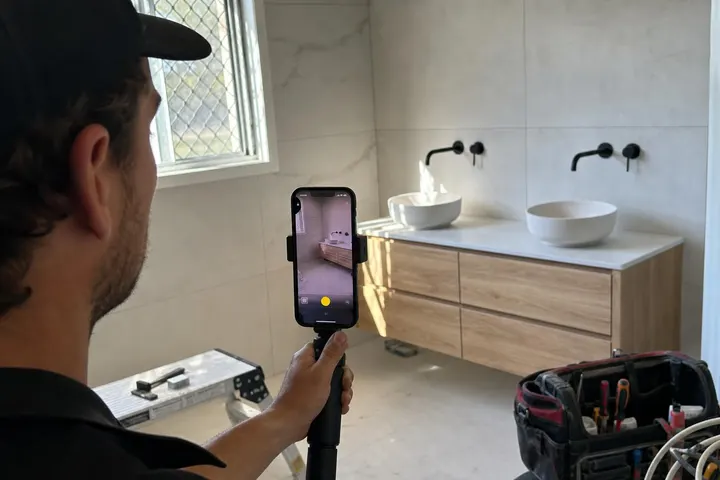
A tradies' phone is a goldmine. Before-and-after shots, site progress photos, final installations these post themselves. Add a one-sentence caption: "Kitchen reno finished for the Thompson family. What a transformation." Done. This is the easiest post to make consistently, and it works because it proves you're real and working. Before-and-after posts for tradies generate some of the highest engagement on Facebook because they're visual proof of value.
2. Customer reviews and testimonials
When a client gives you a five-star review, screenshot it and post it. Turn customer reviews into social media posts with a simple caption: "So glad we could help, Mel. Thanks for the kind words." This takes 60 seconds and is social proof in action.
3. Before-and-after shots
These work across every trade and service business. Cleaned, repaired, painted, redesigned, organised, upgraded. The visual contrast tells the story without you needing to write much.
4. Quick tips or myth-busting posts
You already know this stuff cold: "Three signs your gutters need cleaning before spring," or "No, you don't need to replace your entire deck; here's how to repair it." This proves expertise and takes five minutes to type. No photo needed just text and a strong opening line. How to write a strong social media hook makes these even more effective.
5. Simple questions and polls
Questions stop the scroll and generate comments, which trains the Facebook algorithm to show your page more often. "What's your biggest plumbing headache?" or "Timber or composite decking?" These are instant engagement with zero production cost.

The 5:3:2 Rule—A Dead-Simple Posting Framework
The 5:3:2 rule tells you exactly what to post and in what proportion, so you never waste time wondering if you're doing it right.
What the 5:3:2 rule actually means
Out of every 10 posts: five should give value (tips, advice, educational content), three should be engagement (questions, polls, behind-the-scenes), and two should be sales or promotion. This ratio prevents your feed looking like a brochure, while still making it clear what you do and how to hire you.
How to apply it when you only have 10 minutes a week
If you're posting twice a week (10 posts a month), your formula is five value posts, three engagement posts, two promotional posts. That's it. You don't overthink it. You rotate through the five post types above until the month is done.
Does the 5:3:2 rule still work in 2026?
Yes. The Facebook algorithm's preference for engagement and value content has only strengthened since this rule was popularised. Pure sales posts still tank. The ratio works because it mirrors what human audiences actually want from small business accounts: proof you're good at your job, a chance to interact, and a straightforward way to buy.
20 Ready-to-Use Facebook Post Ideas for Australian Small Businesses
If you're staring at a blank screen, here are 20 posts you can write or photo today, sorted by business type.
Service and trade businesses
Finished job photo with one-sentence caption
Before-and-after split-screen post
"Do you have this problem?" post with photo
Customer testimonial screenshot
"Common mistake I see..." tip post
Progress photo from a current site
Safety or maintenance checklist as image or text
Photo of your tools with "ready for next week's jobs"
"How to spot a dodgy [your trade]" myth-buster
Seasonal tip ("It's spring—time to...")—three sentences max
Retail and product-based businesses
New stock photo with "Just arrived"
Customer unboxing or using your product
Product comparison: "Ours vs. the other guy"
Behind-the-scenes packing or prep photo
"Your most-asked question answered" post
Limited stock or sale announcement
Close-up detail shot of a product feature
Styling or how-to-use tip
"Who's this for?" poll with product photos
Staff or owner feature: "Meet the person who [makes/sources/ships] your order"
Professional services and consultants
"This week's question from a client..." (anonymised case study)
Industry news with your take: "Here's what it means for you"
Three-point checklist: "Before you hire an accountant / lawyer / trainer"
Myth-buster in your field
Video or photo from a workshop or event you ran
Client testimonial (with permission)
Poll: "What's your biggest [challenge]?"
Downloadable tip or template teaser
Quote from someone credible in your field, with your commentary
Your availability update: "Booking up fast for Q1—message to discuss"
How to Batch Your Posts So You Only Do This Once a Week
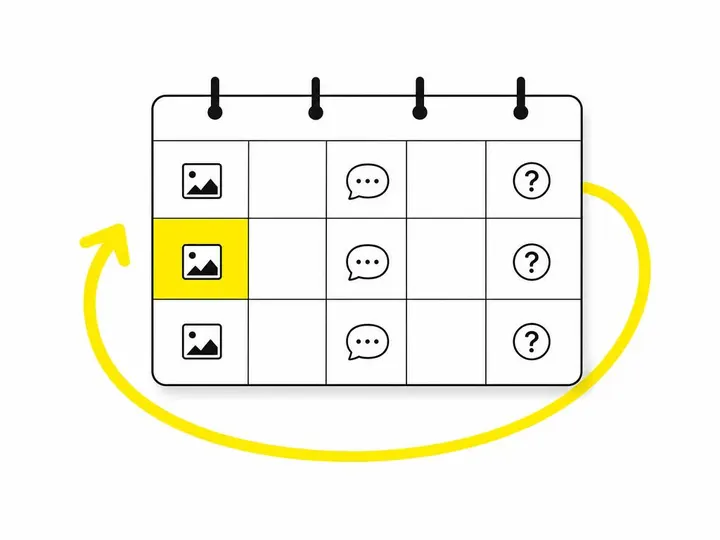
The key to consistency without burnout is batching. You sit down once, for 30 minutes, and create a week's worth of posts. Then you forget about Facebook for six days.
The 30-minute Sunday session
Pick a Sunday (or Tuesday, or whatever day you can protect). Pull two to three job photos, one customer review, one tip, one question. Write captions for all of them. Use tools to schedule your Facebook posts like Meta Business Suite (free), Buffer, or Later to set them to go out at set times over the next week. You're done. Come back next Sunday and repeat.
Which scheduling tools are worth using
Meta Business Suite is free and built into Facebook, so start there. Buffer and Later cost money but offer a nicer interface and insights if you're managing multiple platforms. For a sole trader or small team just trying to get consistent, the free option in AI tools for social media management via Meta Business Suite is enough. The Meta Business Suite help centre has step-by-step guides for scheduling posts.
Using AI to write your captions faster
If writing captions feels slow, use AI to write your social media captions. Feed a photo or a basic fact into ChatGPT, Claude, or a dedicated social tool and ask: "Write a one-sentence caption for this finished kitchen reno photo." It'll take 10 seconds and you'll edit it to match your voice. This alone cuts your batching session in half.
What Not to Post on Facebook (Common Mistakes That Kill Reach)
These three habits tank your engagement faster than irrelevance.
Posting and ghosting
If you post and disappear for three days, comments dry up. The algorithm sees low engagement and stops showing your content to followers. Reply to every comment within the first hour if you can. Even "Thanks, mate!" matters. Consistency includes showing up after you post.
Too much selling, not enough value
A feed that's 80 percent sales pitches will get ignored. The 5:3:2 rule prevents this, but it's worth repeating: pure promotional posts underperform. Give, give, give, then ask for the sale.
Ignoring comments and messages
Every comment is a hand raised in your direction. Ignore it and that person stops seeing your posts. Reply, ask a follow-up question, engage. Messages (DMs) are even more critical. If someone messages you on Facebook, treat it like a phone call—respond within hours, not days.
When Organic Posts Are Not Enough. Boosting vs. Running Proper Ads
Organic reach is real but limited. You may hit 200 to 500 people per post when you're starting out. Sometimes you need to spend money.
When to boost a post
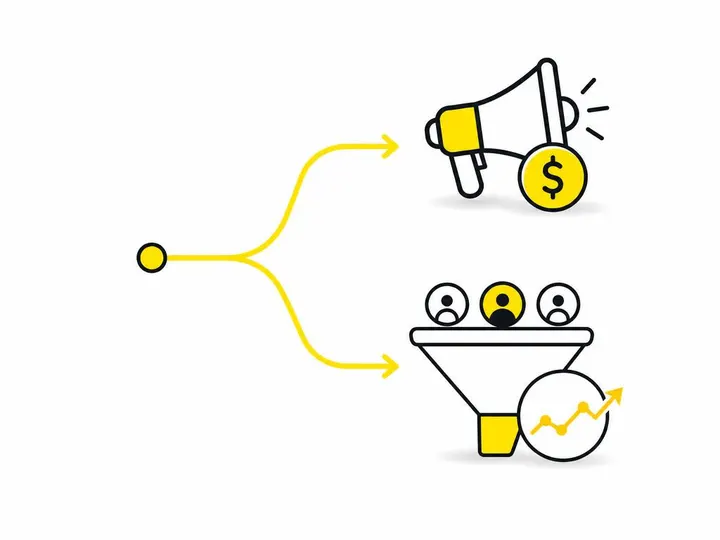
A post that already has 20 to 30 comments or shares is a good candidate for a boost. Boosting amplifies what's already working. You pick a budget ($5 to $20 is fine to start), an audience (your followers, or a geographic/interest-based target), and Meta does the rest. Boosting is the on-ramp to paid advertising and usually gets you a decent return on a small budget. Facebook ads for local service businesses in Australia start here, with boosting, before you scale to more complex campaigns.
When to graduate to Facebook Ads
When you're consistently getting good engagement, when you've tested which post types work, and when you want to reach people who don't follow you yet, it's time for a proper ad campaign. This is different from boosting: you're targeting cold audiences, testing different ad creatives, and tracking conversions. This usually makes sense when you have a specific goal (bookings, sales, signups) and a budget to test with ($500 to $2,000 per month is a real starting point for local businesses).
Conclusion
Posting on Facebook as a time-poor small business owner is not a mystery. It's a formula: five to ten high-quality posts per month, rotated through proven types (before-and-afters, reviews, tips, questions, finished work), posted on a schedule, and replied to within hours. The 5:3:2 rule keeps you from over-selling. Batching (one 30-minute session per week) makes it sustainable. You don't need a content team, perfect photography, or viral-level inspiration. You need consistency, a system, and the discipline to do 30 minutes on Sunday.
Start this week. Pick two days to post. Use the 20 ideas above. Schedule them in Meta Business Suite. Reply to every comment. In four weeks, you'll see engagement improve and the algorithm start working for you. That's the entire game.