Social Media Content Ideas for Small Business: No New Photos Needed
Key takeaways
- Variety in content type matters more than fresh photos on Meta platforms.
- Customer testimonials and reviews can become high-performing posts without imagery.
- Carousels, Reels, and text posts all work well without a photo library.
- AI tools can turn existing content into captions and post ideas quickly.
- Consistency beats polish — posting regularly outperforms occasional perfect posts.
Most small business owners think they need fresh photos every week to keep their social media alive. They don't. You can build a consistent, engaging presence using content formats that don't require a single new image, using stuff you've already got sitting on your phone or in old posts. The secret isn't better photos; it's smarter repurposing and formats Meta actually rewards in 2026.
Why Most Small Businesses Run Out of Content (And Why It's Not Your Fault)
The pressure to post perfect photos every few days kills more social media efforts than any algorithm change ever could. You're running a business, not a content studio. Most Australian tradies, service providers, and small retailers simply don't have time to shoot, edit, and post new images constantly. And here's the thing: Meta doesn't care as much as you think.
The visual content trap
Instagram and Facebook have conditioned us to believe every post needs a professional photo. That's partly true, but only partly. What's actually happening is that small business owners are competing with brands that have armies of content creators, then burning out trying to keep up. The reality is far kinder: Meta's algorithm in 2026 rewards consistency and engagement far more than novelty. A thoughtful text-based post that starts a conversation will outperform a pretty but generic product shot every time.
The trap isn't the lack of photos. It's the belief that photos are your only option.
What Meta's algorithm actually rewards in 2026
Meta's systems prioritise posts that generate saves, shares, and meaningful comments, regardless of format. A carousel built from existing images, a Reel made from screen recordings, or a testimonial-based text post all get the same algorithmic treatment as a freshly shot photo if they spark engagement. The platform explicitly rewards variety now. Users who only post one format (say, static image posts) see measurably lower reach than accounts that mix Reels, carousels, text, and testimonials. The algorithm is telling you: format diversity matters more than photo freshness.
This is where building a social media strategy that focuses on repurposing becomes your competitive advantage.
Content Formats That Don't Require New Photos
Text-only posts and quote graphics
A well-written text-only post on Facebook or Instagram performs surprisingly well if it's honest and useful. Share a common question your clients ask, answer it directly, and watch engagement climb. Use Canva's free design tool to turn a single sentence into a branded quote graphic in under two minutes. No photography required. These posts cost nothing to make and sit in your content library forever.
Carousels built from existing images or tips
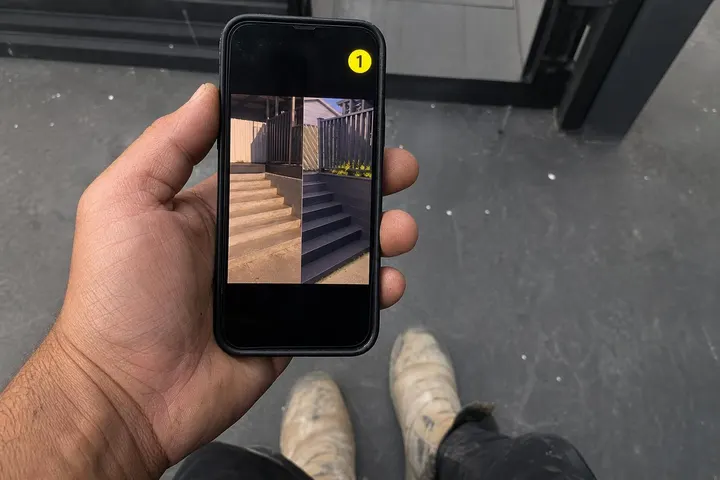
Instagram and Facebook carousels don't need new photos. Take five images you've already posted (before and afters, step-by-step process shots, old customer photos) and arrange them into a carousel slide deck. Add one tip or insight per slide. You've now created a completely fresh post from content you already own. For service businesses, try a "five myths about [your service]" carousel using existing brand assets or text overlays on old photos.
Reels using screen recordings, slideshows, or voiceovers
Reels are where Meta pushes reach hardest in 2026, and you don't need a camera. Screen record yourself answering a frequently asked question. Create a slideshow of before-and-after photos you already have, add on-screen text and a voiceover. Film your monitor showing a calculator or pricing breakdown. Facebook Reels accept these formats just as eagerly as filmed Reels, and the algorithm treats them equally. This is genuinely low-friction content creation.
Repurposed testimonials and Google reviews
Your Google reviews and customer testimonials are social media goldmines. You don't need the customer's photo. Take a five-star review, design it as a quote graphic using Canva, and post it. Or write a short paragraph about a customer win (anonymised if needed) as a text-only post. Turn written reviews into carousel slides, one testimonial per slide. Testimonials generate 5.5 times more engagement than brand-only content, and they cost you literally nothing to harvest. You're doing the work anyway, collecting feedback. Now you're simply reusing it.

Specific Post Ideas for Common Australian Industries
Tradies: before-and-after archives, FAQ posts, myth-busting
You've got a photo library of jobs you've completed over the past three years. Every single one is content. Create before-and-after carousels. Use one before-and-after per week as a standalone post, then reuse the same image with different captions (we'll cover this below). Write FAQ posts: "Why does your kitchen tile job cost more than your mate's?" Answer honestly. Myth-bust your industry. "No, you don't need a brand-new rewire just because your house is old." These posts position you as the expert and cost nothing. See Instagram content ideas for tradies for specific format guidance.
Service businesses: process explainers, pricing transparency posts
Walk people through your process in a carousel or Reel voiceover. "Here's exactly what happens when you book a cleaning service with us." Make pricing transparent. "Why accounting costs $X for a small business." People engage fiercely with honesty and clarity. These posts build trust without a single photo of your office or team. They're your IP, your knowledge, use it.
Retail and hospitality: supplier stories, behind-the-scenes text, seasonal tips
Tell the story of your supplier or product origin. Even if you only have one photo of your coffee roaster or clothing manufacturer, write a full post about them. Share seasonal tips in text form. "Five things to check before you winterise your garden." These aren't brand ads; they're genuinely useful content that keeps people coming back to your page.
How to Stretch One Piece of Content Across Multiple Posts
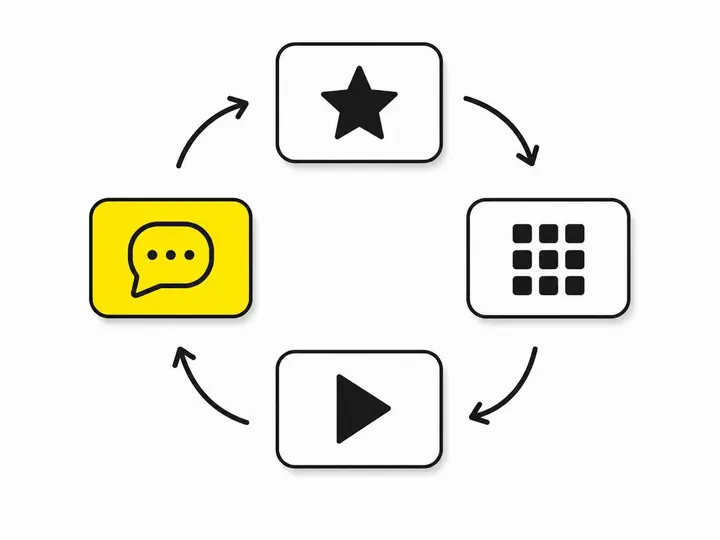
The content repurposing loop
Take one solid piece of content (a blog post, a customer story, a before-and-after, even a single sentence idea) and express it six different ways:
Text-only post with context
Quote graphic (using Canva)
Carousel: one point per slide
Reel: narrate it with screen recordings or voiceover
Testimonial angle: frame it as client feedback
FAQ style: rewrite as a question and answer
Post these across two to three weeks. Most of your audience won't see every version, and the algorithm sees variety. You've made six posts from one idea.
Using AI to generate caption variations from what you already have
Once you have a solid post idea, using AI to write social media captions saves you the mental load of rewriting the same idea. Paste your post into an AI tool and ask for "five different captions for this image, each targeting a different audience feeling (curious, skeptical, excited, worried, inspired)." You'll get ready-to-use variations. This is how full-time creators stretch time. There's no reason a small business can't use the same approach.
Posting Frameworks to Keep You Consistent
The 5-3-1 rule explained
The 5-3-1 rule is a proven posting rhythm: five educational or useful posts, three entertaining or behind-the-scenes posts, one ask or promotion, per week. For a small business posting three to five times weekly, this keeps your feed balanced and prevents the "constant sales pitch" vibe that kills engagement. Educational posts might be FAQ answers or process explainers. Entertainment might be a funny customer story or a behind-the-scenes text update. The one ask could be a testimonial request or a gentle call to action. This framework works because it feels natural, not robotic.
Simple weekly posting rhythm for time-poor business owners
How often to post on social media depends on your capacity, but consistency beats frequency. Post three times a week consistently, using the frameworks and formats above, and you'll outperform a business posting five times one week and zero the next. Use social media scheduling tools to batch-plan Sunday evening and forget about it. Spend 45 minutes once a week scheduling six to nine posts, and you're done.
Tools That Make No-Photo Content Easier
Free design tools for text-based graphics
Canva is the no-brainer choice. Templates for every social platform, free tier is genuinely functional, zero design skill needed. You can create a quote graphic in 90 seconds. No learning curve.
AI caption and content idea generators
Tools like ChatGPT or Claude are free (or very cheap on paid plans). AI-powered social media tools for Aussie businesses can generate post ideas, caption variations, and even hooks for attracting clicks and saves. Paste your business context once, then ask for content ideas weekly. You're outsourcing the thinking, keeping the final edit.
Scheduling tools to stay consistent without daily effort
Meta Business Suite (free, built into Facebook and Instagram) allows you to schedule posts up to six months ahead. Sprout Social and similar tools add more analytics and multi-account management if you're handling several clients or pages. For most small businesses, the free Meta scheduling is enough. Batch your content planning once weekly and schedule everything in one sitting.
When You Do Need Images: Low-Cost Ways to Build a Photo Library
Phone photo habits that take 2 minutes a day
You don't need a photoshoot. Simply photograph one thing daily related to your work. A tradie snaps the site each morning. A service business grabs a shot of a happy client workspace. A retailer photos one product display. Over a year, you've got 365 new images for zero budget. These candid, phone-shot images often outperform staged photography anyway because they feel authentic.
User-generated content and customer photos
Ask your customers to send photos. "Snap a photo of your finished job and tag us." Repost these with credit. User-generated content (UGC) is free, builds community, and performs exceptionally well because it's real. Most customers are happy to help if you make asking simple and public. This alone can refill your content library monthly.
Conclusion
Running out of social media content is a resource problem, not a creativity problem. You don't lack ideas; you lack time and the permission to stop chasing perfect photos. The formats that work hardest in 2026 (Reels, carousels, testimonials, text-based posts) don't require photography at all. Use what you already have: old photos, customer reviews, your knowledge, and one simple repurposing loop.
Start this week by auditing three old photos and turning each into a carousel or quote graphic. Schedule one FAQ post as text-only. Harvest one Google review and design it in Canva. You've now created three pieces of genuinely different content from things you already own, with zero new photography. That's the real competitive advantage, consistency without burnout.
If you're serious about showing up consistently, set up a simple scheduling tool this week and batch-plan your next month using the 5-3-1 rule. You'll spend maybe three hours once, then post reliably for 30 days with zero daily stress.