Facebook Page vs Group for Business in Australia: Which One Do You Actually Need?
On this page 8 sections
Key takeaways
- A Page is your public business identity searchable, reviewable and ad-ready.
- A Group is a participation channel for community, referrals and repeat customers.
- Set up and complete your Page before launching any Group.
- Meta may limit organic external links from Pages monitor this in 2026.
- Neither asset guarantees reach without consistent posting and genuine engagement.
Facebook keeps 17.8 million Australians logged in every month, but whether you set up a Page, a Group, or both depends entirely on what you actually want to achieve. Most Australian small business owners are choosing one or the other without understanding the real difference, and many are wasting time managing the wrong tool.
Why This Question Matters for Australian Small Businesses in 2027
Facebook still reaches 17.8 million Australians
According to DataReportal's Digital 2027: Australia report, released in November 2026, Facebook's potential advertising reach in Australia sits at 17.8 million users. That's 65 percent of the entire Australian population and 82.5 percent of adults aged 18 and over. If you're trying to reach local customers, Facebook still matters.
More businesses are on social, so standing out matters more than showing up
The Australian Bureau of Statistics reported that 51 percent of employing Australian businesses now use social media for their online presence, up from 47 percent in 2021-22. That's a shift: five years ago, simply having a Facebook presence was enough. In 2026, having one is expected. What separates a business is whether it uses the right tool for the right job. Facebook marketing for local businesses requires strategy, not just presence.
What a Facebook Page Actually Does for a Business
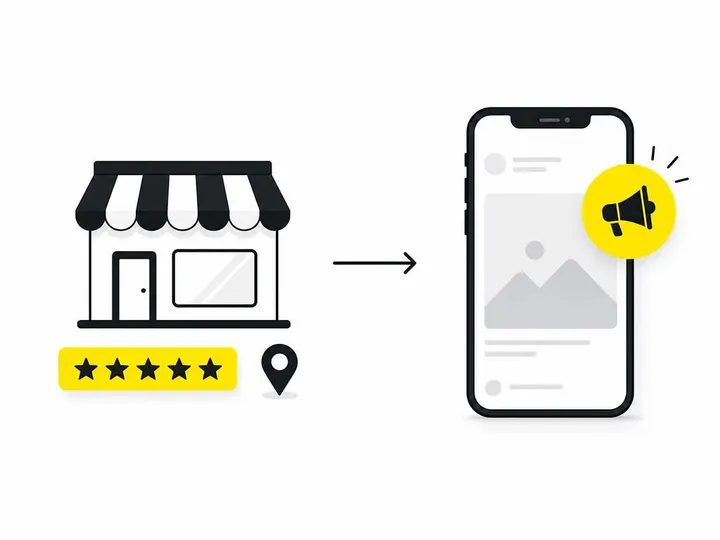
A Facebook Page is your business's permanent public address on the platform, and it behaves like a shopfront: people search for it, they leave reviews on it, they ring you from it, and ads lead them to it.
Searchability, reviews and contact details
When someone types your business name into Facebook's search bar, a well-built Page appears. Your opening hours, phone number, website link, location map, and customer reviews all live on that Page. You can't have a Group that does that. The Page is where you control how your business looks to strangers and prospects.
Running ads and paid promotion
The Meta advertising platform is designed to direct traffic to Pages. When you run a paid campaign, it runs on your Page. Groups can't be the primary destination for ad spend the same way a Page can.
The link-posting restriction to watch in 2026
In October and November 2026, reports indicated that Facebook Pages are being limited to two external links per month unless the business pays for a Meta subscription. This restriction doesn't currently apply to Group posts or comments, but it does affect how much traffic you can send from your Page to your website without paying. If your entire strategy depends on organic Page posts driving website clicks, this change matters. Check your own Meta Business Suite to see whether the restriction applies to your account yet.
What a Facebook Group Actually Does for a Business
A Facebook Group is a closed or semi-closed community where members gather to discuss, ask questions, recommend and support each other. It's a conversation space, not a broadcast channel.
Community, conversation and referrals
When you run a Group well, members talk to each other. They post recommendations, ask for advice, tag their friends and solve problems together. That peer-to-peer trust is worth more than a business posting its own ads. Building an engaged social media community through a Group works because the value comes from members, not from you promoting yourself constantly.
When a Group is worth the effort
A Group makes sense for repeat-purchase businesses (think gyms, local services, product communities), customer support networks, member-only education, referral-friendly niches, or event communities. Local tradies, consultants, coaches and retailers often run successful Groups because their customers want to talk to each other.
The moderation cost most owners underestimate
A Group requires constant moderation. You need to approve posts, remove spam, enforce rules, respond to questions and keep conversations on track. Many business owners launch a Group, post an announcement or two, then let it sit. That kills engagement faster than not having a Group at all. The time commitment is real, and it's often the reason a Group fails.
Facebook Page vs Group: A Practical Comparison
Ownership and control
You own and control a Page directly. You decide every post, every comment policy and every link. With a Group, you still own it, but you're also responsible for enforcing community standards. Members can post on your Group and you have to decide whether to allow, delete or edit their content. That's different from a Page where only you post (or approved team members).
Visibility and discoverability
Pages appear in Facebook search results, on local business maps and in ad targeting. Groups don't show up the same way unless someone already knows about them. A Group's growth depends on word of mouth or direct invites from your Page or other channels. Organic reach for a Group is lower than for a Page, but engagement within the Group is often higher.
Best use cases side by side
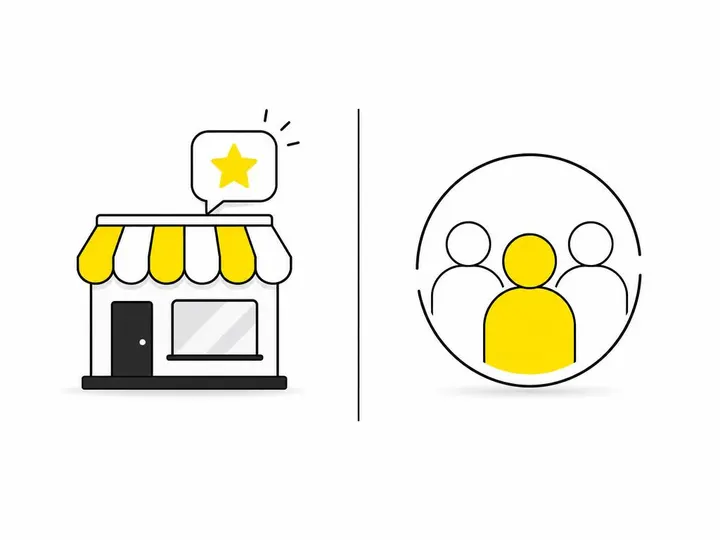
Use a Page if: You need a searchable business listing, you want to run paid ads, you need reviews visible, your customers don't know each other, or you're starting out with social media for the first time.
Use a Group if: Your customers want to connect with each other, you have capacity to moderate daily, repeat business builds community, or referrals matter more than reaching strangers.
Use both if: You have a large customer base that wants both discovery (Page) and community (Group), and you have the time to manage both consistently.
The Recommended Sequence: Page First, Group Only When Ready
If you don't have either yet, start with a Page. It's the foundation. A complete Page with accurate hours, photos, a description and a linked website takes a few hours. A good Page that actually gets visited and trusted takes consistent effort over weeks. Once that's working, consider a Group only if you have a clear reason.
How to know if your business is ready for a Group
You're ready for a Group when you can answer all three questions honestly: Do your customers want to talk to each other? Can you commit to moderating and posting in the Group at least three to four times a week? Do you have a specific purpose for the Group beyond "be visible"? If the answer to any is no, wait.
What a good Group purpose looks like
A Group created to share tips for a hobby, ask questions about a service, recommend local businesses, or support members through a learning journey has a purpose. A Group created to post your promotional content has none. The Group thrives when members use it; it dies when you treat it like an advertising channel.
Common Mistakes Australian Small Businesses Make on Facebook
Starting a Group instead of completing the Page
The Group feels more exciting because it's a new community. But if your Page is incomplete, outdated or missing reviews, you have no visible business presence. Do the boring work first.
Using a Group to push ads instead of spark conversation
Members join groups to talk, not to be sold to. Businesses that use a Group as a second advertising channel often see members leave. What to post on Facebook as a small business is different for a Page and a Group, and misunderstanding that destroys Group engagement.
Ignoring the Page after launching a Group
You don't get to choose one and drop the other. The Page remains your business address; the Group is a bonus. Both need attention or neither works.
When You Need Both and How to Connect Them
Linking your Group to your Page
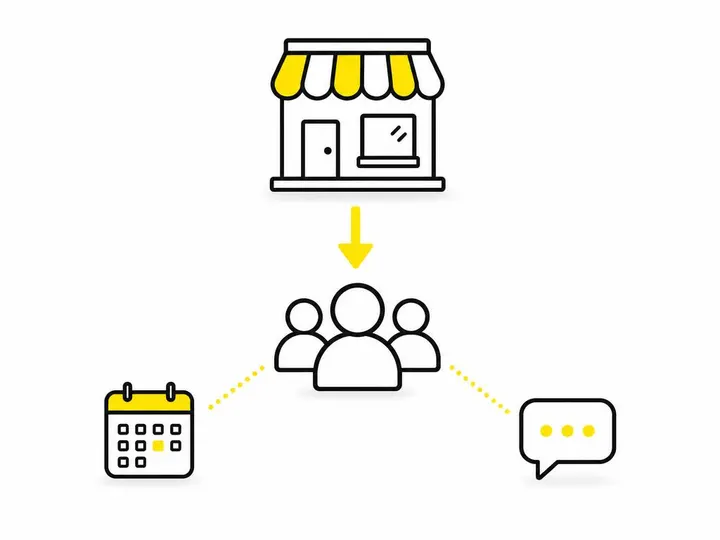
If you manage both, add a link to your Group on your Page. You can create a button that says "Join Our Community" in your Page's About section or pin a post inviting Page followers to join the Group. The Group also gets a link back to the Page in its about information. This way, new visitors to your Page can find the Group if they want deeper engagement.
What to post where
Post announcements, promotions, new products, opening hours and visual content on the Page. Save detailed advice, behind the scenes stories, member spotlights and conversation starters for the Group. The Page attracts people. The Group keeps them engaged. If you're short on time, social media management for small businesses can handle both for you, but the strategy has to be clear first.
Conclusion
Facebook Page and Group serve different jobs. The Page is your searchable business presence, your ad platform and your contact point for strangers. The Group is your community and conversation layer for customers who already know you and want to connect with others. Most Australian small businesses need a Page. Most don't need a Group until they're ready to moderate and participate daily.
Start with a strong, complete Page. Use posting frequency for small business social media as your guide to stay visible without burning out. Once that's working and you see genuine demand from customers wanting to talk to each other, then build a Group. The link-posting restrictions Meta rolled out in late 2026 mean you also can't rely purely on organic external links anymore, so treat the Page as one part of a broader strategy that includes email, referrals and paid promotion. Done right, either asset can help you reach more customers. Done wrong, either one wastes your time.