Skincare SEO: How to Rank Your Product and Collection Pages in 2026
On this page 9 sections
Key takeaways
- Build collections around skin concerns and ingredients, not just product categories.
- Product copy must answer what shoppers actually search: skin type, actives, texture, routine step.
- Internal links between ingredient pages, products and guides create a discoverable site structure.
- Accurate structured data and Merchant Centre data prevent eligibility issues during promotions.
- Audit image quality before January 2027 when Google enforces 500x500 pixel minimums.
Skincare brands are increasingly competing in a crowded online space where your product isn't found by typing your brand name it's discovered through searches like "best moisturiser for sensitive skin", "vitamin C serum for hyperpigmentation" or "ceramides for barrier repair". Ranking in those moments requires an approach to SEO that treats your collection pages, product descriptions and ingredient taxonomy as interconnected systems, not isolated product pages. This guide walks through how to structure and optimise your skincare store so that Google and your customers can find exactly what they need.
Why skincare SEO is different from general ecommerce SEO
Skincare shoppers search by skin problem, active ingredient and skin type far more often than by product name or brand alone. Someone hunting for "niacinamide serums for oily skin" is likely at a different stage of their journey than someone searching "CeraVe Hydrating Serum", and both deserve to find the right collection or product page. This problem-driven search behaviour means your information architecture, collection structure and product copy all need to reflect how real people describe their skin concerns and preferred ingredients.
The Australian beauty market is worth noting: Australians spent A$2.0 billion online on beauty products in 2025, a 15.7% year-on-year increase, and 49% of all Australian beauty spending now occurs online. That growth means more searchers are using Google and Google Shopping to discover skincare solutions, and they're doing it with specific, detailed queries. Ecommerce SEO for beauty brands therefore demands attention to structure, copy and data integrity that generic product-based ecommerce often overlooks.
Shoppers search by problem, ingredient and concern, not just product name
A person with breakout-prone skin doesn't search "serums" they search "best serum for breakouts" or "salicylic acid serum for cystic acne". They're looking for a collection or product that addresses their specific need, backed by the right active ingredients. Your collection pages and product descriptions need to speak that language and make those problem-to-solution connections visible to both search engines and humans. That's why a skincare store's information architecture should include collections built around skin concerns and ingredients, not only broad product categories like "serums" or "moisturisers".
Australian beauty is a growing online market worth knowing
Australians spent A$2.0 billion online on beauty in 2025. That 15.7% year-on-year growth means your SEO effort is reaching an audience actively searching and buying. Men's skincare alone now represents 43% of Australian men using skincare products—approximately 4.9 million users with that figure growing 16.7% over four years. Your site's navigation and collection structure should recognise this growth by building collections around needs like oil control, shaving irritation and barrier repair, rather than relying solely on demographic labels.
How should a skincare brand structure its collection pages to rank for problem and ingredient searches?
Your collection pages are the bridge between general searches like "best serum for dry skin" and specific product pages; they need to be crawlable, unique and built around both skin concerns and ingredients so Google can understand what they're about and serve them to the right searchers.
Build collections around skin concerns and ingredients
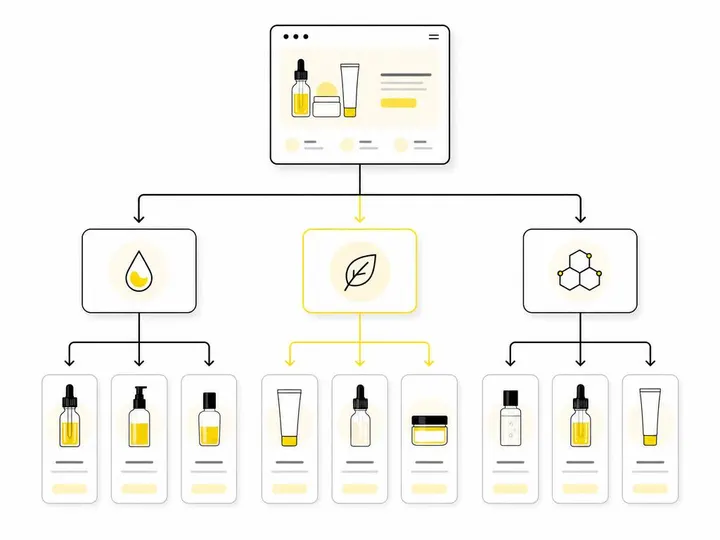
Create dedicated collection pages for skin concerns ("acne-prone skin", "sensitive skin", "oily and congested") and for key ingredients ("niacinamide", "hyaluronic acid", "salicylic acid", "ceramides"). Each collection should have unique introductory copy that explains the concern or ingredient, why it matters and which products suit that need. This structure reflects how shoppers actually search and gives Google clear signals about what each page targets. Avoid making every collection follow identical templates or descriptions; skincare shoppers need context, not just a product grid.
Prevent collection pages from competing with each other
If you have both a "vitamin C serums" collection and a "brightening serums" collection, they may cannabilise each other in search results. Use your internal linking and navigation to show Google the relationship between them: a brightening collection might link to vitamin C serums as a subset, or the vitamin C page might mention brightening as one benefit. Be intentional about which collection you want to rank for the broader term. How collection pages work for product-based brands applies equally to skincare; each collection should serve a distinct search intent.
Make collections reachable through crawlable navigation
Google Search Central guidance on ecommerce navigation and crawlable links emphasises that important collections should be reachable from your menu, not only through filters or onsite search. A visitor should be able to click their way from your homepage to "Concerns" to "Acne-Prone Skin" to individual products without hitting a dead end or a filter that isn't crawlable. This matters for discovery and for how Google understands your site structure.
What information must product page copy include to satisfy both shoppers and Google?
Your product description must answer the questions a skincare shopper actually asks before they buy: What is this for? What's in it? How do I use it? Who should use it? The best product copy also matches the terms people search and avoids simply copying manufacturer descriptions word for word.
What information skincare shoppers need before they buy
Skincare buyers need to know: the skin type or concern the product targets, active ingredients and their concentrations where relevant, the product type and texture, where it sits in a routine (cleanser, toner, treatment, moisturiser), usage instructions, any exclusions or cautions (not for pregnant or nursing customers, not suitable for certain conditions), pack size, and Australian-specific information like shipping, returns and whether the brand is Therapeutic Goods Administration (TGA) compliant or holds any relevant certifications. This information builds trust and helps the shopper decide whether the product suits their needs. It also gives Google the context it needs to match your product to relevant searches.
Match your copy to the terms people actually search
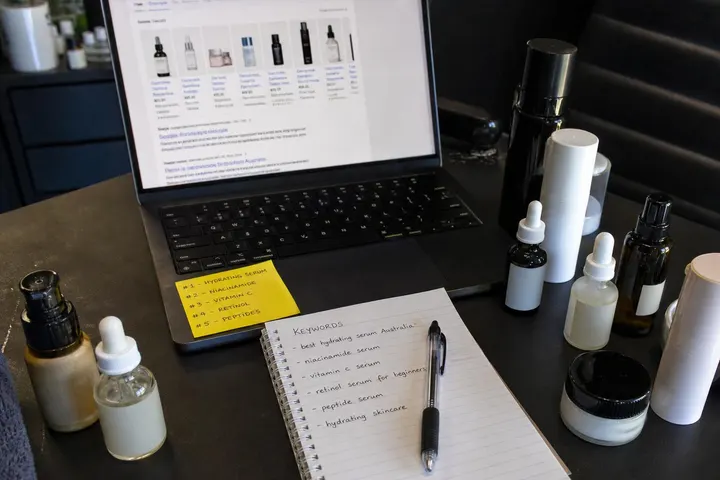
If your target audience searches "lightweight moisturiser for sensitive skin" but your product description uses only "balancing cream" and "gentle formulation", you're missing the semantic connection. Research the actual search terms your audience uses—through Google Search Console, keyword tools and customer reviews—and weave those terms naturally into your product descriptions. That means writing "lightweight moisturiser" if that's what shoppers call it, and "sensitive skin" if that's the concern your product addresses.
Avoid copying manufacturer descriptions
Manufacturer descriptions often use marketing language or broad claims that don't match how real Australian shoppers search or describe their skin concerns. Write original product copy that speaks to your audience's language and concerns. This also protects you from duplicate content issues if the same manufacturer supplies dozens of retailers.
How do you use ingredient pages as an internal-linking system without keyword cannibalisation?
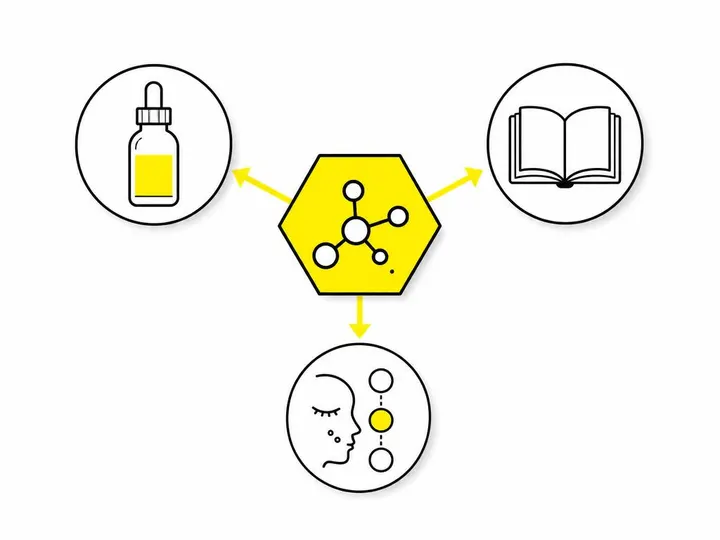
Ingredient collection pages become powerful internal-linking hubs when you link them to products, educational content and routine guides using consistent terminology and clear information hierarchy.
Create dedicated ingredient collection pages
An ingredient page like "niacinamide" or "hyaluronic acid" should explain what the ingredient is, why skincare brands use it, what skin types benefit from it, and typical concentrations found in skincare products. It should not compete with your "niacinamide serums" or "niacinamide moisturisers" collection pages; instead, those collection pages should link to the ingredient page as a resource. This establishes the ingredient page as the central authority on that ingredient and uses it to send link equity and context to product collections without creating duplicate or competing pages.
Link ingredients to products, routines and educational guides
From each ingredient page, link to relevant product collections ("niacinamide serums", "niacinamide moisturisers") and to any routine guides or blog posts that feature that ingredient. From product pages, link back to the ingredient page. This internal link pattern helps Google understand the relationships between ingredients, products and guidance, and it helps shoppers discover related products and education.
Keep terminology consistent across the site
Use the same term for each ingredient everywhere: always "hyaluronic acid", not "hyaluronic acid" on one page and "sodium hyaluronate" interchangeably on another (even though they're related). Consistency helps Google connect your pages and prevents confusion in your internal-linking system.
What does Google's November 2026 Product structured data update require skincare brands to fix?
Google's Product structured data documentation updated on 23 November 2026, clarifying which markup applies to product snippets, merchant listings and other use cases, and providing much clearer guidance on how to specify sale-price effective dates. For skincare brands running limited-time promotions, Black Friday sales or time-sensitive bundles, this matters significantly: if your structured data says a product is on sale from 1 to 10 December but your page says the sale runs through 15 December, or if your Merchant Centre feed shows a different price, Google's systems may distrust your data or restrict your eligibility for certain features.
Audit your product feed and structured data before any promotional period: ensure product names, prices, sale prices, effective dates, availability status and variants all match your visible page content and your Merchant Centre entries. Use technical SEO for ecommerce principles to verify your markup is accurate and reflects what shoppers actually see when they visit your site.
Optimising collection pages beyond the product grid
A collection page is not just a grid of products; it's an opportunity to guide shoppers, reduce decision fatigue and reinforce your site's information architecture.
Add unique introductory copy and selection guidance
Open each collection with a brief, genuine explanation of the concern or ingredient and who should consider products in that collection. For example, a "barrier repair" collection might begin: "A compromised skin barrier can cause sensitivity, irritation and dryness. These products focus on restoring ceramides, cholesterol and fatty acids to strengthen your skin's natural protection." Then provide simple guidance: "Start with one product and use it consistently for three to four weeks before adding another treatment." This approach treats your collection page as educational, not just transactional.
Use descriptive headings, filters and related links
Use clear subheadings within your collection ("Best for sensitive skin", "Best value", "Best for beginners") to help shoppers narrow their choices. Provide useful filters: skin type, price range, product type or key ingredients. Link to related collections or concerns at the bottom of the page, so a shopper viewing "sensitive skin" products can discover "barrier repair" or "anti-redness" collections.
FAQs and routine guides on collection pages
Include a brief FAQ section if it genuinely answers questions you hear from customers. "Can I use multiple ceramide products together?" or "What's the difference between ceramide NP and ceramide EOP?" are real questions shoppers ask. Keep the answers concise and accurate. Consider adding a simple routine guide for each collection: how to layer products, what time of day to use them, and what not to mix.
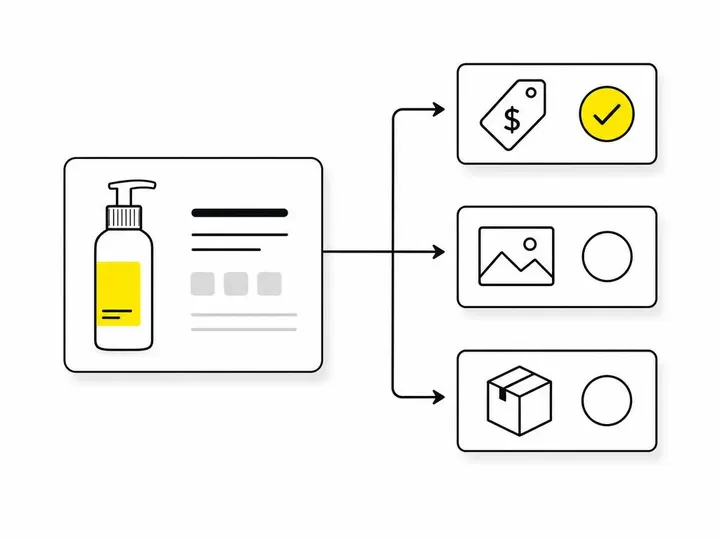
Visual assets are part of skincare SEO, not decoration
High-quality product images with descriptive filenames and alt text make your products discoverable in Google Images, Google Lens and Google Shopping, and they signal to Google what your product actually looks like and what problem it solves.
Descriptive filenames and alt text for product images
Use filenames like "niacinamide-serum-sensitive-skin-30ml.jpg" instead of "product-123.jpg". Write alt text that describes the product, its purpose and key features: "Niacinamide serum in a dark glass bottle with dropper, formulated for sensitive and oily skin." This helps both Google Images and visitors using screen readers.
How Google Images, Lens and Shopping extend your reach
Google Lens allows shoppers to take a photo of a skincare product they like and find similar products online. If your product images are high-quality and properly optimised, they're more likely to be surfaced in Image search and Lens results. Feedonomics guide to Google Shopping feed specifications notes that Google is also introducing a minimum image resolution requirement of 500 × 500 pixels from 31 January 2027. Plan an image audit now: ensure all product images meet that standard, replace low-resolution images and prepare your feed to pass validation.
Building collections for emerging audiences
Men's skincare now represents a significant and growing market in Australia, with 43% of men using skincare and that figure growing 16.7% over four years. Your information architecture should reflect that growth intentionally.
Men's skincare: build around needs, not demographic labels
Rather than a collection simply called "For Men", create collections around actual needs: "Oil control and pore care", "Shaving irritation and ingrown hair", "Barrier repair", or "Post-workout recovery". Use your internal links to surface relevant products from your main collections as well as dedicated men's-focused products. This approach serves both the growing men's skincare audience and allows shoppers of any gender to find products suited to their actual concerns.
Conclusion
Skincare SEO succeeds when you treat your store's structure, copy, links and data as an integrated system rather than isolated components. Build collections around skin concerns and ingredients so shoppers find solutions to their specific problems. Write product descriptions in the language your audience actually uses, backed by accurate structured data and high-quality images. Use ingredient pages as internal-linking hubs to connect products to education and other resources.
Before promotional periods, audit your feeds and structured data to ensure prices, availability and effective dates align with your visible content. Prepare now for Google's 500 × 500 pixel image requirement from 31 January 2027, and structure your navigation including emerging categories like men's skincare so that Google and your customers can discover the right products through crawlable links and clear information hierarchy.
The Australian beauty market's growth means more competition and more opportunities. Skincare brands that invest in thoughtful collection structure, consistent terminology, and accurate product data will rank higher, convert better, and build genuine authority in a crowded space.