NDIS Website Design: What Participants and Referrers Need to Find Quickly
On this page 8 sections
Key takeaways
- Answer the five core questions on every service page, near the top
- Build separate navigation paths for participants and referrers
- List specific suburbs, regions and delivery modes, not vague claims
- Make every service page enquiry-ready with one prominent call to action
- Explain funding arrangements accurately without implying guaranteed eligibility
- Mobile-first design and accessible navigation reduce drop-off significantly
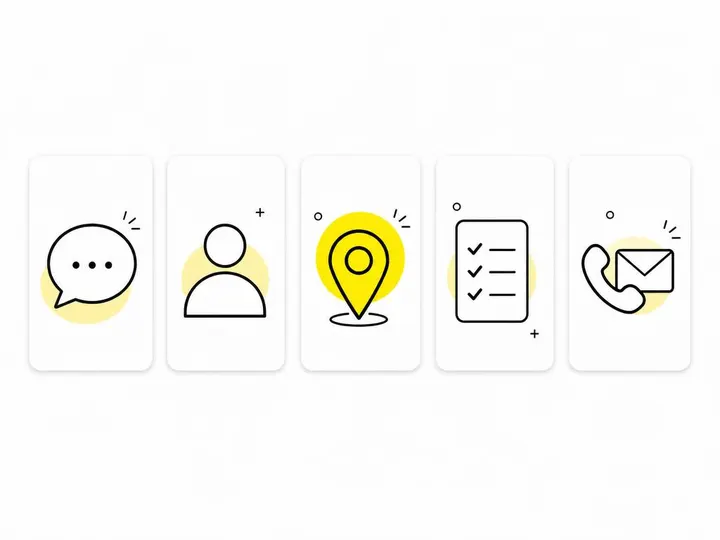
Your NDIS website needs to answer five critical questions in the first few seconds: what supports you provide, who they're for, where you operate, how they work, and how someone gets in touch. With 795,531 participants now in the Scheme and 280,258 active providers competing for their attention, a website that makes these answers hard to find is leaving referrals on the table.
Why your NDIS website needs to work harder in 2027
The NDIS participant base continues to grow. Latest data published in November 2026 recorded 795,531 participants at the end of October, with 782,013 holding approved plans as of June 2026. For providers, that's good news on volume but bad news on visibility. The provider market is growing too: 280,258 active providers were registered at 30 June 2026, up from 277,376 three months earlier. In a tighter, more competitive market, your website either helps people quickly understand your service and make contact, or they move to the next provider in the search results.
The NDIS itself has signalled what matters. The NDIS Quarterly Report Q4 2025-26 documented testing an assessment tool with 300 participants using real-world usability, accessibility, clarity and overall user experience as the benchmark. Provider websites should apply the same rigorous thinking. When a support coordinator or family member visits your site under time pressure, they're asking: Can I find what I need? Does it make sense? Can I get in touch?
This is where website design for health and disability providers differs from generic small business sites. NDIS users and referrers come with specific tasks, often limited time, and sometimes cognitive accessibility needs that demand deliberate information architecture.
The five questions every NDIS website must answer immediately
Structure your homepage and core pages around answering these five questions so clearly that a visitor can spot the answers without scrolling or searching.
What supports do you provide?
Be specific. Instead of "We provide disability support," say "We provide in-home personal care, community participation support and life skills coaching for participants aged 18 to 65." This distinction helps support coordinators and plan managers filter quickly. Use the language of NDIS Support Categories where relevant: Assistance with Daily Living, Community Participation, Employment, Psychosocial Support, Specialist Disability Accommodation and others. Your participants' plans already reference these categories, so speaking that language builds confidence.
Who are those supports for?
Specify participant age groups, primary disability types if applicable, communication needs you support (Auslan, visual supports, plain language), and any exclusions. If you support younger people with acquired brain injury but not autism spectrum disorder, say so openly. Unclear participant fit wastes everyone's time.
Where do you operate?
List suburbs, postcodes or regions. Include whether you offer in-home visits, centre-based sessions, telehealth, transport and service area boundaries. Vague claims like "servicing greater Sydney" frustrate referrers because they still don't know if you cover Penrith or Sutherland Shire. Use NDIS local SEO principles to build accurate service area pages tied to real locations.
How do your supports work?
Explain your intake process, typical response timeframe, how you work with plan managers or support coordinators, and whether you're set up for agency-managed, plan-managed or self-managed funding (or a combination). Many referrers assume all providers accept all funding types; clarifying this upfront prevents mismatched enquiries.
How can someone get in touch or make a referral?
Provide multiple contact pathways: a prominent phone number with expected business hours, an enquiry form that doesn't demand excessive detail upfront, and an email address. Mobile users especially benefit from click-to-call buttons and short forms rather than lengthy applications.
Building separate paths for participants, families and referrers
Not everyone visiting your site needs the same information or framing.
What participants and families need to see
Participants and their families often come to your site uncertain, possibly stressed and potentially lacking technical confidence. They need reassurance, clarity on cost (if any), and an easy first step. Use plain language, break complex ideas into short paragraphs, and consider making your website accessible with readable fonts, sufficient colour contrast and no auto-playing videos. Explain the support in human terms: "We help you build routines and confidence to get out into the community" lands better than "We facilitate community participation engagement outcomes." Avoid jargon or define it immediately.
What support coordinators and allied health referrers need
These professionals are time-pressed and task-focused. They want service details, referral requirements, intake procedures, your response SLA (service level agreement) and confirmation that you can accommodate their participant's specific needs. Create a dedicated referrer page with downloadable referral forms, the information you require, consent processes, contact details for the intake team and an estimated first contact timeframe. This reduces email back-and-forth and speeds up the referral process.
Making your service pages enquiry-ready
Each service you offer deserves its own page structured to move a visitor from curiosity to action.
What to include on each service page
Start with who the service is for, what's included, typical frequency or availability, locations and cost (if applicable). Add a brief explanation of how you deliver the support, the qualifications of your staff and how you involve the participant and their family. Finish with a prominent enquiry button or form: "Enquire about availability for [Service Name]." This improves your website's conversion rate by reducing friction between interest and action.
Referral forms and intake information
Offer a web-based referral form or a downloadable template. Specify exactly what information you need: participant name, support coordinator contact details, relevant plan approval excerpts, communication preferences. Set clear expectations about confidentiality, consent and data handling. Confirm receipt within your promised timeframe and assign a named contact person for follow-up.
Accessible navigation and content that works for everyone
Accessibility isn't optional in disability support; it's foundational. The WCAG 2.1 quick reference guide outlines the standard. For NDIS provider websites, focus on these practical steps.
Practical accessibility steps for NDIS provider websites
Use descriptive headings that outline page structure (not "Click here" or "More information").
Ensure text colour contrast meets WCAG AA standard (at least 4.5:1 for body text).
Make navigation keyboard-friendly; don't rely on hover-only menus.
Provide alt text for all images and captions or transcripts for video content.
Use plain language and short sentences; avoid dense paragraphs.
Publish key PDFs as accessible HTML pages too, so screen readers and plain-language users can access them.
Mobile and low-friction contact options
At least 60 percent of NDIS enquiries arrive on mobile devices. Ensure your phone number is clickable, your enquiry form loads fast and doesn't require unnecessary fields, and your email address is obvious. A confirmation message ("We've received your enquiry and will be in touch within 2 business days") reduces anxiety for people managing disability or care coordination across multiple providers.
Explaining funding clearly without overpromising
Funding information is a minefield. Many families misunderstand eligibility or believe a provider can guarantee funding approval.
Support categories and plan management types
State the NDIS Support Categories your service aligns with. Explain that participants use their plan budgets to pay for supports and that eligibility for a category is determined by the NDIA (National Disability Insurance Agency), not your provider. Distinguish clearly between agency-managed (the NDIA pays you directly), plan-managed (a plan manager coordinates payment) and self-managed (the participant or representative pays you) arrangements. Specify which your provider accepts.
What not to say about eligibility
Never claim "We can help you get approved for NDIS" or "Eligible participants get unlimited funding." The NDIA provider responsibilities document clarifies that only the NDIA determines access and eligibility. You can explain what your service does and which plan categories it typically suits, but not whether someone will be approved. When in doubt, defer to the participant's support coordinator or the NDIA itself.
Local SEO and service area pages done properly
Being found online matters, but only if the information is accurate and useful.
Be specific about where you operate
Instead of one vague "Service Areas" page, build dedicated pages for each suburb or region you genuinely serve. Include postcode, landmarks, whether you visit homes, have a centre location, or offer telehealth. Link these pages to your Google Business Profile and ensure your NAP (name, address, phone) is consistent across every platform. Keep service area claims honest; don't claim coverage you can't deliver.
Accurate provider details also support the NDIA's own data initiatives. The November 2026 public data release from the NDIA made provider information more searchable by participant demographics, markets and plan utilisation. Keeping your provider profile complete and current means referrers can find you through official NDIS channels as well as Google.
Conclusion
An NDIS website that works is one that answers five core questions instantly, creates separate journeys for participants, families and professional referrers, and treats accessibility as a strength rather than a checklist. With the participant base at 795,531 and the provider market at 280,258 and growing, clarity, speed and genuine usability are now competitive advantages. Your website should reflect the same care and person-centred thinking that underpins your direct support work.
Start by auditing your current site against those five foundational questions. If your homepage doesn't clearly answer "What supports do you provide?" or "Where do you operate?" in under ten seconds, restructure it. Build separate content pathways for participants and referrers. Make every service page enquiry-ready with one clear next step. Ensure your contact options work on mobile and in real time. Test your site with real users, including people with disability, to catch accessibility barriers before they frustrate a potential referral.
The goal isn't a beautiful website; it's a useful one. When a participant, family member or support coordinator lands on your NDIS provider site, they should understand exactly what you offer, whether it fits their need, how to access it and how to get in touch. Build for that clarity first, and the referrals will follow.