B2B SEO Solutions That Actually Win Clients in 2027

On this page 7 sections
Key takeaways
- 71% of B2B buyers start their search on Google before contacting anyone
- Content and local SEO together drive the most qualified B2B leads
- Technical site health directly affects your rankings and bounce rates
- B2B SEO takes 3 to 6 months to build momentum but compounds over time
- Google Business Profile optimisation is a fast win for local B2B visibility
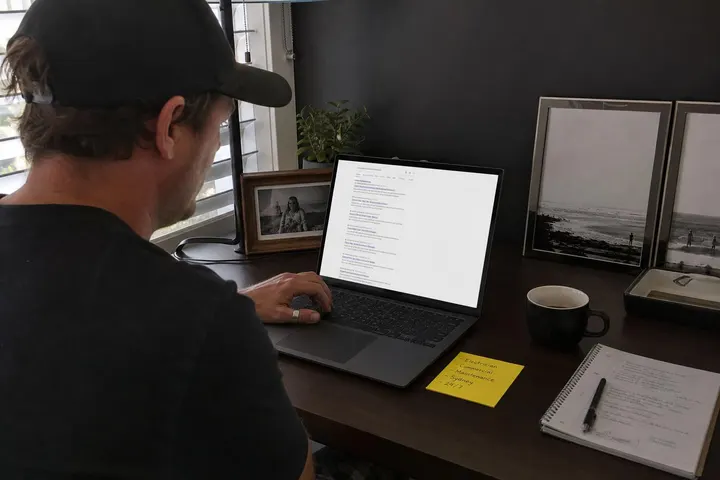
Most Australian B2B businesses are losing clients to competitors who show up first in Google, and they don't even know it's happening. While your sales team waits for inbound calls, your potential clients are already deep into their research phase, reading competitor blogs, checking credentials, and forming opinions before anyone picks up the phone. The businesses winning in 2027 are the ones who get their SEO right, and that means understanding what B2B SEO solutions actually look like.
Why B2B Buyers Search Before They Call Anyone
B2B buyers spend weeks researching before they contact a single vendor, which is why search engine visibility matters more than ever.
Forrester research on B2B buyer search behaviour shows that 71% of B2B buyers start their journey with a search engine. They're not jumping straight to your phone number. They're looking for answers to problems, comparisons between providers, case studies from similar businesses, and proof that you know what you're doing.
The research phase most businesses miss
Most B2B business owners think their job is to close deals, so they focus their marketing spend on sales enablement. What they miss is that 60% of potential clients will consume three or more pieces of content before they ever talk to your sales team. That content lives on your website, in your blog, or on pages that rank in Google search results.
If your competitors control those search results, your prospects are already learning from them, absorbing their messaging, and building trust with them. By the time they call you, they've already decided whether you're worth talking to.
How long B2B sales cycles affect your SEO strategy
B2B sales cycles average five to seven months for small to mid-market deals. That length matters because it means you're not selling to someone who needs you today; you're selling to someone who might need you in four to six months, after they've gathered information, compared options, got budget approval, and convinced their team that change is necessary.
This is why HubSpot's guide to B2B SEO and organic lead generation emphasises that organic search drives 40% of B2B leads for companies with mature SEO programs. SEO isn't a quick channel; it's a compounding channel that builds value over months and years, feeding your sales pipeline with qualified prospects who've already done their homework.
The Four Pillars of Effective B2B SEO Solutions
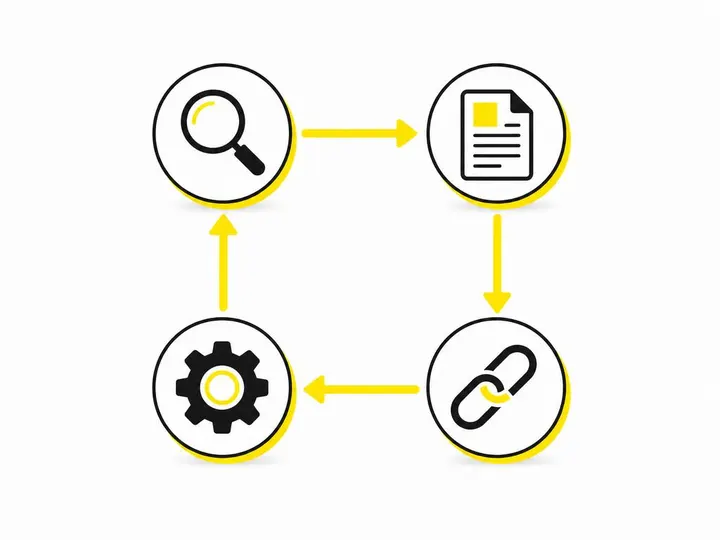
Winning B2B SEO in Australia rests on four core pillars that work together to attract the right prospects and convince Google you deserve to rank.
1. Keyword strategy built around buyer intent
Not all keywords are equal in B2B. You don't want traffic; you want traffic from people who are actually looking to buy or considering a change.
Buyer intent keywords are searches that signal someone is in the research or decision phase. For a plumbing contractor, that might be "emergency plumber in Parramatta" or "how much does a new hot water system cost" rather than generic terms like "plumbing tips." For a business consultant, it might be "management consultant for manufacturing" rather than "what is management." These specific, problem-focused searches attract prospects who are closer to saying yes.
Our B2B SEO services start with keyword research that maps the entire B2B sales cycle, from early awareness through to late-stage decision keywords your sales team can actually close.
2. Content that earns trust before the first conversation
Blog posts, case studies, and service pages are where trust gets built. A prospect reads your technical breakdown of how you solve a specific problem, sees a case study showing results for a business like theirs, and suddenly you feel credible.
SEO-focused content isn't about keyword stuffing or writing for robots. It's about writing for buyers who are asking real questions and need real answers. That means detailed explainers, honest cost breakdowns, and clear explanations of your process.
3. Technical SEO: the foundation buyers and Google both need
Technical SEO is invisible to your prospects but essential to Google. It covers site speed, mobile usability, crawlability, and Google's Core Web Vitals documentation which measures how fast your pages load and how smoothly they respond to user input.
Sites with poor technical foundations get penalised in search rankings, meaning your excellent content never gets seen. Technical SEO fixes ensure your website is built on solid ground from a search engine perspective.
4. Authority and backlinks in your industry niche
Backlinks are still one of Google's strongest ranking signals. When other reputable websites link to yours, Google sees you as an authority in your field. In B2B, this often means earning links from industry associations, getting featured in trade publications, or being mentioned in relevant resource lists.
For Australian tradies and service businesses, local authority matters most. Links from local business directories, chamber of commerce sites, and industry-specific Australian resources carry more weight than random global links.
Local SEO: The Overlooked B2B Advantage for Australian Businesses
One in four B2B Google searches includes a location modifier, yet most service businesses treat local SEO as an afterthought.
Optimising your Google Business Profile for B2B enquiries
Your Google Business Profile is the foundation of local SEO services. When a prospect searches "electrical contractor Parramatta" or "logistics provider Melbourne," they're often looking at Google's local pack, which pulls results from businesses with well-optimised profiles.
A properly optimised profile includes accurate contact details, opening hours, service areas, high-quality photos, and regular posts. Businesses with complete, up-to-date profiles see two to three times more enquiry rates than those with neglected profiles. For B2B, this means adding your service areas, linking to your website, and encouraging clients to leave reviews that reinforce your expertise.
Location and service-area pages that rank
Service businesses with multiple locations or service areas need service area pages that rank for their local markets. A plumbing company serving five suburbs should have a dedicated page for each suburb, optimised with local keywords, local case studies, and relevant schema markup that tells Google exactly where you operate.
These pages are where local searches land. They're also where you demonstrate that you understand the specific needs of each area you serve, building trust with local prospects.
E-E-A-T and Why It Matters for B2B Service Businesses
Google now prioritises Experience, Expertise, Authority, and Trustworthiness across all business sectors, particularly in B2B and professional services.
How to demonstrate experience and expertise on your website
E-E-A-T isn't just a buzzword; it's baked into Google's ranking algorithm following the 2024 Helpful Content Update. For B2B service businesses, demonstrating these qualities means showing exactly who you are, what you've done, and why prospects should trust you.
Your team bios should include real credentials, experience, and qualifications. Your "About" page should tell the story of how you started, what problems you solve, and how long you've been solving them. Your blog should reflect genuine expertise, not generic content written by freelancers who've never done the work.
Case studies, credentials, and author bios as trust signals
Case studies are among the most powerful trust signals on your website. Specific numbers, real client examples, and measurable outcomes prove your expertise in a way a sales pitch never can. A prospect reading "We helped a manufacturing firm reduce production downtime by 22%" learns more than from any brochure.
Author bios matter too. When someone reads a blog post, seeing the writer's title, experience, and credentials builds authority. If an article is just attributed to "The Team," it carries no weight. If it's written by your lead engineer or your operations director with ten years in the industry, suddenly the content means something.
Optimising your Google Business Profile is also part of this strategy. Your profile is where you add posts, respond to reviews, and signal to Google and to searchers that you're an active, engaged, trustworthy business.

How Long Does B2B SEO Take to Show Results?
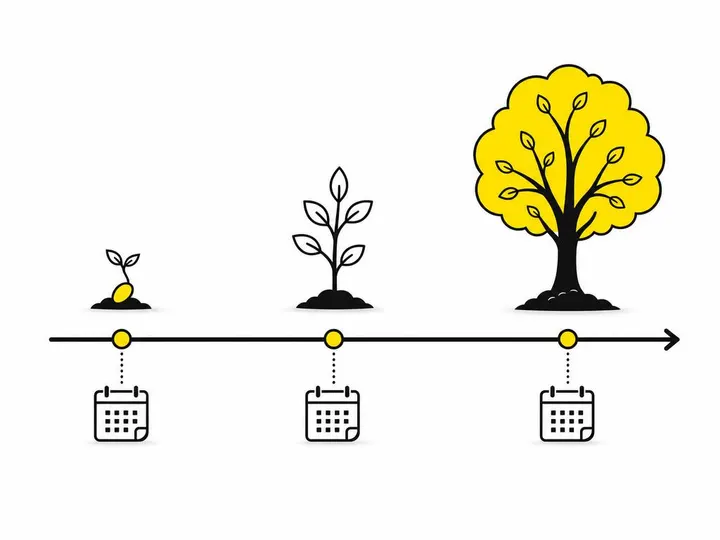
Most Australian B2B businesses see meaningful results from SEO within four to six months, but the timeline depends on competition, your starting point, and how much work needs doing.
Realistic timelines for small to mid-market Australian businesses
If your website has technical issues, thin content, or almost no backlinks, you're starting from a deficit. Fixing technical problems and building initial content might take two to three months before you see any ranking movement. If your site is already reasonably sound, you might see some traction within eight to twelve weeks.
Local keywords tend to move faster than national ones. A Melbourne plumber optimising for local searches might rank on the first page within two to three months. A business competing for national keywords against established players might wait six to nine months for meaningful results.
Quick wins vs long-term compounding gains
Quick wins in B2B SEO include fixing obvious technical issues, adding schema markup to help Google understand your business, and optimising your Google Business Profile. These changes can move the needle in weeks.
Long-term gains come from consistent content creation, building your backlink profile, and establishing authority in your niche. These compound over time, meaning that after twelve months of effort, you're not just seeing twelve months of results; you're seeing accelerating returns as your domain authority grows and Google trusts your site more.
What a B2B SEO expert does is balance these quick wins with long-term strategy, so you're not waiting six months with nothing to show, but also building foundations that generate leads for years.
What to Look for in a B2B SEO Provider in Australia
Not all SEO agencies are equipped to handle B2B businesses, and choosing the wrong partner can waste months and thousands of dollars.
Questions to ask before you sign anything
Ask any potential provider: What's your experience with B2B businesses in my industry? Can you show case studies with real results? How do you approach keyword research and buyer intent? What's your content process, and who writes it? How do you measure success, and what will you report on monthly?
Ask about technical SEO specifically. Do they run a full audit? Do they check Core Web Vitals? Do they implement schema markup? These aren't optional; they're foundational.
Ask about local SEO. If you serve multiple locations or suburbs, do they build service area pages? Do they optimise Google Business Profiles? Do they understand the difference between B2B and B2C local search?
Choosing a B2B SEO consultant means finding someone who understands your sales cycle, your buyer, and your competitive landscape.
Red flags and what good reporting looks like
Red flags include guarantees of first-page rankings, promises of results in thirty days, or agencies that don't want to do an audit before starting. Any provider who says SEO works quickly for B2B is either lying or doesn't understand your market.
Good reporting includes monthly traffic data from Google Analytics, rankings for your target keywords tracked in Google Search Console, backlink changes, and leads or conversions attributed to organic search. Get an SEO audit from any provider before you sign a contract; their audit should be detailed, honest about what's wrong, and clear about what fixing it will cost and take.
Transparent pricing matters too. See our pricing to understand what B2B SEO actually costs in Australia. If an agency won't tell you their pricing up front or quotes wildly different numbers based on vague criteria, that's a sign they're not being straight with you.
Conclusion
B2B SEO in 2027 isn't optional for Australian service businesses, tradies, and mid-market companies. Your prospects are searching before they call, and if you're not showing up in those search results, your competitors are capturing those early conversations and building relationships you'll never recover.
Winning requires four pillars working together: keyword strategy built around buyer intent, content that demonstrates real expertise, technical foundations that help both buyers and Google, and authority signals that prove you're trustworthy. Add in local SEO for geographic specificity and Forrester research on B2B buyer search behaviour confirms that this combination moves prospects through their decision journey.
Results take time, but they compound. Give SEO four to six months of consistent effort, focus on the right keywords and the right content, and you'll have a sales channel that's still generating qualified leads years from now. Start with a proper audit of where you stand, identify the quick wins, and build a plan for long-term authority in your niche.