What Does a B2B SEO Expert Actually Do (And Do You Need One)?

On this page 6 sections
Key takeaways
- B2B SEO targets decision-makers, not everyday consumers
- Longer sales cycles mean content must cover every buying stage
- Local signals matter even for businesses that sell nationally
- E-E-A-T proof (case studies, credentials) builds trust with B2B buyers
- Results typically take 3 to 6 months to show meaningful traction
B2B SEO looks straightforward until you're deep in it. You need leads from search, so you hire an SEO expert. But six months later, your rankings are up, traffic is up, yet your phone isn't ringing with qualified buyers. The problem isn't usually the SEO work itself. It's that most SEO experts don't actually understand how B2B buyers search, what they're looking for, or why a procurement manager clicks a different result than an impulse shopper would.
This gap between "doing SEO" and "generating B2B leads from search" is exactly why business-to-business companies often waste money on generic SEO services. A B2B SEO expert is different. They know how to target decision-makers, build authority with the right signals, and structure your content so it catches buyers at every stage of a long sales cycle. But not every business needs one, and not every SEO expert is actually qualified to do B2B work.
What makes B2B SEO different from regular SEO
B2B search optimisation is a completely different animal because the person searching is not the person making the decision. That sentence alone changes everything. A tradie searching for a plumbing supplies software isn't shopping on impulse. They're solving a business problem, often with three other team members weighing in on whether to buy. Your SEO strategy has to account for that.
You are targeting decision-makers, not impulse buyers
In B2C SEO, you target keywords where someone is ready to pull the trigger. "Best running shoes" means buy now. In B2B, "best project management software for construction" means the person is six weeks away from a purchase decision, and they'll visit seven websites before they choose. They'll read reviews, compare pricing pages, download case studies, and ring three competitors. Your SEO job is to be the site they land on first, and crucially, to stay visible all the way through that long journey.
Longer sales cycles change the keyword strategy
B2B sales cycles can run three to nine months. Keywords change meaning as the buyer moves through stages. Early on, they search "what is [your service type]?" or "how to choose [service]". Mid-cycle, they search "[your service] vs competitor" or "best practices for [problem]". Late-cycle, they search "[your service] pricing" or "[your service] reviews". A generic SEO expert writes content for the keywords with the highest volume. A B2B SEO expert writes content for the keywords with the highest buying intent, across every stage. That's harder, and it's also what actually drives revenue.
Longer sales cycles change the keyword strategy
Search volumes for B2B keywords are genuinely smaller. "Best CRM software for dentists" gets maybe 500 searches per month. "Best CRM software" gets 50,000. But those 500 searches from dentists are worth infinitely more because they're already filtered to your exact buyer. A B2B SEO expert knows that 50 qualified leads is better than 5,000 unqualified ones, and they build your strategy around buyer intent keywords, not just traffic numbers.
What a B2B SEO expert actually does day to day
When you hire a B2B SEO expert or agency, they're not just running a template playbook. Here's what actually happens each month on a real B2B SEO project.
Keyword research built around procurement and buying intent
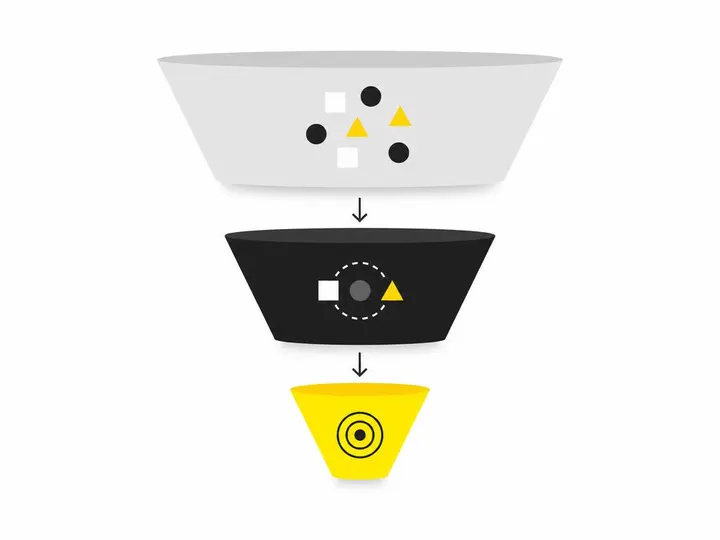
The expert starts by mapping your buyer's journey. They find keywords at every stage: awareness ("what is [your service]"), consideration ("[your service] benefits"), and decision ("[your service] pricing" or "case study [your service]"). Then they run those keywords through a lens that filters out bargain hunters and hobbyists. Tools like Google Search Console and keyword research platforms show search volume, but the expert is reading forum discussions, competitor websites, and sales team notes to understand what the person behind the search actually needs. This is manual work, and it's where most B2B SEO fails if you're working with someone who just runs numbers.
Content that speaks to every stage of a long sales cycle
Once the keywords are mapped, the expert builds a SEO content strategy that covers the entire journey. That might mean a comparison guide for consideration stage, a detailed technical specification page for late-stage evaluators, and a resource hub for early-stage researchers. The content has to satisfy Google's helpful content guidance (so it ranks), but it also has to move a real human closer to a purchase decision. Most B2C content stops after the first part. B2B content does both.
Technical SEO to keep a B2B site fast and crawlable
B2B websites are often complex. You've got service area pages, case study filters, resource libraries, and technical documentation. A technical SEO expert makes sure Google can find and index all of it. They audit page speed (slow B2B sites kill conversions), fix crawl errors, set up proper internal linking so link equity flows to your most important pages, and ensure that Google Search Console shows no warnings. This work is invisible until something goes wrong. Then it's everything.
Link building with industry-relevant Australian sources
B2B businesses need backlinks from industry publications, association websites, and relevant Australian directories. A B2B SEO expert knows which sites in your industry actually matter for Google rankings (usually not the sites you'd naturally think of). They also know which sites are spammy or low-quality, and they avoid them because links from poor sources actively hurt you. Link building for B2B is slower and smaller-scale than B2C, but it's also more effective because you're building with sources your buyers already trust.
The E-E-A-T signals that matter most in B2B search
Google measures page quality using a framework called E-E-A-T: Experience, Expertise, Authoritativeness, and Trustworthiness. In B2B search, these signals matter more than almost anything else because a procurement manager is betting their reputation on your company delivering results. They'll check E-E-A-T signals before they ever pick up the phone.
Case studies and verifiable client results
The clearest E-E-A-T signal in B2B is a real case study from a real client showing real results. Not a testimonial quote. A documented story showing the problem, your solution, and the measurable outcome. Procurement teams want client results they can verify. If you have case studies, they move higher in Google rankings because Google's algorithm now rewards pages with demonstrated business impact. If you don't have them, you're at a disadvantage, and a B2B SEO expert will push you to create them.
Author credentials and subject-matter expertise
Who wrote this page? Do they actually know what they're talking about? In B2B search, Google now checks author credentials more carefully than it did five years ago. A blog post about software implementation should be written by someone who's actually implemented software, not a freelance content writer who's never done it. That means bylines with real expertise, author bios that prove credibility, and content that shows deep knowledge of the problem. A B2B SEO expert will push you to publish under your team's real names and credentials, not under a vague "our team" author.
Trust signals that convince a procurement manager, not just Google
Beyond what Google measures, procurement managers look for specific trust markers: certifications, compliance badges, years in business, published research, speaking engagements, and media mentions. A B2B SEO expert identifies which trust signals matter most in your industry and makes sure they're visible across your site. NAP consistency (your business name, address, and phone number identical everywhere online) matters too. So does a Google Business Profile with complete, up-to-date information, especially if you serve multiple regions. These details sound small. They compound into authority that Google recognises and buyers trust.
How to know if you actually need a B2B SEO expert
Not every B2B company needs to hire a specialist. Sometimes the problem is different. Here's how to diagnose what you actually need.
Signs your current SEO is not built for B2B
Your website ranks for keywords but you're not getting qualified leads. Your traffic is up 40 percent but your sales pipeline hasn't moved. Your SEO consultant talks about ranking position but never asks about your sales cycle or what happens after someone lands on your site. You don't have case studies published on your website. Your content reads like a B2C product page, not like something written for a procurement team. You have no author bylines or credentials on your high-value pages. If any of these apply, your current SEO isn't built for B2B, and you need either a different approach or a different agency. An SEO audit from someone who understands B2B will usually reveal exactly where the disconnect is.
When paid ads are a better short-term move
If your sales cycle is urgent and you need leads in the next 60 days, B2B SEO is not the answer. SEO takes three to six months to show results. Paid search campaigns can drive qualified leads in two weeks. A smart B2B SEO expert will sometimes tell you to run paid ads first while SEO builds in the background. That's honesty about what actually works on your timeline.
What to ask before hiring an SEO agency or consultant
Ask them about their B2B clients and the results. Not rankings. Results: lead volume, qualified pipeline, revenue. Ask them to explain your sales cycle back to you in their own words. If they can't articulate your buying process, they don't understand your business. Ask what they'd do about case studies, author credentials, and trust signals specific to your industry. Ask them how they measure success beyond traffic and rankings. Ask for professional SEO advice on whether paid ads or SEO makes sense for your timeline. The right expert will give you honest answers, even if one of those answers is "not yet" or "not us".
What B2B SEO costs in Australia and what realistic results look like
B2B SEO pricing varies wildly because scope varies wildly. A $500-per-month SEO package from a generalist agency won't include real B2B strategy work. A proper B2B SEO service from a dedicated firm starts around $2,000 to $5,000 per month.
Typical monthly retainer ranges for Australian businesses
A specialised B2B SEO service in Australia typically costs $2,000 to $8,000 per month, depending on the size of your website, your industry, and the complexity of your buyer journey. Smaller retainers ($2,000 to $3,000) usually cover keyword research, content optimisation, and basic technical work. Mid-range ($4,000 to $6,000) adds case study strategy, link building, and monthly reporting. Larger retainers ($6,000 to $8,000+) include competitor analysis, content creation, and dedicated strategy calls. If someone is quoting you $500 to $1,000 per month for B2B SEO, they're not doing B2B SEO. They're doing generic SEO that might accidentally help you sometimes.
How long before you see a return on investment
Realistic timeline: three to six months to see meaningful results, nine to twelve months to see a strong return on your investment. In month one and two, you might see nothing. Search rankings move slowly, especially in competitive industries. In month three, you might see ranking improvements for lower-competition keywords, and maybe 10 to 20 extra organic visitors per week. By month six, you should see traffic that looks meaningful and the first real leads coming from search. By month nine to twelve, if the strategy is sound, your monthly lead volume from organic search should start to pay for the SEO retainer itself. If it's not, something is wrong with either the strategy, the execution, or the fit between B2B SEO and your business model.
Red flags to avoid when comparing quotes
Avoid agencies that promise rankings in 30 days. Avoid anyone who charges per keyword or per ranking position. Avoid SEO services that don't include any content creation or case study strategy. Avoid quotes that include dozens of cities or locations without understanding your actual service area. Avoid agencies that won't show you case studies or concrete results from other B2B clients. Avoid anyone who doesn't ask detailed questions about your sales process before quoting. A reputable B2B SEO expert will spend time understanding your business before they give you a price, because the price should match your needs, not a template.

Conclusion
A B2B SEO expert is a specific role with specific skills. They understand buyer intent, long sales cycles, and the trust signals that procurement managers look for. They build strategy around your entire sales process, not just traffic metrics. They know that 100 qualified leads from organic search is worth more than 10,000 unqualified clicks.
Whether you need one depends on your timeline, your current results, and whether organic search actually fits your market. If you're getting zero leads from search and your budget allows for a six to nine month investment, a B2B SEO expert is probably worth talking to. If you need leads in 30 days, paid ads are faster. If you're unsure whether your current SEO is B2B-ready, start with an audit that specifically evaluates your buyer journey, your content gaps, and your authority signals. That will tell you whether you need a specialist or just a different strategy.
The practical takeaway: don't hire an SEO expert because they rank websites. Hire one because they understand your specific buyers, your sales cycle, and what actually converts. Ask them to prove it with case studies and results from other B2B clients in your space. That's the difference between SEO that looks good in reports and SEO that actually rings your phone.