Cosmetic Clinic Instagram Content Ideas Australia: Educate Patients Without Breaching Advertising Rules
On this page 8 sections
Key takeaways
- Education-first content reduces regulatory risk while building genuine trust
- Every caption, story and reel that promotes a service counts as advertising under Australian law
- Avoid guaranteed results, miracle language and unapproved product references in all formats
- Before-and-after posts require documented patient consent and accurate, unedited representation
- A consultation invitation is safer than a promised outcome in any call to action
Instagram is one of the fastest ways for Australian cosmetic and skin clinics to reach patients and build trust, but every post, story, reel and caption is treated as advertising under Australian law and breaching the rules can cost you credibility, complaints to AHPRA, and TGA enforcement action. The challenge is creating genuine patient education content without accidentally making therapeutic claims, promoting unapproved products or publishing misleading before-and-after images. This guide walks you through what's compliant, what's risky, and exactly how to structure your clinic's Instagram strategy so you can educate patients safely.
Why Instagram content is so risky for Australian cosmetic clinics
Australian cosmetic clinics operate under two overlapping regulatory frameworks that cover every piece of content you publish on Instagram, whether it's paid, organic, a story that disappears in 24 hours or a reel with 10,000 views. Understanding these frameworks is the foundation of safe social media practice.
The TGA advertising framework and what it covers
The Therapeutic Goods Administration (TGA) requires that any advertisement for a therapeutic good must be accurate, balanced, not misleading and supported by evidence. For cosmetic clinics, this means any post that mentions or implies a medical benefit from an injectable, filler, laser treatment or skincare product is advertising a therapeutic good. That includes captions, hashtags, stories and comments not just paid promotions. If you're claiming your treatment reduces wrinkles, improves skin texture, reduces scarring or treats acne, you're making a therapeutic claim and you need evidence to back it up.
AHPRA's specific rules for health practitioners
If your clinic is run by or employs registered health practitioners (doctors, nurses, cosmetic technicians), they must comply with AHPRA advertising guidelines for registered health practitioners. AHPRA rules are stricter in some ways: practitioners cannot make guaranteed claims about outcomes, cannot present testimonials as typical results, and must avoid language that encourages people to bypass proper assessment. A post saying "Our Botox results are permanent" or "See what one patient achieved" (even with consent) crosses AHPRA's line because it guarantees an outcome or presents one case as representative.
Why the rules apply to captions, stories and reels, not just paid ads
A common misconception among clinics is that advertising rules only apply to paid Instagram ads. In fact, the TGA's Therapeutic Goods Advertising Code covers any material that promotes a therapeutic good or service, regardless of format or whether money changed hands. A reel showing a treatment process, a carousel post explaining injectables, a story with a "Book Now" sticker, or an organic post with a link to your booking page are all advertising. This is especially important right now: the TGA is actively reviewing and consulting on parts of Australia's advertising framework to make it clearer and better suited to current digital practices, so regulators are paying closer attention to how clinics use social media.
The compliance spectrum: low-risk to high-risk content
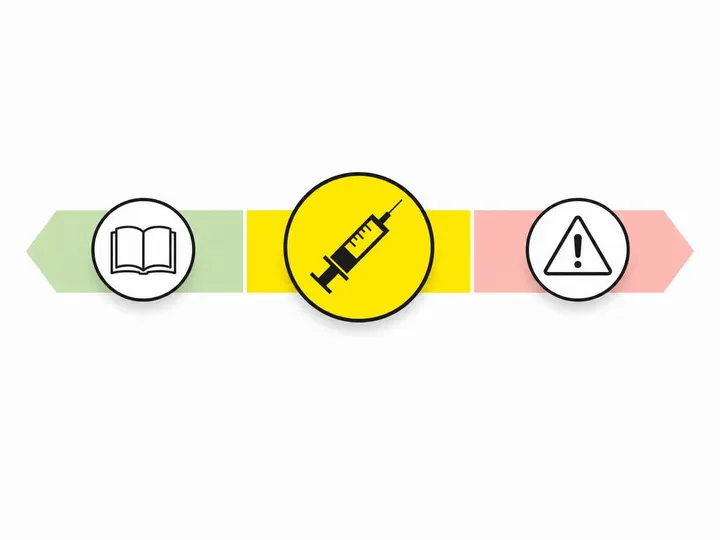
Not all Instagram content carries the same regulatory risk. Understanding where your posts fall on the spectrum helps you plan a calendar that educates patients without crossing into therapeutic claims or misleading territory.
Low-risk: skin health education and general information
Posts that explain how skin works, the difference between skin types, how the sun damages skin, or why hydration matters are generally low-risk. These are factual, educational and not promoting a specific treatment or product. Examples: "What happens to collagen as we age," "The five signs of dehydrated skin," "How UV rays damage skin cells." You're not selling anything; you're helping patients understand their skin.
Medium-risk: treatment explainers and suitability questions
Posts that explain how a specific treatment works or ask "Is this right for you?" are medium-risk because they're moving toward a recommendation, but they're not yet making guaranteed claims. Safe examples include "What to expect during a laser consultation," "Who is a good candidate for dermal fillers?" or "Common myths about injectables." The key is staying factual, acknowledging limitations and always directing people to a consultation for personalised advice.
High-risk: before-and-after posts, testimonials and promotional offers
Before-and-after images, patient testimonials, success stories and time-limited promotional offers are high-risk because they're directly encouraging a purchase decision and implying specific outcomes. These require strict compliance with consent requirements, evidence of authenticity, disclosure of relevant factors and careful language to avoid guaranteeing results. Many clinics get these wrong, which is why they appear frequently in AHPRA complaints.
20 compliant cosmetic clinic Instagram content ideas for 2027
Here's a practical menu of content ideas that sit within safe compliance boundaries and still deliver education and patient engagement.
Skin health explainers
How collagen and elastin break down over time
The difference between fine lines and deep wrinkles
Why skin texture changes and what causes it
The role of hydration in skin appearance
How environmental factors (pollution, sun, stress) affect skin
Treatment suitability and preparation posts
"Questions to ask before your injectables consultation"
What to avoid before and after laser treatment
Why skin assessment is essential before any procedure
How to prepare your skin for a professional treatment
What realistic recovery timelines look like
Practitioner credentials and clinic protocols
Staff qualifications and years of experience
Your clinic's sterilisation and safety standards
Why choosing a qualified practitioner matters
Your clinic's consultation process
How your clinic stays up to date with training
Consultation prompts and patient education series
"Five things to discuss at your first consultation"
Why photos and patch tests are part of assessment
How practitioners customise treatments to skin type
What happens during an aftercare appointment
Seasonal content, including SPF posts done right
Sunscreen and SPF education is increasingly scrutinised by the TGA, especially after the TGA's October 2026 announcement on strengthening sunscreen regulation and SPF claims. Safe SPF content avoids broad claims about protection levels unless they're product-specific and backed by approved evidence. Instead, post about "Why daily sun protection matters for skin health" or "How to choose the right sunscreen for your skin type" rather than claiming a particular SPF level provides guaranteed protection.
How to discuss injectables and peptides without crossing the line
Injectables and peptides are a core part of cosmetic clinic services, but they're also the source of the most frequent compliance breaches. The difference between a compliant post and a problem comes down to language.
Language that gets clinics into trouble
Avoid these phrases: "instant results," "risk-free," "miracle," "completely eliminates," "permanent solution," "safe for everyone," "proven to work," "as seen on [celebrity name]," or "guaranteed." These make therapeutic claims, guarantee outcomes or present subjective results as objective fact. They also run directly into AHPRA's rules about guaranteed outcomes.
Safe language alternatives
Replace them with: "Some patients see results as early as two weeks," "results vary based on skin type and age," "designed to soften the appearance of wrinkles," "many patients report improved confidence," "your practitioner will assess suitability during consultation," "results are not guaranteed and depend on individual factors." This language is factual, acknowledges variation and defers to professional assessment rather than making promises.
The TGA's 2026 warning on unapproved peptides, what it means for your content
On 5 November 2026, the TGA warned that testing found unapproved peptide products do not contain what their labels claimed. This is directly relevant to any clinic discussing peptides or sharing information about injectables available online. If your clinic educates patients about peptides, make it clear that only approved, clinically administered products should be used, and avoid any content that implies online-sourced or unapproved peptides are safe or effective. A compliant post might read: "Why peptide treatments should only be administered in a clinical setting by a qualified practitioner" rather than promoting peptides as a home-use or online purchase option.

Before-and-after posts: a compliance checklist
Before-and-after images are powerful, but they're also the highest-risk content type for clinics and the most frequently challenged by regulators. Use this checklist every single time.
Consent and image authenticity requirements
Written consent from the patient must be on file and must cover Instagram publication specifically.
Images must be genuine, unedited beyond professional colour balancing, and taken under consistent lighting.
Never use stock images, AI-generated images or images from other clinics.
Keep records of consent and treatment dates for at least three years.
What you must disclose
The treatment given and date of treatment.
Any relevant skin conditions, allergies or factors that might affect outcomes (e.g., "patient has sensitive skin" or "combined with home skincare routine").
That results are specific to this patient and may vary for others.
Any aftercare the patient followed.
When to avoid them altogether
If you're unsure about consent, if the images have been edited beyond basic colour correction, or if you cannot document the patient's treatment and timeline, don't post the image. A single complaint to AHPRA or the TGA can trigger an investigation that affects your entire clinic's advertising practices.
A practical caption formula for every treatment post
Use this five-part structure for any post that mentions or implies a treatment or product benefit:
The five-part structure
Part 1: Educational statement. Start with a fact about skin or ageing (not a claim). Example: "Collagen naturally decreases by about one percent per year after age 30."
Part 2: Suitability or assessment. Explain who this treatment is designed for or why assessment is needed. Example: "Whether a filler is right for you depends on your skin elasticity, age and goals, which is why we start with a consultation."
Part 3: Realistic limitation or risk. Briefly acknowledge that results vary or there are factors outside your control. Example: "Results depend on skin type, lifestyle and maintenance."
Part 4: Call to consultation, not booking. Invite assessment, not a direct purchase. Example: "Curious whether this treatment suits you? Book a consultation to chat with our team."
Part 5: Link to qualified advice. Direct to your website, a consultation booking page or AHPRA resources, not to product sales pages.
Caption examples you can adapt
Example for dermal fillers: "As skin loses volume over time, dermal fillers are designed to restore contour and hydration. Not everyone is a candidate, and results depend on your unique anatomy and skin type. Your practitioner will assess whether this is right for you during a consultation. Questions? Let's chat. Book a consultation via our website."
Example for laser treatment: "Laser skin resurfacing works by stimulating collagen production over several weeks. Recovery and results vary based on your skin tone, sensitivity and sun exposure after treatment. That's why aftercare is as important as the procedure itself. Wondering if this suits your skin? Let's discuss it in a consultation."

Building a content review process for your clinic
The most compliant clinics treat every Instagram post the same way they'd treat a patient consent form: with a review process before it goes live.
Who should review posts before they go live
Assign one person (ideally a registered practitioner or someone trained in advertising compliance) to review all posts, captions, stories and reels before publication. This person should check every post against the five-part caption formula, verify that before-and-after consent is on file, flag any therapeutic claims and ensure language is balanced and factual. Use a simple checklist in your scheduling tool or project management software. Planning your clinic's social media calendar in advance means you have time to review and revise posts before they need to go live.
Keeping up with the TGA's ongoing advertising review
The TGA is currently consulting on reforms to advertising rules to clarify how they apply to digital platforms and new formats like reels and influencer collaborations. While no Instagram-specific rule change has been confirmed yet, staying informed is crucial. Subscribe to TGA newsletters, check their consultations page quarterly, and review AHPRA's advertising hub regularly. Changes may be announced in 2026 or 2027, and clinics that have already built compliant habits will adapt faster than those caught off guard. AHPRA's advertising guidelines for health practitioners also apply to your clinic's practitioners and are updated periodically.
Conclusion
Instagram is essential for patient education and clinic visibility, but for cosmetic clinics operating under TGA and AHPRA rules, every piece of content is advertising. The strategy isn't to avoid social media, it's to plan content that genuinely educates while respecting regulatory boundaries. Build a content library of skin health explainers, treatment explainers, practitioner credentials and consultation prompts, then reserve high-risk content like before-and-after images and testimonials for posts that have been carefully reviewed, consented and disclosed. Use the five-part caption formula consistently, flag any language that sounds like a guarantee or miracle claim, and assign one person to review before publication.
The TGA's current review of advertising rules and their November 2026 warnings about unapproved peptides and sunscreen claims show that regulators are paying close attention to how clinics use social media. Rather than waiting for enforcement action or complaints, build your review process now. The clinics that win on Instagram in 2027 are the ones that balance patient education with genuine compliance, not the ones that push therapeutic claims as far as possible. Start with low-risk educational content, test what your patients engage with, and scale safely from there.