Local Lead Generation Ideas for Electricians Beyond Word of Mouth
On this page 8 sections
Key takeaways
- Google Business Profile drives 60-70% of local tradie enquiries when optimised
- Meta ads cost $15-30 per lead for electricians targeting local homeowners
- A quote-ready website converts 3-5% of visitors into enquiries
- Combining three channels reduces reliance on word-of-mouth referrals
- Most electricians waste budget on platforms that don't convert for their trade
Most electricians build their business on word-of-mouth, and it works,until it doesn't. When a major project wraps up or a client moves away, the phone goes quiet. If you're relying solely on referrals, you're gambling with your income and leaving thousands in revenue on the table. The good news is that local lead generation for electricians in Australia has become simpler and cheaper than it was five years ago, and you don't need a marketing degree to run it.
Why Word-of-Mouth Alone Isn't Enough Anymore
The referral gap: when work dries up between jobs
Word-of-mouth works because your past clients trust you. That's gold. But referrals are unpredictable. A client who loves your work might not need another electrician for two years. Their mate might be between jobs. Or they simply forget to mention you when their sister needs a sparky. You end up chasing the same leads repeatedly or watching the pipeline run dry between seasons.
The referral gap is a real problem for electricians. One solid job keeps you busy for a fortnight, then you're back to hoping the phone rings. This inconsistency forces you to either lower prices to grab any work available or spend months hunting for the next big contract. Neither option is sustainable or profitable.
How customer search behaviour has changed in Australia
Most Australian homeowners don't ask their mates for a sparky recommendation first anymore. They search "electrician near me" on Google or scroll through Facebook to see who's advertising. If you're not visible in those places, they've already moved on to someone who is. Local lead generation strategies now centre on being findable when someone is actively searching, not just hoping they know someone who knows you.
People want fast, convenient options. They want to see photos of your work, read reviews from real customers, and get a quote without waiting two weeks. If your online presence is non-existent, you're invisible to the vast majority of potential customers who are ready to book right now.
What happens when you can't control your pipeline
When you rely entirely on word-of-mouth, you can't control how many enquiries come in each month. This makes it hard to grow. You might hire a second electrician to handle more work, but if referrals dry up, you've got wages to pay and no jobs to fill. On the flip side, good months are chaotic. You're turning work away or overextending yourself.
A diversified lead generation system lets you turn the tap up or down. Slack month? Run more ads. Flat out? Pull back spend. This kind of control is impossible with word-of-mouth alone, and it's the foundation of a scalable electrical business.
Google Business Profile: Your First Lead Generation Priority
Why 'electrician near me' searches matter for local tradies
When someone in your service area searches "electrician near me" or "emergency electrician [suburb name]", Google shows them a map with local options. A properly optimised Google Business Profile gets you into that map result, and map clicks convert to calls and quote requests at a much higher rate than any other free channel.
This is where most of your organic, cost-free leads come from. You don't pay per click. You don't manage an ad budget. But you do need to set it up correctly and keep it active. Neglect it, and you'll lose leads to competitors who've done the work.
How to set up your Google Business Profile properly
Start with Google Business Profile setup. Claim your business if you haven't already. Fill out every field: business name, address, phone, website, and service area. If you cover multiple suburbs, list them all explicitly. Use a professional photo of you or your van (not a stock image). Write a clear business description that includes the word "electrician" and the suburbs you serve.
Most electricians skip the service area field and just put their address. Big mistake. If you operate across five suburbs, list all five. Google uses this to show you to the right people at the right time. Your address matters less than your service radius for a local service business.
Getting reviews that actually convert searchers
Reviews are the single biggest factor in whether someone calls you after seeing your profile. Three reviews with four stars beats no reviews with a perfect profile. After every completed job, ask the customer to leave a Google review. Send them a text or email with a direct link (Google makes this easy from your Business Profile dashboard). You'll get more reviews if you ask within 48 hours of finishing the work, while they're still happy.
Don't fake reviews or offer discounts for them. Google catches this and it damages your credibility. Authentic customer reviews, even if they're not perfect, build trust faster than anything else.
Google Business posts and local service ads
Post updates to your Google Business Profile every week or two: a photo from a job, a seasonal reminder, a special offer. These posts are free and show up to people searching for electricians in your area. Google Local Service Ads are a paid option where you pay only for qualified leads that meet your criteria. They're more expensive than other channels but deliver genuinely interested customers who've already decided they need an electrician.

A Simple Website That Turns Visitors Into Quote Requests
What electrician websites must include to convert
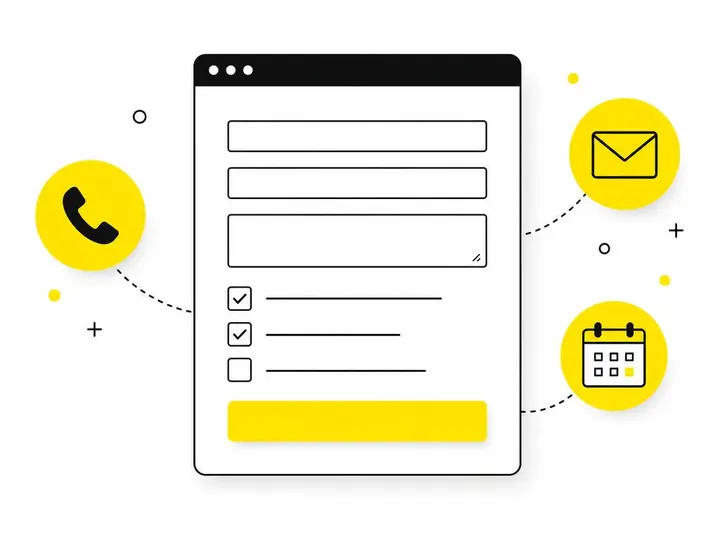
Your website is where curious visitors become actual enquiries. If you're sending people to a dead homepage or a site that hasn't been updated since 2015, you're wasting the traffic you've generated. A conversion-ready electrician website includes a clear phone number (clickable on mobile), a simple quote request form, photos of your work, a list of services you offer, and customer testimonials or reviews.
The form should ask only what you actually need: name, phone, email, suburb, and a brief description of the work. Don't ask for fifteen pieces of information. Nobody fills that out. Getting more quote requests starts with making it dead simple to contact you.
Service pages that rank for local searches
Create a simple page for each type of work you do: "Emergency Electrician Services", "Residential Rewiring", "Switch and Outlet Installation", "Safety Switches and Testing". Include your suburb or region name on each page. This helps you rank when someone searches "[service] electrician [suburb]". You don't need pages and pages of content. A few paragraphs, a photo, and a call-to-action are enough.
Mobile-first design for on-the-spot quote requests
Most people finding you will be on a mobile phone. If your website is slow or hard to navigate on mobile, you'll lose them. Your site needs to load fast, display properly on a small screen, and make it easy to tap a button and request a quote. Our free website offer includes mobile-optimised templates designed specifically for tradies, so you're not building from scratch.
Real conversion rates you can expect
If you're getting 100 visitors per month to your website and your form converts at 5 percent, that's five quote requests per month from your site alone. At a 20 percent quote-to-job conversion rate, that's one job a month from your website. Small, but consistent and free once the site is set up. Better sites with good reviews and clear calls-to-action convert at 8 to 10 percent.
Meta Ads for Electricians: Targeting Homeowners in Your Area
Why Meta ads work better than Google Ads for some electrical services
Google Ads work when someone is actively searching for an electrician. Meta ads (Facebook and Instagram) work by showing your ad to people who fit your ideal customer profile, even if they're not searching yet. Someone sees your ad while scrolling, they click through to see your recent work, and suddenly they're thinking about that dodgy wiring in their kitchen.
For emergency services, Google Ads are better. For routine work like safety switches or rewiring, Meta ads can find customers earlier in the decision process and often at a lower cost per lead. How tradies use Meta ads is different from how a software company or retail shop uses them. You're targeting homeowners in specific postcodes who've shown interest in home improvement or have recently bought a house.
How to target local homeowners who need electrical work
You can target people in your service area by suburb or postcode. You can target people who've recently moved house (Facebook knows this from address changes). You can target people who've shown interest in home improvement or renovation. You can retarget people who've visited your website. Layer these targeting options together and you can reach the exact person most likely to need a sparky, at exactly the right time.
Ad creative that generates qualified leads
Show before-and-after photos of actual jobs. Use carousel ads to show multiple completed projects. Include customer testimonials as text overlays. Keep the message simple: "Your home electrical safety inspection by [your name]" or "Safety switches tested and certified". End with a clear call-to-action: "Book your free quote" or "Message us today".
What to budget and what results to expect
Most Australian electricians run Meta ads on budgets between $500 to $1,500 per month. At a cost per lead of $20 to $50, you might expect 10 to 50 enquiries per month depending on your targeting and creative quality. Not all of those will convert to jobs, but good ads will see 20 to 40 percent of enquiries turn into quote requests that you actually want to respond to. Meta ads management requires regular testing and tweaking to hit those numbers, but they're realistic.
Lead Generation Platforms: What Works and What Doesn't
ServiceSeeking, Airtasker, and similar platforms assessed
ServiceSeeking platform and Airtasker for tradies put you in front of customers actively looking for electricians. The trade-off is that you pay a commission or a lead fee on every job or enquiry. ServiceSeeking typically takes 10 to 15 percent commission. Airtasker charges a platform fee plus a percentage.
These platforms work best for routine, lower-value work: installation of a light fitting, adding a power point, testing a safety switch. They're less useful for larger jobs where margins are tighter and the commission cuts into profitability significantly.
Cost per lead vs quality of enquiries
On ServiceSeeking, you might pay $15 to $30 per lead you generate, or lose 10 to 15 percent of the job value to commission. On your Google Business Profile or website, that lead costs you nothing. The quality is often comparable, but the economics are very different. A $500 job on ServiceSeeking might net you $425 after commission. The same job from your website nets you the full amount.
Many electricians use these platforms as a top-up when work is quiet, not as their primary lead source. The numbers work better that way.
When quote platforms make sense for electricians
Use them if you're new and have no reviews or online presence yet. Use them if you have spare capacity and want to fill gaps. Use them if you're willing to take lower-margin routine jobs to build volume and reviews. Don't rely on them as your only lead source, because you'll be paying commission on every dollar you earn.
Building a Local Referral Network That Actually Sends Work
Partnering with builders, real estate agents, and property managers
Referrals from businesses, not just customers, are often higher value and more consistent. Property managers manage dozens of rental properties and need regular electrical maintenance. Real estate agents refer electricians to clients doing renovations. Builders subcontract sparks for new builds and renovations. These relationships send steady work if you earn their trust.
Target one type of business partner at a time. Call a local property management company. Offer to give their properties a priority service rate or a small discount for volume. Follow up with a photo and a thank-you when you complete work. Stay top-of-mind without pestering by sending a quarterly message: a price update, a seasonal tip, or simply a "thinking of you" text.
How to stay top-of-mind without pestering
Don't call or message every week. Once a month or once a quarter is enough. Keep messages short and valuable. "Just reminding you we're available for emergency callouts" or "Winter's here, time to check safety switches" or "New customer? Send them our way and we'll look after them". If you've sent them work and done good work, they'll remember you.
Tracking which referral sources deliver real jobs
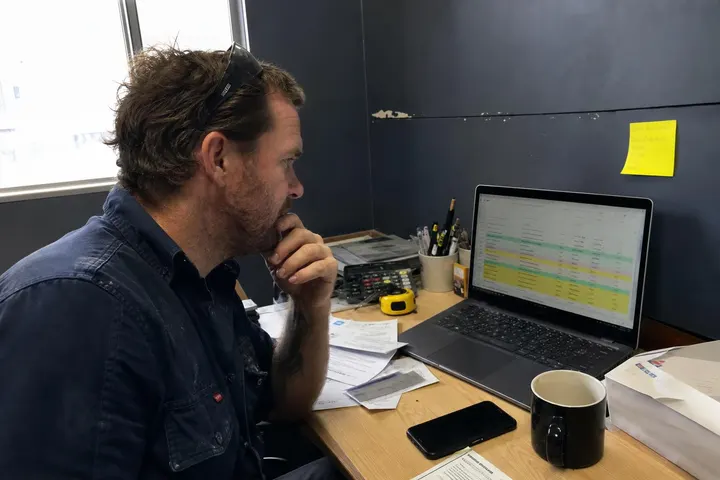
Keep a simple spreadsheet. For every job, note where the enquiry came from: Google, website, Meta ads, ServiceSeeking, direct phone call, or a specific referral partner's name. After three to six months, you'll see which sources bring in jobs reliably and which are costing you time for no return. Double down on the winners and cut the rest.
Tracking What's Working: Simple Lead Attribution for Sparkies
How to know which channel sent each enquiry
When someone calls, ask: "Where did you find us?" Write it down. When someone fills out your website form, note which page they came from. When you get an Airtasker enquiry, tag it as Airtasker. This is the only way you'll know whether Google or Meta or your referral partner sent you that job. Without this, you're flying blind.
Measuring cost per lead across all your tactics
Cost per lead is the amount you spend on a channel divided by the number of enquiries it generates. If you spent $500 on Meta ads and got 20 enquiries, your cost per lead is $25. If you spent $200 on a referral partner dinner and got 10 jobs (not enquiries, actual jobs), your cost per job is $20. Compare these numbers every month. Channels that deliver leads below $30 to $40 are generally worth doing more of.
When to double down or cut a lead source
If Google Local Service Ads are delivering jobs at $35 per lead and your website converts at $0 (free), but you're only getting two website enquiries a month, you might increase your spend on ads and improve your website at the same time. If ServiceSeeking is costing you 15 percent in commission but you're booked solid from other channels, cut it. If a referral partner has sent you five jobs in six months, that relationship is worth nurturing.
Reassess every quarter. Markets change, competition moves, and what worked last year might not work this year. Simple tracking makes it obvious what to do next.
Conclusion
Word-of-mouth will always be part of your business, but it can't be your only lead source if you want stable, predictable income. The good news is that the tools to generate local leads as an electrician in Australia are cheap and straightforward: a properly set up Google Business Profile costs nothing; a conversion-ready website can be built for under $500; Meta ads start at $10 a day; and tracking which source sends each job takes only a few seconds per enquiry.
Start with one or two channels. Get your Google Business Profile right and ask for reviews. Build a simple website that converts visitors. Test a small Meta ads budget. Track everything. After two to three months, you'll see which channels deliver jobs at a cost you can live with. That's when you scale up what works and cut what doesn't.
The electricians who succeed in 2024 and beyond are the ones visible online when someone is ready to book. Make yourself visible, make it easy to contact you, and measure what works. Do those three things and you'll never rely solely on word-of-mouth again.