Jewellery Website Design: What Shoppers Need Before They Buy
On this page 8 sections
Key takeaways
- Show each piece from multiple angles including a worn shot and a scale reference
- List dimensions in millimetres, metal type, plating depth and gemstone details
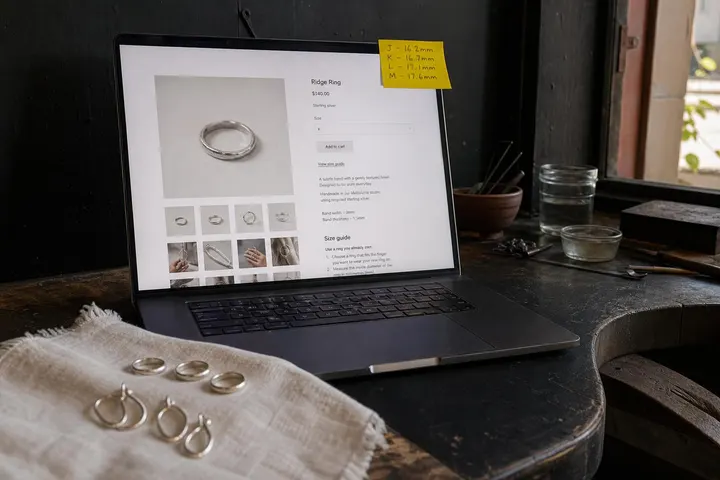
- Put a size guide and sizing method close to the add-to-cart button
- Display dispatch time, delivery estimate and return policy near the buy button
- Add genuine customer photo reviews and clear Australian business details as trust signals
Good jewellery website design does one job above everything else: it answers every question a shopper would ask a salesperson across the counter, before they think to ask it. When someone can't hold a ring, feel the weight of a chain or ask whether a pendant is solid gold, every unanswered question is a reason to close the tab. This guide covers what your product pages, policies and checkout need to turn browsers into buyers.
Why Do Jewellery Websites Lose Sales Before Checkout?
Jewellery websites lose sales because shoppers can't confirm size, quality or delivery details, so they leave rather than risk a wrong purchase. Most of those sales aren't lost on price. They're lost on uncertainty.
The gap between browsing and buying
A shopper might love a pair of huggies, then hesitate because they can't tell whether they're 8mm or 12mm, whether the gold is plated or solid, or whether they'll arrive before a birthday. Closing that gap is mostly about information, not design flourishes. If you want a broader framework, these conversion rate optimisation tips apply directly to jewellery stores.
What the data says about Australian online shoppers in 2026
Australians are spending more online but buying more carefully:
The CommBank iQ consumer spending report, September quarter 2026 found online spending hit $25 billion, up 17% year on year.
The same report showed the average online basket fell 6.8% to $90.
Shopify research reported by Jeweller magazine in October 2026 found 85% of 2,000 Australians would rather wait for the right product than buy whatever is available.
Roy Morgan reported 9.5 million Australians shopped with Amazon over the past 12 months, which sets the bar for how quickly shoppers expect to find delivery and returns details.
Put simply, shoppers will pay for the right piece, but only once they're sure it's right.
What Product Photos Does a Jewellery Page Need?
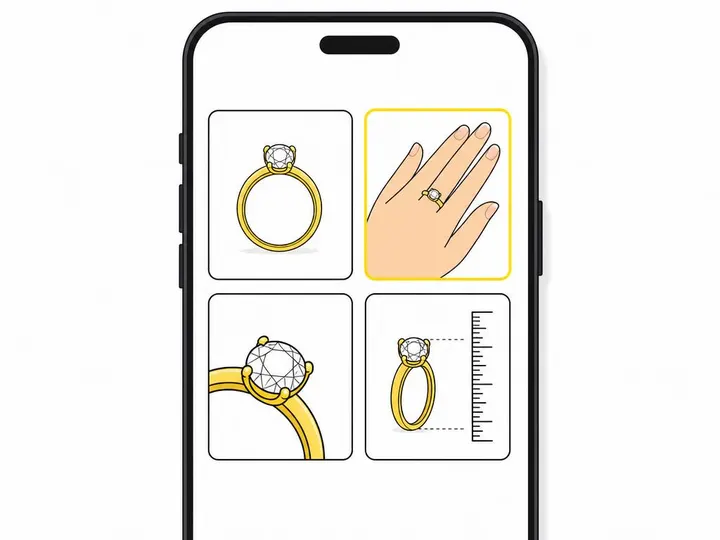
Every jewellery product page needs a consistent set of images that shows the piece clearly, shows it worn, and shows it beside something familiar so shoppers can't misjudge the size.
The essential image set for every piece
A clean product shot on a plain background
A close-up of the stone, texture or engraving
A side or back view showing profile and thickness
A clasp, post or setting detail
Scale references and model shots
Fine chains, stud earrings and stacking rings are notoriously hard to judge on a screen. Show each piece worn on a model and state the model's ring size or the chain length they're wearing. Add a scale shot beside a coin or a ruler. Avoid tight crops that make a 6mm pendant look like a statement piece, because exaggerated imagery is a fast track to returns and bad reviews.
Short video for fine detail
A five to ten second clip of a ring turning in natural light shows sparkle, movement and proportion better than any still. Keep files compressed so they don't slow the page.
Which Product Details Justify the Price?
The details that justify a jewellery price are exact measurements, honest material information and clear care and stock details, because these are what separate your piece from a cheap marketplace lookalike.
Dimensions, weight and chain length
List measurements in millimetres: pendant height and width, band width, hoop diameter, stone size. Include weight for solid gold and silver pieces, and give chain length plus any extender length.
Metal type, plating and gemstone details
Be specific. "Gold" isn't enough. Say 9ct solid yellow gold, 18ct gold vermeil over sterling silver, or 14ct gold plated brass with plating thickness in microns. For gemstones, state whether they're natural, lab grown or simulants, plus cut, carat and origin where you know it. Shoppers comparing you against Temu and Shein need these specifics to understand why your price is higher.
Care instructions and stock status
Explain whether a piece can be worn in the shower, how to clean it and how to store it. Show stock status honestly, and flag made-to-order lead times clearly so nobody expects next-day dispatch on a custom engagement ring.
How Should a Jewellery Website Handle Sizing?
A jewellery website should handle sizing with a visible size guide on every relevant product page, simple at-home measuring instructions and a clear resizing policy, which together prevent most size-related returns.
Ring, bracelet and chain-length guides
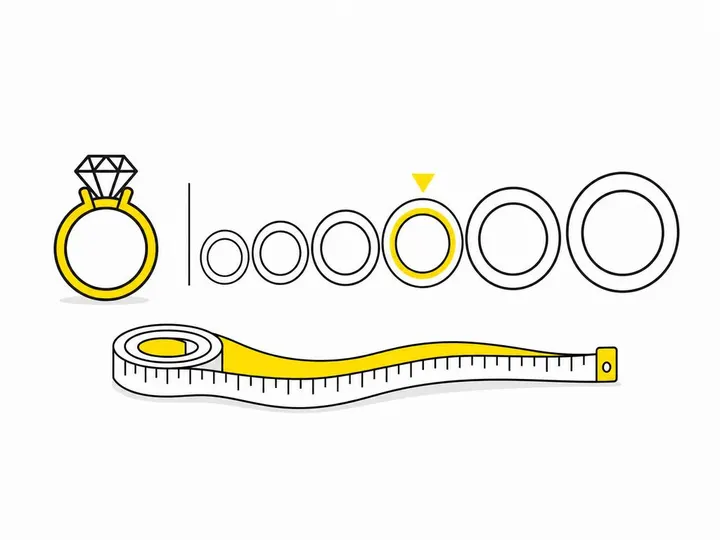
Link your ring size guide right beside the size selector, not buried in the footer. Use Australian letter sizes with diameter and circumference in millimetres. For necklaces, show an illustration of where 40cm, 45cm and 50cm chains sit on the collarbone. For bracelets, explain how much room to allow over wrist measurement for a snug or loose fit.
At-home measuring instructions
Offer a printable ring sizer, plus instructions for measuring an existing ring that fits. Gift buyers in particular need tips, such as borrowing a ring from the recipient's jewellery box.
Resizing policy and direct contact option
State whether you offer free resizing, within what timeframe, and which styles can't be resized (eternity bands, for example). Add live chat or a "Not sure of your size? Message us" link for uncertain buyers.
Where Should Shipping, Returns and Payment Information Go?
Shipping, returns and payment information should sit directly beside or below the add-to-cart button, because that's exactly where shoppers look when they're deciding whether to buy.
Dispatch time and delivery estimates
Show dispatch time, standard and express options, and estimated delivery by state. Mention tracking, insurance and signature on delivery for higher-value pieces. The Australia Post eCommerce Industry Report 2026 shows marketplace spending grew 20% to $6.1 billion, so independent brands need delivery promises that are just as easy to find.
Return windows and exclusions for personalised items
State your return window, who pays return postage, and the exclusions: engraved or personalised pieces and pierced earrings for hygiene reasons. Put a short summary on the product page and link to the full policy.
Payment options and buy-now-pay-later
Display accepted payment methods and any buy-now-pay-later (BNPL) options under the price, showing the instalment amount. For a $480 bracelet, seeing four payments of $120 changes the decision.
Trust Signals That Actually Move the Needle
The trust signals that matter most to Australian jewellery shoppers in 2026 are real customer photos, visible Australian business details and clear warranties, ahead of generic security badges.
Customer reviews with photos
Reviews showing pieces on real hands and necklines answer the size question better than studio shots. Mark up reviews and product details with product schema markup so star ratings and prices can appear in Google results, something that pairs well with dedicated jewellery SEO.
Australian business details and warranties
Show your ABN, studio or showroom location, a phone number and the story behind your craftsmanship. Spell out your warranty on clasps, settings and plating.
Secure checkout cues
Familiar payment logos and a clean, trusted checkout reassure buyers. Platforms like the Shopify eCommerce platform handle this well out of the box, which is one reason many brands choose Shopify website design. If you're still deciding, compare Shopify vs WordPress for Australian businesses.
Merchandising for the 2026 Shopper
With average baskets shrinking to $90, jewellery brands should merchandise accessible entry pieces and useful add-ons alongside their hero collections, while keeping mobile checkout fast.
Smaller entry-price pieces and gift guides
Feature studs, charms and fine chains under $100 as an easy first purchase. Build gift guides by budget and recipient, such as "Gifts under $80" or "For her 30th".
Useful add-on recommendations
Suggest pieces that genuinely go together: a matching chain for a pendant, a jewellery pouch, or a second stacking ring. Keep it relevant, not pushy.
Mobile checkout and page speed
Most jewellery browsing happens on phones, so test your product pages with Google PageSpeed Insights and compress large images. These mobile-friendly website tips cover the fixes that matter most.
Conclusion
Jewellery shoppers in 2026 are spending more online but buying with care. They'll pay for quality when your site proves it: honest photos with scale, exact measurements and materials, sizing help they can't misread, and shipping, returns and payment details right beside the buy button.
Start with your five best sellers. Audit each page against this checklist, fill every gap, then roll the same template across your range. That single exercise usually does more for sales than any redesign.